Caffeine & Sleep
Best Decaf Coffee Brands That Actually Taste Good
By Nora Vale · May 15, 2025 · 7 min read
I fought decaf for years on taste grounds, and I’ll admit the fight was fair for most of that time. Decaf was where coffee went to retire: stale beans, dark roast hiding everything, the shelf’s afterthought. Then I started running a real cutoff, bedtime minus eight hours, and the 4 p.m. slump kept arriving whether or not the latte did, and the question stopped being whether decaf was good and became what the afternoon ritual was actually for.
This is what I’ve learned about the best decaf coffee brands that actually taste good, and the mechanics of why decaf earns its place live in my guide to caffeine and sleep.
Key takeaways
- Decaf carries only 2 to 15 milligrams per cup, which fills the ritual without meaningfully touching your midnight.
- Swiss Water or similar water-based processing is the flavor-preserving method to look for on the label.
- Bad decaf is usually stale, over-roasted, or made from cheap beans; freshness and roast date fix most of what people hate.
- The decaf swap works because it keeps the ritual, and half the habit lives in the holding of a warm cup.
- The goal was never zero coffee. It was a last cup that behaves.
What decaf actually is
Decaf isn’t caffeine-free, and the honest number matters: a cup carries 2 to 15 milligrams depending on bean and brew, against a regular cup’s 100 to 200. That’s roughly the difference between a rounding error and a decision, and for most people the remainder is too small to touch sleep even in the evening. If your sleep is already threadbare, even that remainder belongs earlier, but as a general rule the decaf after dinner is sleep-neutral.
The processing is where flavor lives or dies, and it’s worth knowing the two main camps. Traditional solvent-based methods work fine and leave negligible residue, but the method that coffee people trust most is water-based processing, best known under the Swiss Water name, which uses water and carbon filtration to remove caffeine without solvents. On the label, that phrase is the first thing I check, because water-processed decafs tend to taste more like the coffee they came from.
The other half of the taste equation isn’t decaf-specific at all: freshness. Much of the bad decaf in the world is simply old, and coffee stales regardless of its caffeine content. A roast date on the bag is the single best predictor of whether a decaf will taste like anything, and I’d take a fresh, well-roasted water-process decaf over a stale trendy bag with no date, every time.
What to look for on the shelf
First, the process, Swiss Water or equivalent water-based, printed clearly. Second, the roast date, because stale decaf is the main reason decaf has a reputation, and no brand escapes staleness. Third, the roast level: I lean medium or medium-light, because the dark roasts that dominated decaf for decades were often doing structural work, hiding old beans under char, and the flavor you actually want, the coffee part, lives in the middle roasts.
Fourth, the origin story, lightly held. Single-origin decafs from decent roasters now exist at every price point, and the ones from Latin American beans tend to run chocolatey and forgiving, which suits both afternoon drinking and the milk-heavy drinks most people actually order in the afternoon. The point isn’t connoisseurship. The point is that the swap only works if the substitute is a pleasure, and pleasure is where the ritual gets protected.
And fifth, the brew you’ll actually make. A decaf that tastes thin as black drip can be excellent as an afternoon latte, because milk does what it always does, and there’s no virtue in drinking bad black coffee to prove a point. Match the decaf to the drink, not to the tasting notes.
How the swap actually works
The decaf swap earns its place in the taper toolkit because of what it preserves. The 4 p.m. slump arrives on schedule whether or not a latte comes to meet it, and the difference is that without caffeine you actually feel the dip, plain and unedited, for a week or two. It shrinks. Most people find the real dip was a fraction of the crash the caffeine cycle had been manufacturing. The decaf doesn’t fix the dip. It fills the ten-minute break, and the break is what the afternoon was actually asking for.
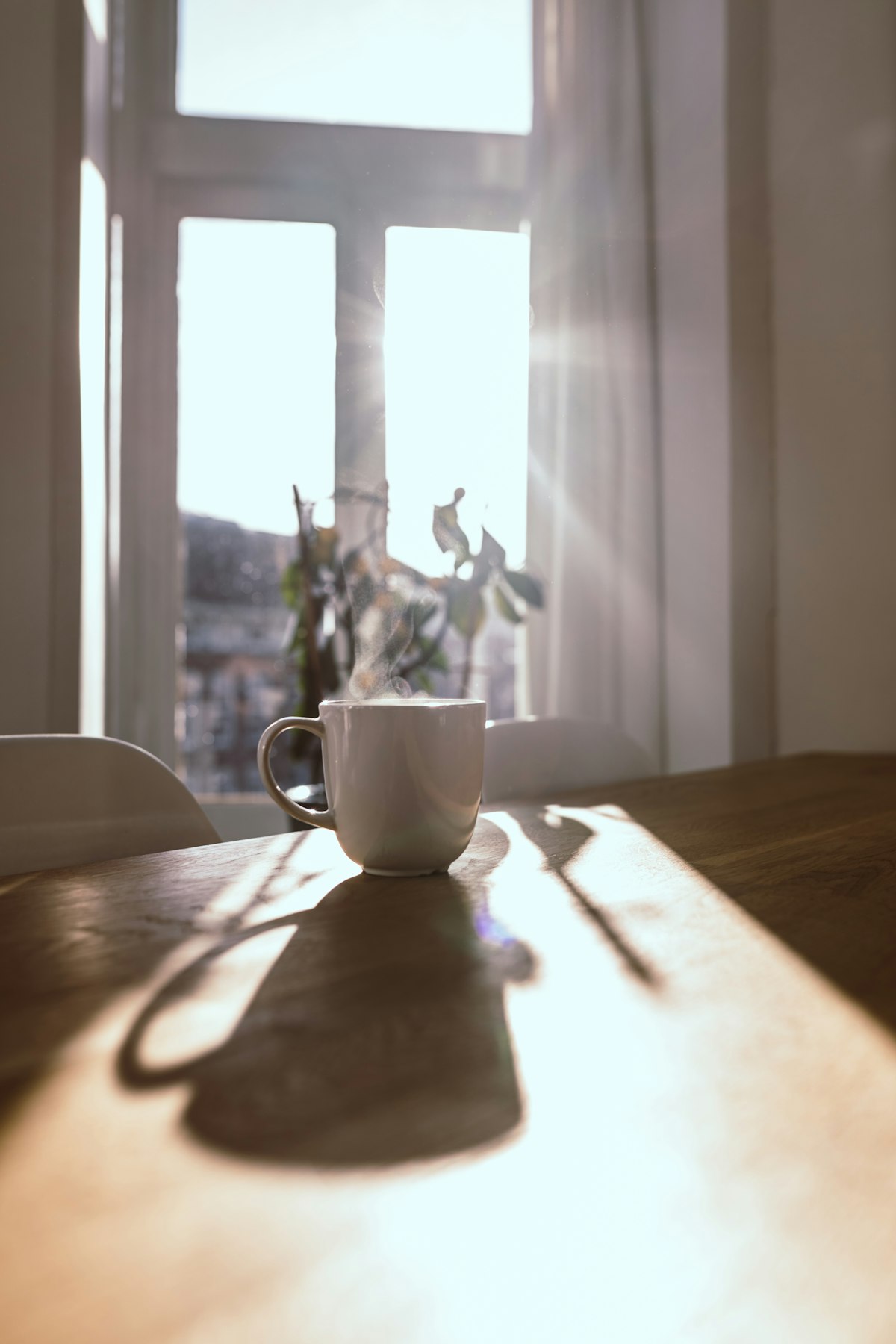
Half the habit lives in the holding of a warm cup. That line changed how I think about every coffee I drink, because it separates the chemistry from the ceremony, and the ceremony is most of what the afternoon cup was doing anyway. The decaf keeps the ceremony, skips the loan against tonight, and lets the cutoff do its work without a fight about willpower.
In practice, my own swap went like this: the afternoon latte became a decaf latte at the same hour, same mug, same ten minutes away from the desk. The first two afternoons I noticed the difference and considered it a loss. By the second week the noticing stopped, the 2 a.m. surfacing I’d been ignoring quietly disappeared, and the espresso menu at 3 p.m. became something I look at with real grief rather than act on. I’d rather have the sleep. Both can be true.
The honest limits
First limit, decaf isn’t nothing. The 2 to 15 milligram remainder is real, ultra-sensitive people and very late, large servings can still feel it, and anyone whose sleep is already thin should treat even decaf as an earlier-evening item rather than a bedtime one.
Second limit, taste is personal, and my palate is not a laboratory. What I can vouch for is the label logic, fresh roast dates and water processing, which hold across brands, and the fact that the category has genuinely improved. Try a couple, keep the one you look forward to, and ignore anyone who tells you there’s a correct decaf.
Third limit, the medical one: pregnancy roughly doubles caffeine’s half-life, which makes even decaf’s remainder a conversation for the obstetrician, and anyone with a heart condition or caffeine sensitivity should run their specific numbers past a doctor rather than a blog.
Frequently asked questions
How much caffeine is actually in decaf coffee?
Two to 15 milligrams per cup against regular coffee’s 100 to 200, small enough to be sleep-neutral for most people even in the evening, though the very sensitive and the very late should still mind it.
What does Swiss Water processed mean on decaf?
It’s a chemical-free decaffeination method using water and carbon filtration, and it generally preserves more of the coffee’s original flavor than older processes. It’s the first label line I check, alongside the roast date.
Why does decaf often taste bad?
Mostly staleness, over-roasting, and cheap green beans, the shelf-afterthought problem. Fresh-roasted, water-processed decaf from a real roaster tastes like coffee, because that’s what it is.
Can decaf still keep me awake?
Rarely at that dose, unless you’re extremely sensitive or drinking large amounts very late. If sleep is already thin, move even the decaf earlier in the evening and let the log referee.
Is decaf a good swap when cutting back on caffeine?
The best one, because it preserves the ritual, and the ritual is half the habit. Same warm cup, same ten-minute break, none of the loan against tonight, which makes the cutoff livable instead of heroic.
The remainder question is answered in how much caffeine is left in decaf and the swap logic in can decaf keep you awake, with the trendier cousin in mushroom coffee and sleep, myth or help. The full chapter is in Sleep, Finally.
This guide is educational, not medical advice. If sleep problems persist most nights for three months or more, a doctor is the right door.
Check the process, check the roast date, and give the afternoon decaf two honest weeks. The slump was never the latte’s fault, and the 2 a.m. surfacing was never the deck’s. Swap the ritual, keep the pleasure, and let the math quietly close the case.