Caffeine & Sleep
Caffeine and Deep Sleep: What One Cup Really Costs
By Nora Vale · July 27, 2025 · 7 min read
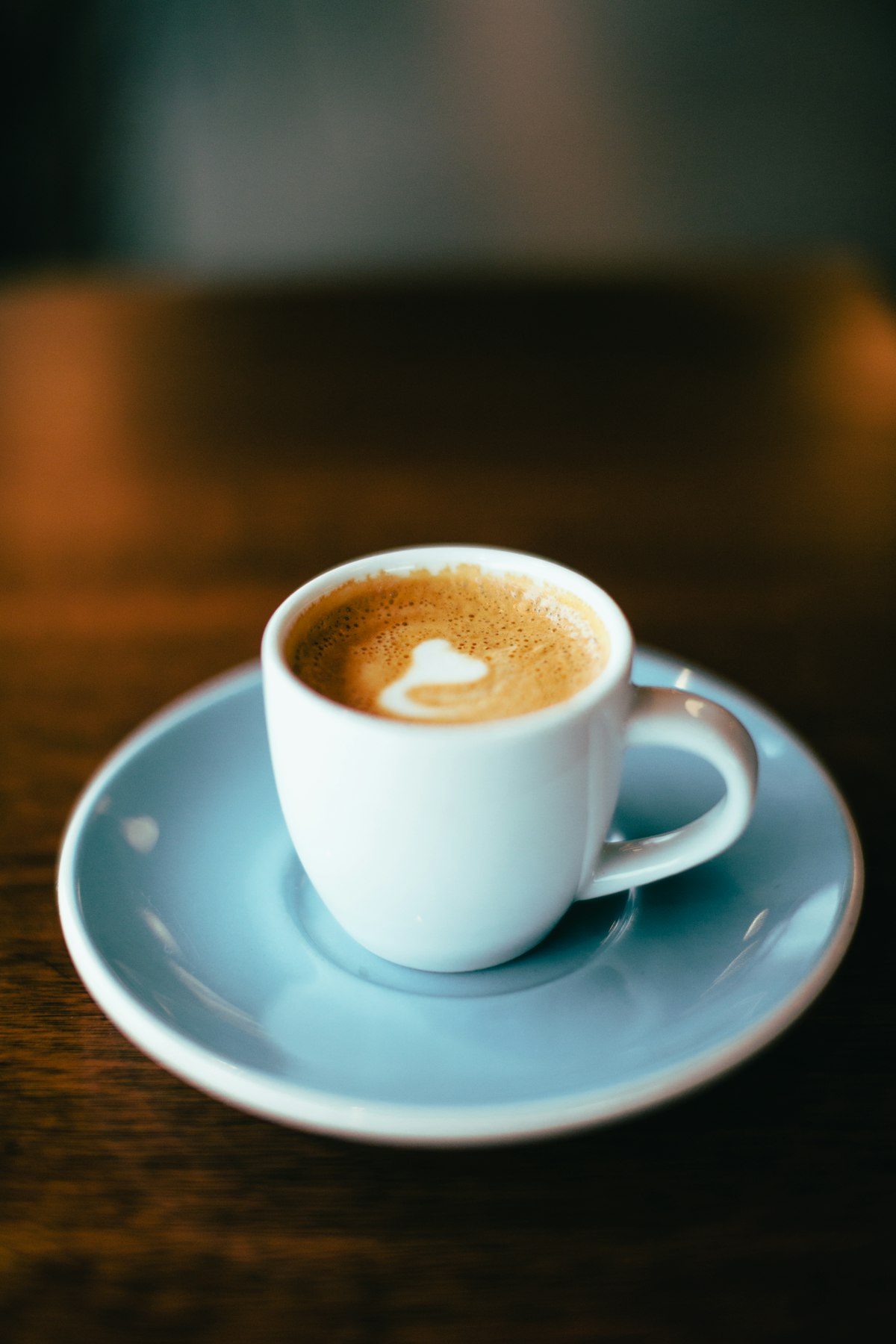
At 3:20 on an ordinary Wednesday you order one latte, drink it at your desk, and by 2 a.m. that same cup is still on duty, roughly fifty milligrams patrolling the exact hours your brain is supposed to be running its deepest cleaning cycle. You didn’t drink an evening coffee. The 3:20 cup just refused to leave on time. I drink coffee every day, before noon, always, and I’m not here to take yours away, because my argument is about the clock, not the cup, and the clock says one afternoon latte pays its interest out of your deep sleep. The full timing system, dinner and hidden sources included, lives in the guide to caffeine timing, the piece I’d hand you first.
Key takeaways
- One afternoon cup leaves a quarter of itself in your blood past midnight, right when deep sleep should be running.
- Caffeine doesn’t give energy, it hides the receipt. The sleepiness was postponed, not paid.
- Falling asleep fast proves nothing. Staying down in deep, unbroken sleep is the actual test.
- The line is bedtime minus eight hours, and one cup moved to lunch usually clears it.
- Two weeks of a boring experiment beats any article, including this one.
The receipt, not the gift
From the moment you wake, your brain starts producing adenosine, a chemical that stacks up hour by hour the entire time you’re awake, and by evening it has grown into the sleepiness bill your body plans to pay overnight. Caffeine doesn’t shrink the bill. It blocks the receptors adenosine needs, so the bill keeps growing somewhere you can’t see it while you feel wide awake. As the book puts it, “the thing it sells you isn’t energy. It’s a loan against tonight.” The loan feels like a gift for exactly as long as the doors stay blocked.
Here’s the part that matters for deep sleep specifically. Deep sleep is when the brain clears out the day’s adenosine backlog, and a night spent circling the shallow end never clears much of it, so you wake with the bill mostly unpaid and reach for the morning cup before your feet touch the floor. The loan rolls over.
The caffeine deep sleep cost of one 4 p.m. cup
Half-life is the number that turns the whole argument from theory into arithmetic, and for a typical adult it runs five to six hours, so a 200-milligram large coffee ordered at 4 p.m. still has about 100 milligrams on board while you wind down at ten, and roughly 50, a quarter of the original cup, still circulating at 2 a.m. Fifty milligrams is not nothing. It’s a respectable cup of tea showing up at the exact hours your sleep is supposed to be deepest and quietest. “Caffeine has a half-life, dinner has a deadline, and both of them are set by your bedtime,” which means the same order placed at noon is a different drink for your night than the one placed at four.
The deepest, quietest sleep is front-loaded, packed into the first half of the night, which is precisely when the last quarter of your afternoon cup is still swimming. The cost isn’t usually a later bedtime. It’s a shallower night that ends in sandpaper mornings, surfacing at 2 or 3 with no obvious cause, and an alarm that finds you pre-exhausted at 6:40. Because the damage happens while you’re unconscious, the cup keeps its perfect alibi for years. The full anatomy of that hidden damage is in the piece on whether afternoon coffee affects sleep. There’s a rollover too, and it compounds: “By Thursday you’re not drinking coffee, you’re servicing debt.” If you want the full hour-by-hour clock, the piece on how caffeine half-life works runs it sip by sip.
Alex and the 4 p.m. latte
Alex is a tax manager with a stress season the way orchards have a harvest, and every afternoon around four he ordered a large latte, extra shot in the bad weeks, empty cup back on the desk inside ten minutes. He fell asleep within minutes of his head hitting the pillow at 11:30, so as far as he could tell, coffee never interfered with his sleep. What he never saw was his nights. He’d surface at 2 or 3, roll over, and wake up feeling like he’d slept in a trench, and for three years he blamed work, including the seven months with no stress season anywhere in sight. Falling asleep fast isn’t the test. Staying down in deep, unbroken sleep is the test, and Alex was acing the wrong one.
He even ran his own experiment once: skip the latte on one frazzled Friday, sleep badly anyway, case closed by Monday. The suspect walked free for three more years. The real fix took two weeks: he moved the latte to 12:30, right after his lunch walk, kept the order otherwise identical, and the first week gave him nothing. The second week the 2 a.m. surfacing stopped. His text to his wife was four words long. It was the latte.
Keep the ritual, move the hour
Here’s the honest selling point of this entire post: you don’t have to drink less coffee, you just have to drink the same coffee at a different hour. The practical move is one boring experiment: set your line at bedtime minus eight hours, ten if your sleep is already thin, hold it every day for two weeks, write down the time of your last dose, and change nothing else. Taper the last few days instead of going cold, because withdrawal is real: a headache and some fatigue that can last two to nine days. A decaf can carry the 4 p.m. ritual without meaningfully touching your midnight. Move it, don’t mourn it. If you want the exact subtraction for your own schedule, the piece on when to stop drinking coffee does the math for every bedtime.
My own line settled at noon after one miserable experiment month, and it has held for years, because it turned out to be the easiest promise in the book to keep. I’d be lying if I said I never eye the espresso menu at 3 p.m. with real grief. I’d rather have the sleep. Both can be true. The book’s whole policy fits in six words: “Early coffee behaves. Late coffee loiters.”
One audit before you blame the latte: the cutoff counts milligrams, not sources, so tea at 4, dark chocolate at 9, and a decaf after dinner can total 50 to 100 milligrams on an evening you’d swear was caffeine-free. The log catches this. Memory never does. The full list of innocent-looking carriers is in the piece on the caffeine hiding in plain sight.
When one cup isn’t the thief at all
Now the honest flaw, because every lever in this book only works on some people. Half-life is an average. Your liver isn’t. The enzyme that clears caffeine runs fast in some people and slow in others, pregnancy roughly doubles the half-life, and smoking roughly halves it, so two colleagues splitting one 3 p.m. pot can be having completely different nights while each swears the other is exaggerating. Some people hold a noon cutoff for a week and feel no different anywhere they can detect, either because their liver clears the stuff fast or because caffeine was never the main thief in their night. A null result is still a result.
There’s a quieter version too: the cutoff works, but the improvement lands in how often the night stays unbroken rather than in how fast it starts, and without a log you can hold a genuine improvement and never see it. The data you didn’t collect feels exactly like no data at all. The first days also carry a tax I’d rather name up front: withdrawal headaches, and an afternoon dip that feels plain and unedited for a week or two before it shrinks. If two honest weeks move nothing, close the notebook and spend the effort on alcohol, light, or the room instead. Sometimes the verdict reads: not your thief.
Frequently asked questions
Does one afternoon cup really damage deep sleep?
Yes, and the mechanism is annoyingly indirect. One cup’s caffeine blocks the adenosine signal all evening, the sleepiness keeps banking in the background, and the shallow, fragmented night that results announces itself at 2 a.m. rather than at bedtime. Falling asleep on schedule is not the same as sleeping deeply.
How much caffeine is left in my blood by midnight?
For a typical adult, half of a 200-milligram coffee ordered at 4 p.m. is still on board by 10 at night, and a quarter, about 50 milligrams, still circulates at 2 a.m., because half-life runs five to six hours. That’s a real dose arriving during the deepest hours of the night. Your own numbers vary with your liver.
I fall asleep fine after coffee, so am I in the clear?
This is the exact trap that kept the afternoon cup innocent for years. Caffeine can lighten and fragment sleep even on nights you drop off without any trouble, so the damage shows up as 2 a.m. surfacing and gritty mornings instead of any struggle at bedtime. The wrong test keeps passing.
What is the latest I can drink one cup and keep deep sleep?
Bedtime minus eight hours is the standard line, ten if your sleep is already thin, so a 10:30 bedtime puts the last cup before 2:30 p.m., and every earlier bedtime moves the line earlier with it. Morning coffee is mostly cleared before the night even starts. Noon is usually safe.
What if I move the cup earlier and notice no difference?
Then you’ve learned something real, and the experiment still worked. Either your liver clears caffeine fast enough that one cup never touched you, or the thief in your night lives somewhere else entirely, in alcohol, light, or the room. Two weeks of logged data tells you which, for free. A null result is a verdict.
That’s the quiet payoff of the whole thing: the decision gets made once, at the cutoff, and after that the afternoons stop being a negotiation. The book’s summary line says it best. “The math is the math. Your bedtime coffee is being served at lunch.” If you want the whole timing system, dinner and hidden sources included, it’s in Sleep, Finally. Pick your bedtime, subtract eight hours, and move the cup once.
This guide is educational, not medical advice. If pregnancy, a heart condition, anxiety, or regular medication is part of your caffeine picture, the right person to help you set your limits is a doctor.