Wind-Down Routines
Do Cooling Pillows Help You Fall Asleep Faster
By Nora Vale · June 8, 2025 · 6 min read
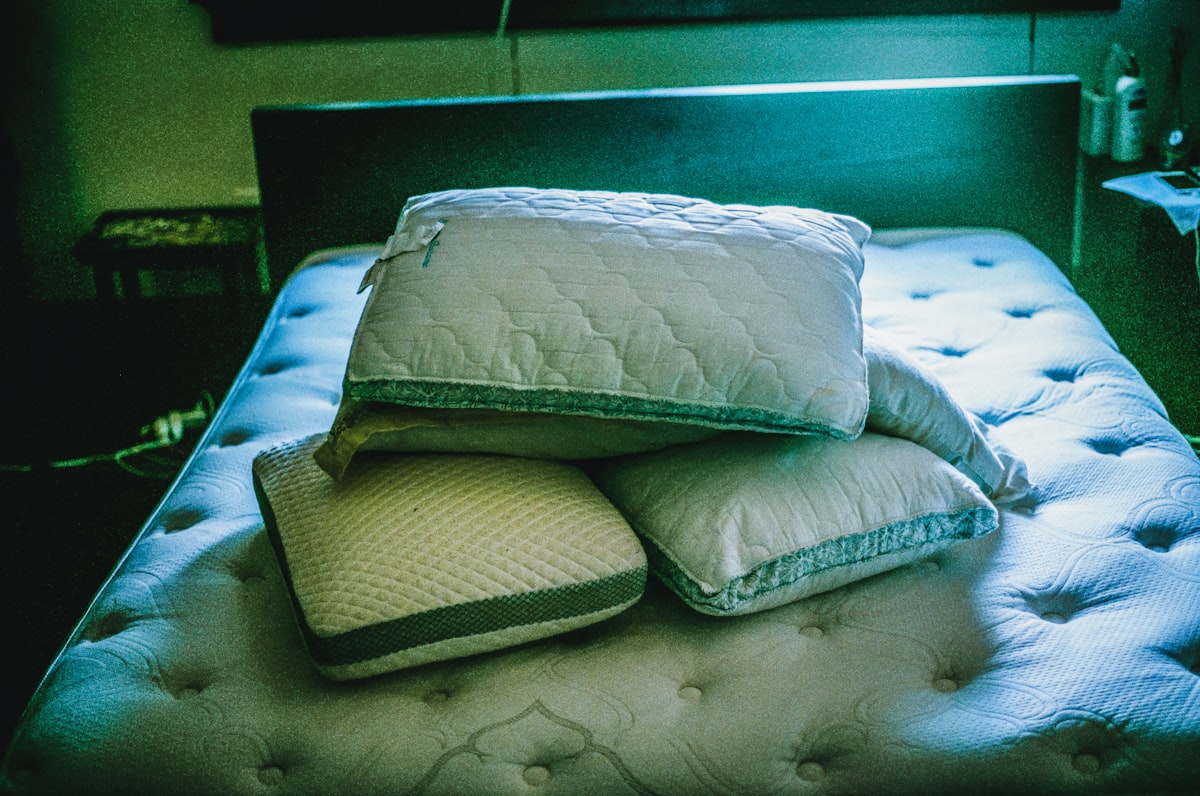
The marketing photo shows a woman sleeping on what appears to be a slab of arctic granite, and the checkout page promises deep sleep for $149. I’ve bought from that page. Twice. So let’s look at the cooling pillow without either the granite or the sneer, because there’s a real mechanism buried under the markup.
The short version: temperature is a genuine sleep lever, the neck is a decent place to pull it, and a cooling pillow can help a specific kind of sleeper. It’s also one of the most oversold products in a category that includes a mattress named after a Scandinavian word. This sits inside the wider evening setup covered in the wind-down routine guide, and here we’ll do the pillow on its own terms.
Key takeaways
- Falling asleep requires your core temperature to drop one to two degrees, so a cooler body is a sleep invitation.
- A cooling pillow works through that mechanism: it pulls heat from the head and neck, where blood runs close to the skin.
- The effect is real but modest, and it only matters in a room that’s already cool.
- The pillow is a gap-filler; the room’s thermostat is the main dial.
- Test temperature cheaply for a week before spending anything.
Why temperature decides the door
To fall asleep, your core temperature needs to drop by roughly one to two degrees Fahrenheit, and that falling signal is part of what tells the brain the night has actually begun. A warm room blocks the drop; a cool room invites it. That’s the whole physics of the category, and it’s why the same product can be a miracle for one person and a coaster for another. It depends on whether temperature was your missing piece.
This is also why the warm shower trick works, which sounds backwards until you see it. Warm water pulls blood out toward your hands and feet, you step out, and your core temperature drops as the heat escapes, and a falling core temperature happens to be one of the body’s oldest sleep signals. Cooling isn’t the enemy of warmth. The drop after the warmth is the signal.
What a cooling pillow can and can’t do
The honest mechanism first. Your head and neck shed heat well, a cooling pillow or a cooling mattress pad gives that heat somewhere to go, and a cooler head makes the whole core-drop slightly easier. For hot sleepers, night-sweat sufferers, and anyone in the menopause stretch who wakes up drenched, that can turn a five-wake night into a two-wake night. People who’ve been through it tell me the difference is real, and I believe them, because I’ve been the person flipping the pillow at 2 a.m. looking for the cold side.
The honest limit: a pillow cools a small patch of a large body. In a 74-degree bedroom it’s a cold spot on a furnace, and no gel weave wins that fight. The commonly cited sweet spot is 65 to 68°F, and the Sleep Foundation’s workable range runs wider, from 60 to 68, which tells you the truth about the number: it’s a starting point, not a law. Get the room into that range first. Then, if your neck still runs hot, the pillow has a job to do. If you sleep cold, skip the category entirely, because you’d be buying a solution to someone else’s problem.
Where it sits in the price league
Here’s the part the checkout page won’t say. The mattress industry would like you to believe the bed is destiny. It isn’t. It’s one dial of four, and the most expensive one, so let’s be skeptical here first. The four dials are light, temperature, the bed, and noise, and temperature’s cheap end is a thermostat and a fan. The sticker isn’t a spec; cooling gels and certified sleep zones are marketing numbers your spine can’t feel.
So the order of operations I’d actually follow: darken the room, drop the thermostat into range, then decide whether your neck still needs help. If it does, a cooling pillow is one of the more defensible buys in the sleep aisle, because the mechanism matches the product. I’d still try the free version first. If the pillow debate keeps turning into a whole-bedroom question, the fuller tour is in best temperature for sleep, and the layering tricks for hot nights live in how to cool a bedroom without air conditioning.
The cheap test to run first
Spend nothing this week except attention. Drop the thermostat two degrees below your usual, or open a window if the season allows, and keep a one-line note each morning: roughly when you fell asleep, how many wakes, how you felt at 7 a.m. Seven days. That’s the entire experiment.
If the notes improve, temperature is your thief, and now a cooling pillow is a targeted fix rather than a hope. If the notes don’t move, the pillow won’t save you either, and your answer lives somewhere else entirely, probably in light or in the last hour of your day. Why you sleep worse in a warm room covers the room side in more depth, and if the heat arrives at 2 a.m. rather than at bedtime, why you wake up hot at night has its own playbook.
One more honest note: if the heat arrives as flashes rather than a warm room, that’s a hormone conversation, not a bedding one, and the fan helps without fully solving it. Bedding can shorten the event. It can’t cancel the chemistry. For that version of the problem, night sweats cooling tips goes deeper on the layering and fabric choices that actually help.
Frequently asked questions
Does a cooling pillow actually help you fall asleep faster?
It can, indirectly. Cooling the head and neck helps your core temperature drop, and that falling signal is part of what tells the brain the night has begun. It’s a real mechanism with a modest effect, not a switch.
What temperature should a bedroom be for a cooling pillow to matter?
A cooling pillow works best in a room already in the 60 to 68 degree range. In a warm room it fights the thermostat and usually loses, because your whole body is the problem, not just your neck.
Are cooling pillows worth the money?
Sometimes. If you run hot at night and the room is already cool, a cooling pillow or pad is a reasonable spend. If the room is warm, the same money does more on a fan or the thermostat.
What’s the cheapest way to test whether cooling helps me?
Cool the room two degrees for a week and keep a simple sleep note. If your nights improve, temperature is your thief, and then a cooling pillow is a sensible upgrade. If nothing changes, it won’t be.
If tonight’s experiment sounds like too much, shrink it: thermostat down two notches, one line on a sticky note each morning, seven days. That’s the whole trial, and it costs less than the shipping on the pillow. The full temperature-and-evening system is in Sleep, Finally.
This guide is educational, not medical advice. If sleep problems persist for months or wreck your days, see a doctor.