Bedroom & Sleep Environment
Do Smart Thermostats Help You Sleep Cooler
By Nora Vale · October 21, 2025 · 7 min read
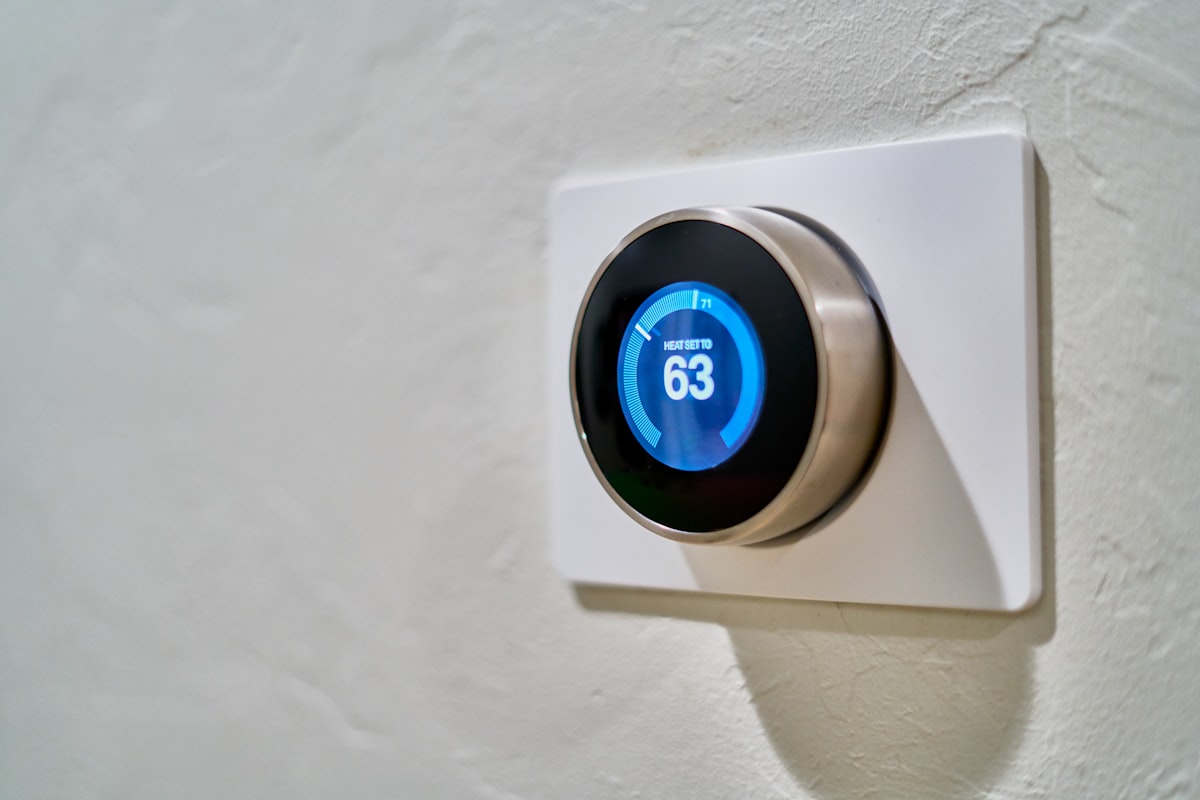
I resisted the smart thermostat for years, partly on principle and partly because the sales page reads like a gadget catalog wrote my bedtime. Then a heat wave arrived in September, my building’s heat kicked on in October, and I learned the difference between owning a dial and aiming it. So, do smart thermostats help you sleep cooler? The honest answer starts with the temperature dial itself, because that is the part doing the work. The full room system lives in my bedroom sleep environment guide.
Key takeaways
- The biology is real: core temperature must drop one to two degrees for sleep onset, and a cool room invites that drop while a warm room blocks it.
- The workable range is 60 to 68 degrees, with 65 to 68 as the commonly cited starting point.
- The pre-cool before bed is the feature that matters, because timing is what a manual dial is bad at.
- Try the free version first: one week manual, everything else constant, seven-day log.
- A thermostat is one dial of four, and the most expensive one, which is exactly why skepticism belongs here first.
The temperature dial, plainly
Start with what the room is actually for. “Temperature works backward from what you’d guess. To fall asleep, your core temperature needs to drop by roughly one to two degrees Fahrenheit, and that falling signal is part of what tells the brain the night has actually begun. A warm room blocks the drop; a cool room invites it.” That is the entire case for sleeping cool, and it explains why the bedroom you find cozy at nine is the one arguing with you at eleven.
“The commonly cited sweet spot is 65 to 68°F, and the Sleep Foundation’s workable range runs wider, from 60 to 68, which tells you the truth about the number: it’s a starting point, not a law.” Some people run cold and can experiment upward rather than shivering through a rule. The number that matters is the one your own log produces, and the experiment to find it costs nothing: a couple of degrees cooler, everything else held constant, seven nights of notes.
This is also why a warm shower an hour or two before bed works, which sounds backwards until you see the mechanism: the cooling afterward is the signal, and the shower trips it. Does a warm shower before bed help has that story in full.
What the smart version actually adds
Here is where I give the gadget its due, narrowly. A manual thermostat can hold any temperature you want. What it is bad at is timing, and timing is where sleep lives. The useful smart schedule looks like this: the bedroom starts cooling forty-five minutes before your usual bedtime, holds the cool range through the night, and lets the rest of the house stay at whatever the rest of the house wants. Nobody pre-cools a hallway at ten o’clock by hand every night. A schedule does it while you are doing the dishes.
The second honest win is the heating season, because most furnaces kick on before dawn, and “if your heat runs on a timer that kicks in before dawn, the sudden warmth can surface you right when sleep is lightest.” A smart schedule that holds the furnace back until the alarm goes off fixes the 5:40 wake-up that nobody connects to the boiler. I had that wake-up for two Octobers and blamed my body clock. It was the building.
The third win is couples, sort of. The thermostat cannot give two bodies one temperature, and “the workable compromise is per-side bedding: a lighter duvet on one side, a heavier one on the other, so two people get two climates four inches apart.” The smart part ends the thermostat war by removing the negotiation, but the duvet does the actual diplomacy.
The cheap version, tried first
Before any purchase, run the free experiment, because it settles whether the dial is your problem at all. Set the bedroom a couple of degrees cooler than usual, keep everything else the same, and “look at the seven-day log in Appendix B and see what happened to the time it took you to fall asleep. That’s the whole experiment, and it beats any chart on the internet.” If nothing improves, the thermostat upgrade is buying you a smaller heating bill and a nicer app, which are real things but not sleep things.
If cooler nights help, the bedding system is the next rung, and it delivers most of what the gadget promises. “Layering beats one heavy thing. A duvet and the room temperature are one system, and a heavier duvet widens the range of room temperatures you can sleep through comfortably.” Layers let you adjust at 2 a.m. without properly waking. Kick one leg out. That counts as climate control, and it costs nothing.
Fans earn their place twice over, moving air across the room and laying down a steady sound that pays off again on the noise dial. Dorm room sleep covers the whole low-budget room kit, and it applies to apartments with landlord-controlled heat just as well.
Who actually benefits from the upgrade
The honest buyer profile is short. You benefit if your heat or cooling runs on a fixed schedule that fights your bedtime, because reprogramming the war manually every day is a habit nobody keeps. You benefit if the household thermostat lives in a hallway nobody agrees on, and a bedroom-targeted schedule ends the argument. You benefit if you have already run the free experiment, confirmed the dial matters for your sleep, and want the pre-cool to happen without you.
You do not benefit if the bedroom’s real problem is light leaking through thin curtains, a phone on the nightstand, or a mind that will not close its tabs, because the thermostat is “one dial of four, and the most expensive one, so let’s be skeptical here first.” A perfectly cooled room with a glowing router and a 3 p.m. energy drink is a nicer place to lie awake in.
One honest flaw from my own setup: the schedule cannot read a heat wave. It held the bedtime pre-cool faithfully through the September spike and left me staring at a ceiling until I remembered the room is a system, not an app, and opened the window.
The verdict
So, do smart thermostats help you sleep cooler? The cooling helps. The smart helps with timing, which manual dials handle badly, and with furnace schedules that surface you before the alarm. The gadget is worth it for people whose heating schedule fights their bedtime and pointless for people whose real thieves live elsewhere. Run the free week, fix the bedding, and let the log decide, not the sales page.
“So the room is necessary, not sufficient. It sets the floor, and the rest of the book builds on that floor.” Temperature is one plank of that floor, and a well-aimed one. The full four-dial system, worksheets and all, is in Sleep, Finally.
Frequently asked questions
Do smart thermostats help you sleep cooler?
They can, because the dial they automate is a real one: your core temperature needs to drop one to two degrees for sleep onset, and a bedroom in the 60 to 68 range invites that drop. A schedule that cools the bedroom before your bedtime works with biology. What the thermostat cannot do is replace the other three room dials or the habits upstream.
What temperature should the bedroom be for sleep?
The commonly cited sweet spot is 65 to 68 degrees Fahrenheit, with a workable range from 60 to 68. It is a starting point, not a law, and the cheap way to find your own number is a one-week experiment a couple of degrees cooler with everything else held constant.
What should I try before buying a smart thermostat?
Set the regular thermostat down manually for a week and keep the seven-day log. If cooler air improves your nights, the upgrade question becomes real. Bedding layers, a fan, and a cracked window deliver most of the cooling a bedroom needs at a fraction of the price.
What does a smart thermostat add over a manual one?
Timing and consistency: a schedule that pre-cools the bedroom before bed, warms it after the alarm, and holds the pattern across the week without you touching it. If you already adjust the dial reliably, the smart version buys convenience, not new biology.
This guide is educational, not medical advice. If sleep trouble persists most nights for three months or more, that pattern has a name and a treatment, and a doctor is the right door.