Bedroom & Sleep Environment
Does Bedroom Clutter Affect Sleep Quality
By Nora Vale · August 10, 2025 · 7 min read
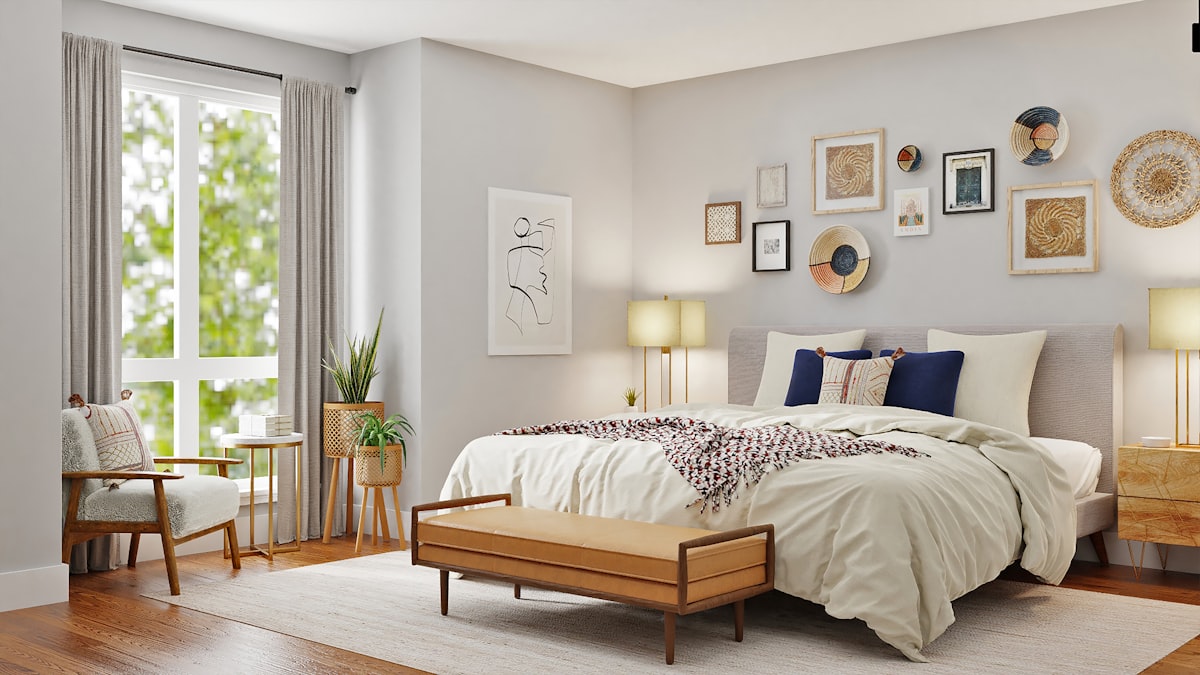
Your laundry chair has been staring at you for three weeks, and you have started to wonder if it is why you sleep badly. Half right, and the half that is right is not the one the organizing videos sell. Bedroom clutter does affect sleep, but the mechanism is meaning, not mess, and that distinction changes what you clean first. This post sorts the real from the imagined, with the framing from the bedroom sleep environment guide.
Key takeaways
- Clutter affects sleep mainly through what the room means, not through how it photographs.
- A bed that means email, chores, and episodes stops meaning sleep, and the brain treats lying down as a question.
- One weekend of removing out-of-place jobs beats months of surface tidying.
- The useful bedroom is boring and cheap, not minimalist or expensive.
- A perfect room can still coexist with a bad night. The room sets the floor, not the whole house.
Bedroom clutter and the brain’s question at 11 p.m.
Start with what your brain is actually doing when the lights go out. It reads the room for context, and context is history: every association the bed has accumulated, every hour of email from under the duvet, every folded-towel session, every episode that autoplayed past midnight. When a room honors the expectations of dark, cool, and quiet, falling asleep is mostly automatic; when the room breaks them, your brain spends the night half-dressed for a party nobody invited it to.
That is the honest mechanism. Not a feng shui energy field. A learning problem. Priya’s bedroom was working three jobs: the desk held her work laptop, a drying rack stood in the corner, and most nights she watched television from under the duvet. So the bed meant email, chores, and episodes, and her brain had no idea which one it was being asked to do at 11 p.m.
The clutter that matters and the clutter that doesn’t
Here is the sorting rule that saves you a weekend of pointless organizing. Clutter with a job attached is the problem. Clutter that is just stuff is mostly harmless. The stack of unread novels on the dresser does nothing to your sleep. The work laptop does, because it drags an entire inbox into the one room whose only job was sleep.
So the first target is not the visible mess. It is anything in the room that belongs to a different room: the desk that arrived during a deadline two years earlier and never left, the drying rack, the television habit, the pile of tomorrow’s errands on the bed itself. Surface tidying rearranges the harmless stuff while the loaded stuff keeps filing reports. Fix the résumé, not the dust.
The weekend that beats the month of tidying
Priya’s change happened on a weekend, not a Monday, which she swore mattered. She moved the drying rack to the bathroom, shifted the desk to the living room wall, and gave the television one rule: if she wanted it at night, she watched it on the couch, and the laptop stopped coming to bed entirely. Nothing was bought. Nothing was installed.
The first few nights the bed felt oddly plain to her, like a hotel room with no luggage. Within about a week she was falling asleep faster, and the reason isn’t mystical: the bed started meaning one thing again, so lying down in it became a cue instead of a question. That same mechanism runs the middle-of-the-night version of the problem, covered in what is stimulus control, where the rule is blunter: the bed is for sleeping, and everything else in your life has somewhere better to happen.
Why the useful bedroom is boring, not minimal
The decluttering industry sells a photograph: white walls, one plant, a bed made like a magazine. That is not the standard, and chasing it wastes money and weekends. The useful version of a bedroom is boring and cheap, the same way a good evening routine is boring and cheap, and for the same reason: biology doesn’t care what looks good; it cares what’s true.
So the goal is not fewer objects. It is fewer jobs. A bedroom can have a laundry basket, a dog bed, and a shelf of paperbacks and still be a perfectly honest sleep room. What it cannot have is a second career. If you want the cheap dials ranked by effort, the tape-and-thermostat version is in how to blackout a bedroom without drilling, and the four dials in full are in the guide above.
The one-bedroom caveat: what decluttering can’t do
Here is the honest flaw, and it stings. The winter I fixed my room, I taped every light, hung the foil, dropped the thermostat, and bought the pillow that finally matched my shoulder. And some nights I still lay there, wide awake, doing math on the ceiling. The room had stopped arguing, and I was still up, because the 4 p.m. coffee, the 9 p.m. wine, and a mind that wouldn’t close its tabs were doing the arguing instead.
So the room is necessary, not sufficient. It sets the floor, and the rest of the book builds on that floor. If you clear every out-of-place job and sleep badly for weeks on end, that isn’t failure and it isn’t proof the room didn’t matter. It is data pointing somewhere else, most likely at your days. The stress version of that argument is in how stress affects sleep, and it is worth reading before you blame the furniture.
And one more honest boundary. Moving the desk does not fix a habit by itself. If the laptop comes back for one busy week, that one reasonable addition is how the room gets its second career back. The fix is the rule, not the single removal.
Frequently asked questions
Does bedroom clutter really affect sleep quality?
It does, mainly through meaning. A bedroom that doubles as an office, a laundry room, and a cinema teaches your brain that the bed is a question instead of a cue, and the brain spends the night unsure what it is being asked to do. Rooms teach, and a room with too many jobs teaches confusion.
Do I need a minimalist bedroom to sleep well?
No. The useful bedroom is boring and cheap, not photogenic. What matters is what the bed is used for, not how many objects exist. A stack of books is harmless; a work laptop in the bed is not. Aim for fewer jobs, not fewer things.
What is the first thing to remove from a cluttered bedroom?
Anything with a job that belongs somewhere else. The work laptop, the drying rack, the television watched from under the duvet. Priya’s weekend of moving furniture beat months of tidying because the problem was the room’s résumé, and the résumé is where the fix belongs.
Can a perfectly decluttered room still leave me sleepless?
Yes. The room is necessary, not sufficient. It sets the floor, and a late coffee, a nightcap, or an unquiet mind can still fill the night with arguing. Do the room because it is cheap and it helps, and treat leftover sleeplessness as data pointing at your days rather than your furniture.
If you want the whole room system, four dials and a twelve-dollar travel kit, it is in Sleep, Finally. Tonight’s version is moving one object that doesn’t belong.
This guide is educational, not medical advice. If poor sleep persists most nights for months, take it to a doctor.