Social Jet Lag & Weekends
How to Wake Up Without an Alarm (For Real)
By Nora Vale · April 4, 2026 · 8 min read
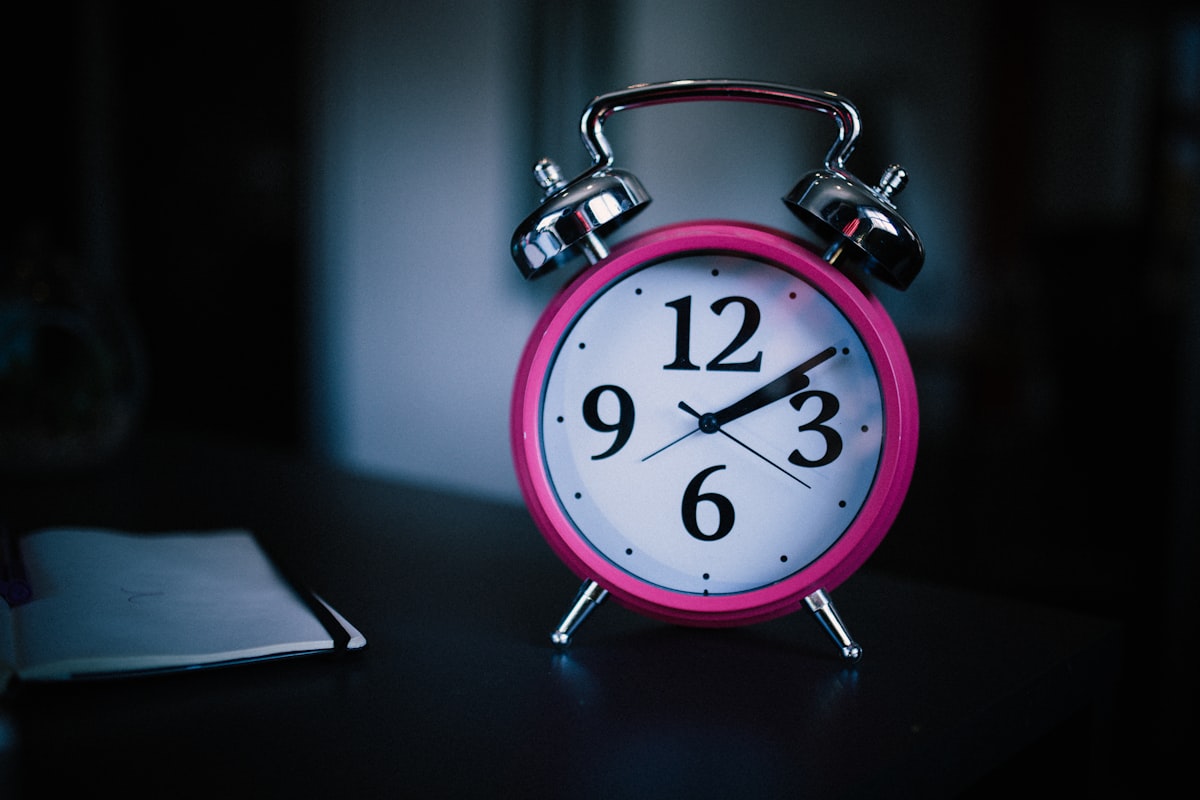
I believed for years that waking without an alarm was a personality trait, the way being a morning person was a personality trait, and that I simply hadn’t been issued one. Then I learned what the alarm-free mornings actually are: not willpower, not virtue, but a circadian clock that has been told the same story enough mornings in a row that it starts anticipating the ending. The book describes the reward side of this, and also the debt side, the part where the alarm rings into what feels like “a head full of wet sand” because the weekend silently renegotiated the schedule.
Here’s the honest version of how to wake up without an alarm, and it starts somewhere unglamorous: with one fixed wake time, held within about an hour, seven days a week. The book’s phrasing is exact: “Pick one wake time. Keep it within about an hour, seven days a week, including Saturdays, including holidays.”
Key takeaways
- Natural waking is trained, not gifted: a fixed wake time lets the clock anticipate the morning.
- Morning light soon after rising is the strongest teaching signal your clock accepts.
- Enough sleep is a precondition; no method wakes you pleasantly from a genuine deficit.
- Weekend drift within an hour keeps the training alive; three-to-four-hour drifts erase it.
- Keeping a quiet alarm as insurance is fine. If you beat it regularly, it’s already a formality.
Why the clock can learn to do this
Your body runs a preparation sequence before any predictable morning. Body temperature rises, cortisol pulses, alertness chemistry switches on, all in anticipation of the wake time it has come to expect. This is why you sometimes wake a few minutes before an alarm you never told your body about. The clock isn’t reading the device. It read the pattern and did the math.
That anticipation only forms around consistency. Harvard’s time-isolation research, where volunteers lived cut off from clocks and daylight, found internal days of about 24.2 hours, meaning your clock naturally drifts late and relies on morning light to be pulled back into a stable schedule. Give it a fixed wake and a fixed dose of light, and it converges on the schedule. Give it a weekday time and a weekend time, and it converges on nothing, which is why every free morning becomes a lottery and every workday morning a robbery. The book’s line for the collision is “Three time zones east, no airport, and a meeting at nine.”
The second precondition is sleep sufficiency, and no schedule tricks get around it. An alarm-free morning from a body that needs more sleep than it’s getting isn’t discipline; it’s deprivation with better marketing. The National Sleep Foundation’s seven-to-nine hours for most adults is the floor the whole experiment stands on.
The method, in four unglamorous steps
Step one: pick the wake time, and pick it based on when your life actually starts, not on an idealized version of yourself. If you must be functional at 7:30, a 6:30 anchor is realistic and a 5:00 one is a countdown to quitting. The book confesses its own rigid 6:00 experiment lasted seventeen days before collapsing, while the looser 6:45 version with a weekend window outlived the house it started in.
Step two: get light soon after waking, outdoors if possible, ten to fifteen minutes, gray skies welcome because overcast daylight still dwarfs indoor lighting. This is the biological half of the training, the signal that tells your clock when the day officially begins. A walk to get coffee counts. Standing on a balcony counts. The book’s version of the morning anchor includes exactly this, calling the Saturday version the cheapest, least dramatic thing you’ll do all weekend.
Step three: let bedtime take care of itself for a few weeks. This is the part nobody believes until it happens. Sleep pressure builds from the moment you wake at the fixed time, so evening sleepiness starts arriving earlier on its own, and one 9:30 bedtime has done more for my Mondays than any sleep-in ever did. Forcing bedtime while ignoring the wake time is building the roof before the walls.
Step four: protect the window on weekends. Up to an hour past your weekday time is not a failure, because “inside that window, the sleep-in is medicine. Take it without guilt.” The training survives ninety minutes of slack. It does not survive a weekend that drifts to ten.
What it looked like when it finally worked
My own version took about three weeks to show its face, and the evidence arrived on an ordinary Saturday: I woke at 7:10 with no alarm, felt like a person, and didn’t recognize the experience enough to trust it. The tell kept repeating, which is the actual definition of a trained clock. Weeks later, on a night I’d stayed up late, the debt paid itself around 10:30 the next evening with a yawn that arrived like an appointment, no alarm negotiation involved.
The book tells a better version with Greg, a freelance designer who wore ten alarm-free years as a credential and still had mornings that leaked: some days six focused hours, other days nothing until two. His rebuild wasn’t a routine, it was a single rule, alarm at seven every day, weekends included. He says the alarm felt like the cage and turned out to be the floor. The day could still go anywhere, it just had to start somewhere. And the punchline of his story is that he ended up sleeping more total hours, not fewer, because a stable rhythm stopped wasting nights.
The honest limits
Some alarms should stay. If your household includes small children, they set the wake time, and the anchor is whatever they permit. If your schedule rotates across shifts, no fixed morning exists to train, and the tools live somewhere else entirely, closer to what social jet lag is for the damage model than to any alarm-free utopia. And if you consistently wake exhausted despite adequate hours on a stable schedule, that’s worth a doctor’s attention rather than another app.
There’s also an honesty clause about the goal itself. Waking without an alarm is not morally superior to waking with one, and the book is pointed that these morning decisions are nobody’s business but yours. Plenty of people with beautifully trained clocks keep a quiet alarm forever as insurance. If you find yourself surfacing before it rings, the sound has already become a formality, and whether you keep it is a furniture question, not a character one.
Frequently asked questions
Can most people actually wake up without an alarm?
Yes, given two conditions: a roughly fixed wake time and enough total sleep. The body runs an anticipation sequence before any predictable morning, raising temperature and alertness in advance. Irregular schedules and short nights break the conditions, and the body gets the blame.
How long does the training take?
Most people wake within minutes of their usual time on free mornings after two to four weeks of consistency. The first week feels like nothing special. The proof is a weekend morning when you surface near your weekday time without being asked.
Do I have to give up sleeping in on weekends?
No. Staying within about an hour of your weekday wake time keeps the training intact, and inside that window the book says take the sleep-in without guilt. Three-to-four-hour weekend drifts are what erase the training, not ninety-minute ones.
What role does light actually play?
It’s the strongest input your clock accepts and the main teaching signal. Ten to fifteen minutes outdoors soon after waking, even under gray skies, does the job, because overcast daylight still dwarfs indoor lighting. A coffee walk counts.
Is waking without an alarm even the goal?
The real goal is a schedule stable enough that the alarm becomes a formality. Plenty of trained clocks keep a quiet alarm as insurance forever. If you beat it regularly, the system already works and keeping the sound is a furniture decision.
The book behind this site treats all of this with more patience than a blog post can, and you can get it here.
This guide is educational, not medical advice. If sleep problems persist for months or wreck your days, a doctor is the right door.