Exercise, Naps & Sleep
Walking for Better Sleep: The Tool Nobody Sells
By Nora Vale · May 18, 2026 · 7 min read
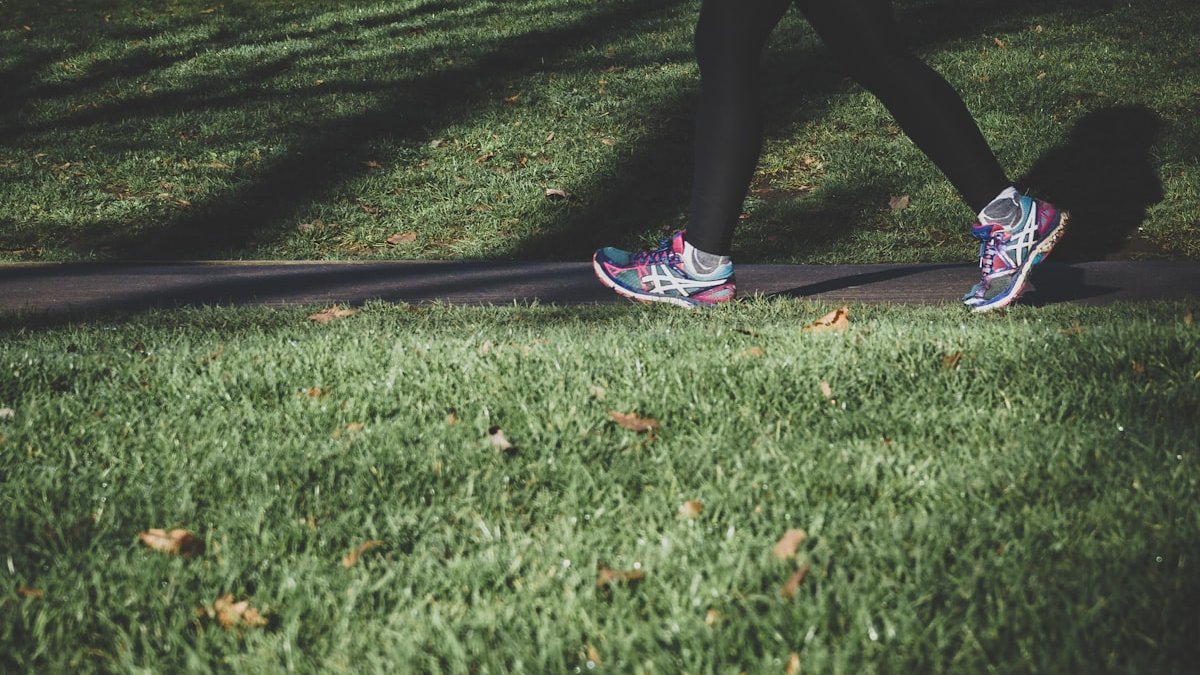
The most effective sleep tool I own costs nothing, fits no box, and can’t be charged monthly, which is exactly why nobody sells it to you. It’s walking. Forty minutes most mornings, twenty on the days life tangles, and it was the thing that finally gave my nights edges back after a year of lying in the dark admiring my own exhaustion. If you’ve been circling the question of walking for better sleep and wondering whether something that ordinary can really be the answer, I understand the suspicion. I had it too.
The mechanism has a name, sleep pressure, and the short version is that walking fills the tank your night drains. The full case for movement lives in my exercise and sleep guide. This post stays on walking specifically: why it works, how much of it the night actually asks for, and where the honest limits sit.
Key takeaways
- Sleep is paid for with sleep pressure, which builds while you’re awake and builds faster when your body moves.
- A day of pure sitting leaves you drained rather than spent, which feels like rest and functions like a deficit.
- Thirty to forty minutes of walking most days is the target, and ten minutes is the honest minimum.
- The National Sleep Foundation surveys found even light activity beats sitting still for sleep.
- Expect the first changes around week two. Night one proves nothing.
The tired that doesn’t pay for sleep
There are two kinds of tired, and your night can tell them apart even when your day didn’t. One is a worked muscle, spent and ready for repair. The other is a drained battery, standby tired, the kind that lies there buzzing while the ceiling gets inspected for flaws it never finds. The book I built this method from spent its worst sleep year in the second kind: a job that paid more and asked exactly one thing, sitting, in cars and chairs and on couches. “Exhausted like a drained battery rather than a worked muscle,” and the difference matters more than it sounds.
The mechanism underneath is sleep pressure. It’s the drowsy fuel that builds in your brain every hour you’re awake, faster when your body actually does things, and it drains while you sleep. Movement raises the fill rate. Sitting all day throttles it. A body that spent nothing by evening has nothing to pay sleep with, and lying down with a full tank of awake and an empty tank of spent produces exactly the restless night you’d predict.
This is why the answer is so unexciting. Walking doesn’t target sleep the way a supplement claims to. It manufactures the currency your night is denominated in.
What the research says about walking and sleep
The findings here are more consistent than almost anything else in sleep advice, which is rare enough to mention. The National Sleep Foundation’s Sleep in America surveys found vigorous exercisers roughly twice as likely to say they rarely or never had trouble sleeping. The headline is exercise. The fine print is the part that matters for walking: light activity also beat sitting still, and moderate activity closed most of the remaining gap. The real dividing line isn’t between casual walkers and serious athletes. It’s between moving and not moving.
Johns Hopkins Medicine puts a number on the moderate end: even thirty minutes of aerobic movement improves how you sleep that same night. Not after twelve weeks of training. That night. A brisk walk is that definition exactly, which makes walking the cheapest way to buy the finding, and the effect compounds when you repeat it, because a boring walk kept for a month beats a heroic workout abandoned by Thursday.
The biggest jump available, by the book’s account and the surveys agree, is from nothing to something. If your current baseline is a chair with occasional intervals, the walk doesn’t need to be impressive to change things. It needs to happen.
How much walking the night actually asks for
The dose is ordinary, and I’d rather give you the ordinary version than the aspirational one.
- Thirty to forty minutes on most days. That’s the target, split into two shorter walks if the day won’t hand you a single block. Ten minutes is the minimum honest dose on the days life wins, and stairs, groceries from the far end of the lot, and a loop after dinner all count as movement even though none of it looks like training.
- Pick the slot your life already owns. Lunch, morning, after dinner. The hour you’ll keep beats the theoretically perfect one, and the post on the best time to exercise for sleep takes apart the timing question properly.
- Staple it to an anchor, not to motivation. The walk after dinner survives because dinner happens every day. Motivation is a terrible scheduler, and the weeks I relied on mine are exactly the weeks the walk didn’t happen.
- Judge it at two weeks with a log. Bedtime, wake-ups, nothing fancier. The research finds sleep improvements within the first weeks of a new routine, so two nights is a verdict on your impatience, not the method.
That’s the whole program. No tracker, no streak, no version of you that owns trail shoes. The book’s line on this is the one I keep repeating to myself on cold mornings: your sleep responds to the doing, not the finishing.
What it looked like for Dave, and for me
Dave is a data analyst, which is a polite way of saying his body lives folded into a chair, and every afternoon around two forty his eyes went to sandpaper. He assumed he needed stronger coffee. What he mostly needed was to stop sitting, so a colleague dared him into a twenty-minute lunchtime walk around the parking lot’s most boring loop, phone left on the desk. The second week the wall softened into a slope. By the third week the walk had become automatic, and the part he didn’t expect was the night: same bedtime, same everything else, but he slept harder on the days he’d walked.
My version was even less photogenic. The worst sleep year of my life was also my most sedentary, and the intervention was a morning walk with nothing smart about it, forty minutes when I could get them, twenty when I couldn’t. Within about two weeks I was falling asleep before the chapter ended again. I’ve been suspicious of sleep advice that requires equipment ever since, and the post on whether exercise helps you sleep follows the wider evidence if you want the full survey.
The honest limits
Two things worth saying before you lace up, because a post without its limits smells like an ad. First, walking is a foundation, not a cure, and it won’t carry the worst nights on its own. The anxious ones, the 2 a.m. meeting-reel ones, need the other tools in this site alongside the movement, and pretending a walk fixes insomnia would be the kind of overselling that makes people quit when it doesn’t.
Second, more is not endlessly better. Chronic overtraining can push sleep the wrong way, and while walking sits far from that line, stacking hard training sessions six days a week can cross it. The dose that helps is the dose a normal week can carry. And if your days are built around a sleep rebuild rather than ordinary life, the naps question changes too, which the post on how long naps should be covers.
Frequently asked questions
Does walking actually improve sleep?
It does, and walking is the version of the evidence I’d bet on. Light activity beat sitting still in the National Sleep Foundation surveys, and thirty minutes of moderate movement improves sleep that same night per Johns Hopkins Medicine. Your sleep doesn’t check your outfit.
How long should I walk for better sleep?
Thirty to forty minutes most days, ten on the tangled ones. Two shorter walks count the same as one long one, and the post on walking versus the morning light version explains when timing adds a second benefit on top.
What’s the best time of day to walk for sleep?
The slot you’ll actually keep. Morning walks add a body-clock benefit through light, evening walks spend leftover restlessness and help digestion, and both beat the walk that never happens because its ideal time didn’t arrive.
Why am I tired all day but wide awake at night?
Often because the day produced drained rather than spent. Sitting generates a battery-shaped tired that feels like rest and pays nothing at bedtime, while movement builds the sleep pressure your night is waiting to collect.
How long until walks change my sleep?
First changes around week two, fuller effect after a month of repetition. Log bedtime and wake-ups so the comparison is week against week, because night against night hides a change this gradual.
The best sleep I’ve had in years started with a walk nobody would have photographed. Start smaller than feels meaningful, repeat it more often than feels inspiring, and let week two deliver the verdict.
This guide is educational, not medical advice. If sleep problems persist most nights for three months or more, a doctor is the right door.