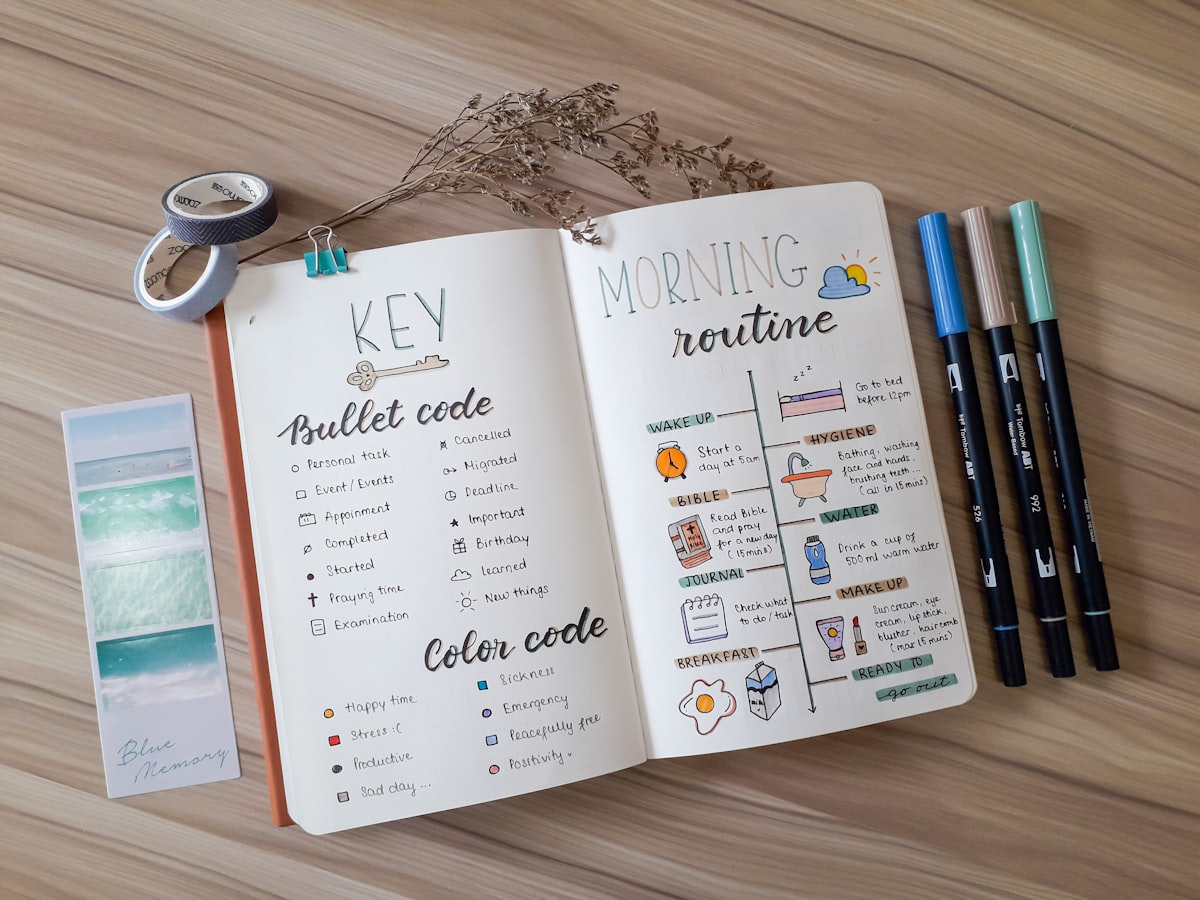
Wind-Down Routines
what to do when you miss your bedtime
By Nora Vale · May 5, 2025 · 7 min read

The notification on my phone says 11:52, and I’m still in the kitchen with the big lights on, tidying up a day that refuses to end. Bedtime was at ten. The wind-down I preach didn’t happen, and now there’s a decision to make about what happens in the next hour. Here’s the version I’ve settled on after years of missing bedtimes and mishandling most of them: the missed bedtime matters far less than what you do next.
This whole site runs on the idea that the last hour of the day is the part you control most completely, and the full system lives in the wind-down routine guide. But a system you can only run on perfect nights isn’t a system. It’s a hobby. Nights go sideways, and the recovery is a skill of its own.
Key takeaways
- A missed bedtime is a data point, not a verdict. One late night costs you a single groggy morning.
- The worst recovery move is the long lie-in, which shifts your body clock and books another rough night.
- Run the five-minute version of your routine no matter how late you arrive. The shape still counts.
- Keep the wake time fixed the next morning, get some daylight, and skip the rescue coffee at noon.
- Never let one skipped night quietly become a skipped week.
First, refuse the guilt spiral
The internal monologue after a missed bedtime tends to run like this: the routine is broken, the week is broken, sleep is clearly something that happens to other people. I’ve run that monologue enough times to know it costs more than the late night did. One night of late lights-out, in a body with an ordinary sleep pressure system, produces one shallow night and one tired day. That’s the entire invoice.
The routine doesn’t need your perfection. It needs your attendance, and the gap between those two words is where most sleep advice quietly falls apart. You missed a night. The tally mark for the week is still seven chances, and you showed up to six. That’s not failure, that’s most weeks.
Run the five-minute version anyway
This is the move that matters most, and it’s the one people skip, because walking in at midnight makes any routine feel absurd. Do it anyway, shrunken. Lights down low. Ten slow breaths while the toothbrush does its work. Phone docked somewhere that isn’t the bedroom. That’s the whole thing, and it takes five minutes.
The point was never the activities. The point is the sequence, the little trail of breadcrumbs your body learns to follow toward the bedroom. A late-night arrival that still runs the shape teaches your body the sequence holds on bad nights too. An arrival that collapses straight into bed with the lights blazing teaches it that the sequence is optional, and the body believes what it’s shown. “You can’t switch a brain off like a lamp, but you can walk it down, and the walk can be short, dull, and repeated.” Short and dull is exactly right for tonight.
Protect tomorrow morning, not tonight
Here’s the trade that took me years to see clearly. The night is already set. What’s still negotiable is tomorrow, and tomorrow decides whether this becomes one rough day or a rough week. The rules are boring and none of them are heroic:
- Up at the ordinary time, even though staying horizontal until eleven feels like medicine. It isn’t. A three-hour lie-in works on your body clock like a time-zone change, and you’ll pay for it at the end of the week.
- Daylight within the first hour or two, even ten minutes on a sidewalk. Light in the morning is what keeps the clock from sliding later, which matters double after a late night. The full case is in the morning light guide.
- No rescue fourth coffee at noon. The caffeine cutoff matters more after a short night, because afternoon caffeine steals from tomorrow night too. There’s a whole breakdown of how long before bed you should stop drinking coffee.
- Bedtime at the ordinary hour, not an 8:30 retreat. Go early and you’ll lie awake doing arithmetic, which is its own special misery.
The dread always quotes a worse day than the one that actually shows up. You’ll be more tired than usual. You’ll also be functional, and the night after tends to run deeper and heavier than normal, because sleep pressure is doing exactly what it evolved to do.
When missing bedtime becomes the pattern
Now the honest part. If you walk in late most nights, the problem isn’t the bedtime, it’s the shape of the evening, and no five-minute version will outrun an evening that has no shape at all. Look at what’s actually eating the last hour. Work email that follows you home. A household that only gets your attention after nine. A feed that turns thirty intended minutes into ninety.
The fix is usually moving one thing earlier rather than adding anything new. Tomorrow’s clothes over the chair and the first three tasks on a scrap of paper close loops before ten. The phone charging in the kitchen removes the single biggest source of quiet drift, and the reasoning is in should I charge my phone outside the bedroom. And when the day itself leaves you wound up, the deeper fix is learning how to decompress after work instead of bringing the day to bed intact.
A pattern of late nights paired with lying awake once you get there points at arousal, not just scheduling, and how to stop overthinking at night covers the toolkit for that. Start with one change, not five. The routine you actually repeat wins, and that’s as true for recovering a missed bedtime as it is for building the whole thing in the first place.
What I’d skip
A quick honest list of things that never helped me. Going to bed dramatically early the next night to “catch up,” which mostly produced ceiling math. Beating myself up with a tracking app after one bad night. Buying anything. The system costs zero dollars, and the recovery from a missed bedtime costs even less, because it’s mostly a matter of refusing three tempting moves: the lie-in, the rescue coffee, and the 8:30 bedtime retreat.
If tonight got away from you, the recovery fits in one paragraph. Finish the day with lights low and the phone out of the bedroom. Tomorrow, up on time, daylight early, coffee before noon, ordinary bedtime. Then run the routine again the following night like nothing happened, because nothing did.
Frequently asked questions
Should I go to bed earlier the night after a missed bedtime?
No. Keep your ordinary bedtime. The body collects the missed sleep on its own through deeper sleep, and going to bed unusually early just teaches your brain that bedtime is negotiable.
Is it better to sleep in or keep my wake time after a late night?
Keep the wake time. A long lie-in feels like repayment but works like a time-zone change, shifting your body clock and booking another rough night within days.
How late is too late to start my wind-down routine?
There is no cutoff worth honoring. If you walk in at midnight, run the five-minute version: lights low, ten slow breaths, phone out of the bedroom. The shape still counts.
Does one missed bedtime ruin my routine?
One night means nothing. The risk is that one late night turns into a skipped week, which is how routines actually die, not with a decision but with a shrug repeated seven times.
Can I nap the day after staying up too late?
A short nap before mid-afternoon is fine if you genuinely need it. Keep it under about twenty minutes so it doesn’t drain the sleep pressure you’ll want at bedtime.
If you want the whole evening system, including the two moves that carry most of the weight, it’s laid out in Sleep, Finally, and none of it costs anything beyond a lamp and a kitchen counter.
This guide is educational, not medical advice. If sleep problems persist for months or wreck your days, see a doctor.