Bedroom & Sleep Environment
Which Bedding Is Best for Night Sweats
By Nora Vale · February 12, 2026 · 7 min read
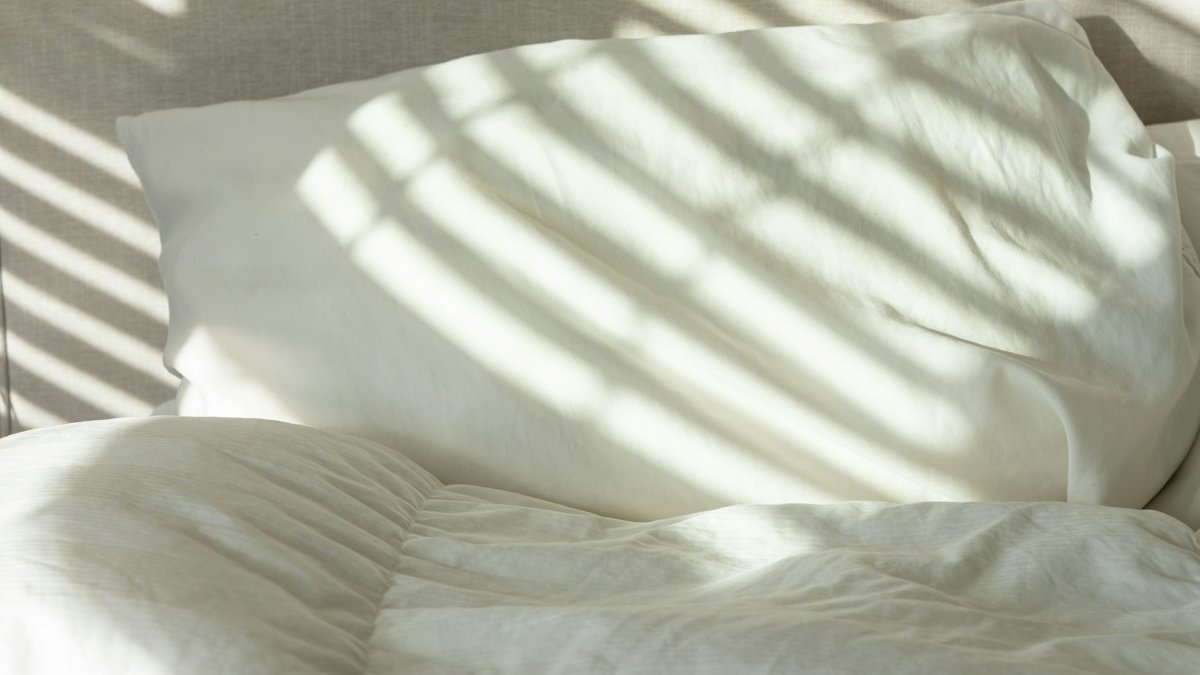
The first thing to know about bedding for night sweats is that the shopping lists have it backwards. They start with the product, the cooling mattress pad, the miracle pillowcase, when the actual system starts with exits. A body that surges at random needs somewhere to dump heat, and the bedding that works is the bedding with escape routes built in. I learned this the expensive way, one gadget at a time, before a flat sheet and a lighter duvet did more than all of them combined.
The full context for why nights run hot in the first place, hormones included, is in my guide to the bedroom sleep environment. This post is the layer-by-layer version for anyone waking up damp: what to put on the bed, what to put on yourself, and what to skip without guilt.
Key takeaways
- Think in layers, not one heavy cover: flat sheet, light blanket, comforter you can shed in stages. Exits beat insulation.
- The layer against your skin should wick: synthetics or merino, not cotton, which absorbs sweat and stays wet.
- A fan earns its place twice, for airflow and for steady sound that masks the small noises that finish waking you.
- The room matters as much as the bed: the bottom of the 60 to 68°F range is equipment, not preference, when flashes are in play.
- Bedding manages the event, not the cause. Frequent or worsening night sweats deserve a doctor and a two-week log, not just a purchase.
Why layers beat one heavy cover
The reason a single duvet fails at 2 a.m. is that it’s binary. You’re either under it, cooking, or out of it, cold, and the transition between those states happens exactly once, dramatically, usually with the duvet ending up across the room. A flash turns into a trap. Layered bedding turns the same flash into a manageable event instead, because you shed in stages: comforter off, blanket stays. Blanket off, sheet stays. Each step is small, each step is reversible, and none of them wakes you the way hurling the entire duvet across the room does.
The classic move inside that system: put one foot out first. A bare foot vents heat surprisingly well, and it’s the smallest possible exit, which matters because the goal is to cool the body without fully surfacing the mind. Tight tucking is the enemy here. You want loose layers and exits, a bed you can adjust from the inside without waking all the way up.
This is also the honest answer to the cooling-gadget question. Some of those products do what they claim, and the layer system beats them on the only score that matters at 3 a.m., which is what you can operate half-asleep. A mattress pad with an app requires you to be awake enough to use an app. A comforter you can shove down requires one arm.
The fabric question, answered without brand names
For the layer against your skin, wicking is the property that matters, and the brief version is this: synthetics and merino both do it, cotton doesn’t. Moisture-wicking sleepwear sounds like marketing copy, and I rolled my eyes at it too, right up until the first night I didn’t have to peel a wet t-shirt off at three in the morning, because fabric that pulls sweat off the skin and dries fast is the difference between shivering back to sleep and changing clothes in the dark. Wet fabric against skin then evaporating is a chill engine, and the chill is what finishes the wake-up the flash started.
Cotton isn’t forbidden, it’s just miscast. Cotton sheets as a base layer are fine and breathable. The mistake is putting cotton in the job where wicking matters, the layer touching skin at 3 a.m. Sheets should be breathable and light. Pajamas should wick. The pillowcase matters less than the lists claim, though a spare one within arm’s reach is a cheap, stupid, effective trick: flip or swap instead of getting up.
One more item, since the lists sell it separately and it isn’t: a cold pack wrapped in a thin towel, kept by the bed. Pressing something cold against your neck or wrists during a flash shortens it for many women, it costs a few dollars, and it outperformed things I paid real money for.
The room, the fan, and the evening before
Bedding works inside a room, and the room is half the fight. The commonly cited sweet spot is 65 to 68°F, with a workable range from 60 to 68, and when flashes are in play the bottom of that range stops being a preference and becomes equipment. A body that surges at random needs a low place to surge from. A room that felt brisk at thirty-five can feel exactly right at forty-seven, and your partner can wear socks.
The fan earns its slot twice over. It moves air across your skin so sweat can actually do its evaporative job, and it lays down a steady sound that masks the small noises that would otherwise finish waking you. Some people run one all night. Others keep it within arm’s reach and switch it on the moment heat starts rising, which makes it a fire extinguisher for flushes. Either way it’s a ten-dollar tool with a long track record among people who’ve been through this. Fans are not subtle. They work anyway.
And the evening has a say. A warm shower an hour or two before bed sounds backwards until you know the trick: warming the skin opens the blood vessels in the hands and feet, the body dumps heat through them afterward, and that falling-temperature slope is exactly the signal sleep is waiting for. Alcohol is also one of the most commonly reported triggers, and evening spice runs second, which is why the trigger log in the next section beats guessing.
When bedding isn’t the problem
Here’s the honest ceiling of everything above: the cooling playbook works, and it also doesn’t work completely. It can turn five drenching wake-ups into two. It can shorten the flashes. It can’t erase them, because no amount of bedding can stop a chemical event from starting, and if the cause is hormonal, a medication side effect, or something else medical, the equipment is managing the event while the cause runs upstream untouched.
The tool that earns its keep before any appointment is a two-week log. One line each morning: whether the night had sweats, roughly when, what you drank the night before, and how spicy dinner was. Memory is a terrible statistician. It rounds off Tuesdays. Fourteen days of that turns “I sweat all night” into a pattern a clinician can work with, and it sometimes finds a trigger you can move, the way one woman found her Tuesday curry and Friday salsa hiding in plain sight inside an ordinary week. The night sweats cooling tips walk through that system in detail, and the guide to what to tell your doctor about menopause sleep covers the appointment itself.
And if the sweats are new, severe, or worsening, the doctor conversation comes before the shopping conversation, whatever the ads say. The full system, worksheets included, is in Sleep, Finally. Tonight’s version costs nothing: strip the bed to sheet plus light blanket, put the comforter within reach instead of on top, and point the fan at the bed.
This guide is educational, not medical advice. If sleep problems persist for months or wreck your days, see a doctor.
Frequently asked questions
What bedding is best for night sweats?
Layers you can shed in stages: a flat sheet, a light blanket, and a comforter you can kick off one at a time. Pair that with moisture-wicking sleepwear in synthetics or merino, since fabric that pulls sweat off the skin and dries fast is the difference between shivering back to sleep and changing clothes at 3 a.m.
Is cotton or synthetic better for night sweats?
For the layer against your skin, synthetics or merino outperform cotton. Cotton absorbs sweat and stays wet, which is exactly the wrong property at 3 a.m. Cotton sheets are fine as a base layer, but the layer doing the work should wick and dry.
Do cooling mattresses and gadgets work?
Some do what they claim, and none of them is required. The core system is a cool room, layered bedding, airflow, and wicking fabric, most of which costs less than one cooling gadget. If flashes are severe or worsening, that’s a doctor conversation before it’s a shopping conversation.
Should I sleep with a fan on every night?
It’s a reasonable default. A fan moves air across your skin so sweat can do its job and lays down a steady sound that masks small noises. Some people run one all night, others keep it within arm’s reach and switch it on when heat starts rising.
What if the bedding helps but the night sweats keep coming?
Then the equipment has done its job and the cause is upstream. Bedding manages the event, it doesn’t treat the cause, which may be hormonal, a medication side effect, or something else worth naming at a doctor’s office. Bring a two-week log of when the sweats happen.