Bedroom & Sleep Environment
Why You Wake Up When the Heating Kicks In
By Nora Vale · April 6, 2026 · 7 min read
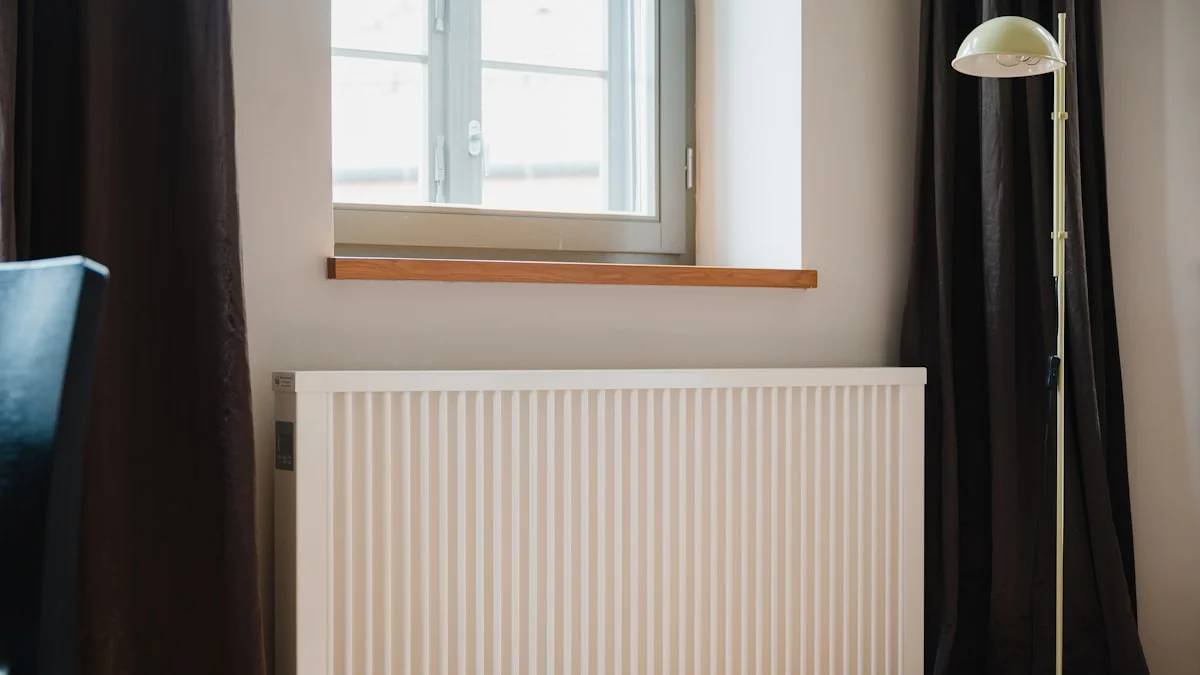
My boiler has one talent, and it’s choosing 4:50 a.m. to announce itself. A click somewhere in the wall, a hum climbing through the radiators, and ten minutes later I’m lying there warm in the wrong way, awake, doing the math on how much of the night is left. If your heating does a version of this, the answer isn’t a better boiler. It’s understanding what your body was doing right before the furnace wrecked it. The room is one of four dials, and the others are in the bedroom sleep environment guide.
Key takeaways
- Falling and staying asleep depends on your core temperature dropping one to two degrees; a warm room blocks the drop and invites the wake-up.
- Furnaces timed before dawn fire into the lightest sleep of the night, when surfacing is easiest.
- The kick-on click is a sudden sound change, and your brain never fully adapts to sudden changes, only to steady sound.
- Layers beat one heavy duvet: kick a leg out at 2 a.m. and you’ve done climate control without properly waking.
- If the heat isn’t yours to schedule, you fix the room around it: start cooler, dress the bed in layers, mask the sound.
The temperature drop your brain is waiting for
Temperature works backward from what you’d guess. To fall asleep, your core temperature needs to drop by roughly one to two degrees Fahrenheit, and that falling signal is part of what tells the brain the night has actually begun. A warm room blocks the drop; a cool room invites it. The commonly cited sweet spot is 65 to 68°F, and the Sleep Foundation’s workable range runs wider, from 60 to 68, which tells you the truth about the number: it’s a starting point, not a law.
Now put the furnace into that picture. Deep sleep is front-loaded into the first half of the night, and by the small hours you’re in the lighter, REM-heavy stretch where sleep is easiest to fall out of. A heating cycle that kicks in before dawn pushes the room warm at exactly that moment. The drop your body was riding reverses, the brain reads the reversal as wrongness, and you surface without ever knowing what surfaced you. It doesn’t feel like a temperature event. It feels like waking up for no reason.
That’s the mechanism. Nothing in it starts with your bedroom being cursed, and the fix doesn’t require owning the thermostat.
The click that goes with the warmth
There’s a second, sneakier mechanism riding along. Your brain doesn’t care much about steady sound; it cares about change. A highway hum fades into the background within minutes, but a sudden burst, the furnace kicking on at 3 a.m., sets off a brief arousal, sometimes with a spike in heart rate, even on nights you never surface enough to remember it in the morning. The sentry doesn’t sleep. It just stops logging.
Count what actually fires at night in an ordinary house: a radiator ticking as it cools, the ice maker dumping a tray, a boiler clicking on before dawn. Each one is small, and each one is a change, which is the only quality the sentry cares about. Steady sound you adapt to within minutes. Sudden sound, the brain never fully files. So the heating wakes you twice, chemically through the warmth and acoustically through the kick-on, and most people only ever notice the second one’s aftermath, which is lying there at 5 a.m. wondering what’s wrong with them.
Fixing it when you don’t control the thermostat
Renters and couples, this is your section, because the thermostat war is a war you can’t win and nobody should fight it at 2 a.m. anyway. The whole trick is dressing the bed for adjustability.
Layers beat one heavy thing. A duvet and the room temperature are one system, and a heavier duvet widens the range of room temperatures you can sleep through comfortably, which matters if your heat is controlled by a landlord, a spouse, or a building that starts pumping warmth in October. Layers let you adjust at 2 a.m. without properly waking. Kick one leg out. That counts as climate control. And if your heat runs on a timer that kicks in before dawn, the sudden warmth can surface you right when sleep is lightest, which is one more argument for bedding you can shed a layer of instead of a thermostat war you can’t win.
So the practical stack, cheapest first. Start the room a couple of degrees cooler than feels right at bedtime, since the furnace will pay the difference later; a cracked window does this for free. Sleep in layers you can shed one-handed without surfacing. If the kick-on sound is the part that gets you, lay down a steady floor of it with a fan, so the click stops standing out as the only change in the room; a 2021 review in the journal Sleep Medicine Reviews found the evidence for white noise improving sleep itself inconclusive, but the downside risk is close to zero, and masking sudden changes is the one job it’s actually good at. There’s more on that in white noise for sleep. And warm feet help the drop along, so socks are allowed even in a room you’re keeping cold on purpose.
The cheap way to find your own number takes one week. Set the bedroom a couple degrees cooler than usual, change nothing else, and check a seven-day log of how long falling asleep took. That beats any chart on the internet, including the ones printed in this book. If a warm bedroom is a nightly fact of your life rather than a furnace-timing quirk, the wider case is in the best temperature for sleep.
What this fix won’t do
One honest limit, because every post that ends in “just crack a window” owes you this. The room is necessary, not sufficient. I once fixed every dial I owned, taped every light, dropped the thermostat, layered the bed, and some nights I still lay there wide awake doing math on the ceiling, because the 4 p.m. coffee and a mind that wouldn’t close its tabs were doing the arguing instead. If the heating only surfaces you on the nights when everything else is already wrong, the furnace is the last straw, not the horse.
And if the wake-up comes with heavy sweating, most nights regardless of season, that’s a different file. Night sweats have their own causes and their own fixes, and cooling tips for night sweats covers them properly. The furnace theory doesn’t explain everything that happens in a warm bed, and it shouldn’t have to.
Frequently asked questions
Why does the heating waking me up at night?
Two reasons stacked. Your core temperature needs to drop and stay down for sleep to hold, and a furnace that fires before dawn pushes the room warm at exactly the moment sleep is lightest. On top of that, the kick-on itself is a sudden sound change, and your brain treats sudden changes at night as worth surfacing for.
What temperature should my bedroom be at night?
The commonly cited sweet spot is 65 to 68°F, with a workable range of 60 to 68. The signal your brain wants is the drop, not a specific digit. Cooler room, warm body under layers you can shed is the combination that survives a furnace you don’t control.
How do I stop waking up when the heat comes on?
Sleep under layers instead of one heavy duvet so you can shed one without properly waking, start the room cool with a cracked window or a lower thermostat, and mask the kick-on with steady fan noise so the click stops standing out. None of it requires owning the heating schedule.
Can a warm shower before bed help with this?
Yes, counterintuitively. Taken one to two hours before bed, it pulls blood toward the skin, and once you get out, that heat escapes and drags your core temperature down, which is the falling signal your brain wants. Right before bed works less well, because you slide under the covers still hot.
Is it better to turn the heat off entirely at night?
If you control it, dropping it a couple of degrees cooler than comfortable at bedtime is usually enough, because the bed itself is the microclimate. Some people sleep cold and should experiment upward instead of shivering through a rule. The seven-day log settles it for your body, which beats any chart.
The chapter behind this post, foil on the window and all, lives in Sleep, Finally. Tonight’s version: crack the window before bed and put the extra blanket within kicking distance instead of on the bed.
This guide is educational, not medical advice. If sleep problems persist most nights for three months or more, a doctor is the right door, no shame in that.