Sleep Red Flags & Help
Why Snoring That Stops and Starts Is a Red Flag
By Nora Vale · October 4, 2025 · 7 min read
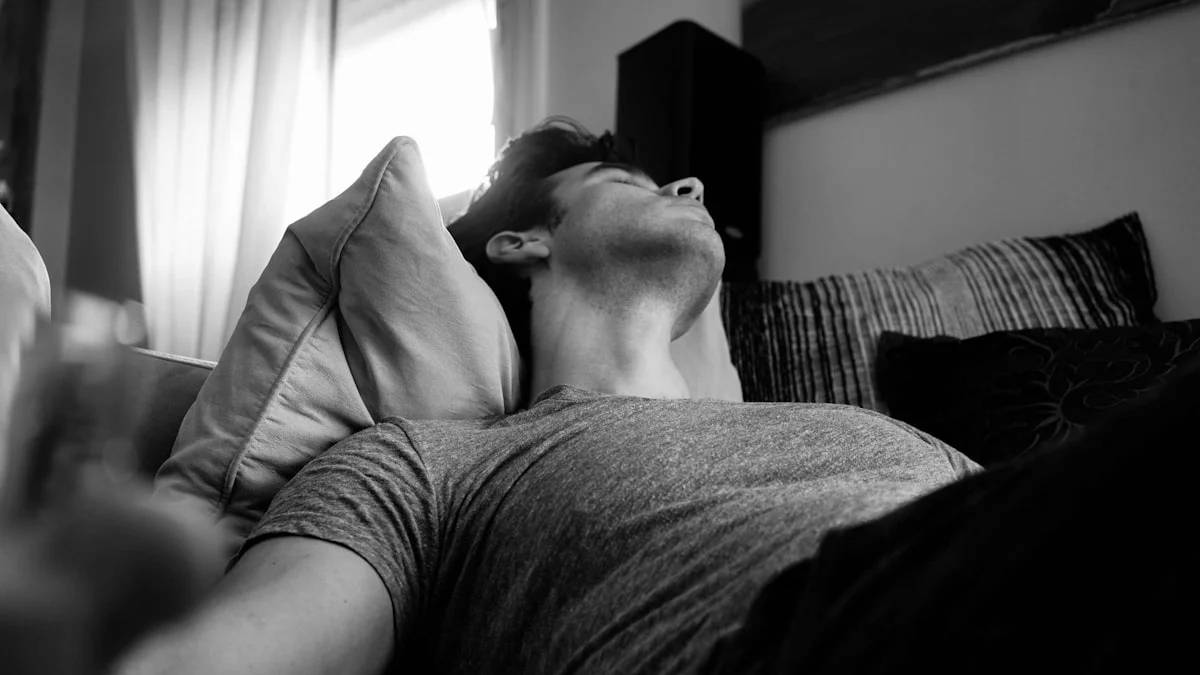
My neighbor’s husband was the cheerful kind of snorer, the kind people imitate at parties, and his wife spent a winter doing something stranger than complaining: counting. Fifteen seconds of silence. Twenty. Then a gasp that snapped her upright in bed while he slept through the whole production. She wasn’t collecting ammunition. She was counting snoring pauses, and it turned out she was the only witness to the most important medical event in their house. This post explains what that stop-start pattern actually is, why the snorer never knows, and what to do with the evidence if it’s happening in your bedroom. The full map of warning signs lives in my sleep red flags guide.
Key takeaways
- Ordinary snoring is noise. Snoring with pauses, then a gasp or snort as breathing slams back on, is a pattern doctors take seriously.
- During each pause the airway has closed and breathing has actually stopped. The brain gasps you awake to restart it.
- Around thirty million US adults have obstructive sleep apnea and roughly eighty percent of them have never been diagnosed.
- Snoring plus morning headaches plus daytime sleepiness that coffee doesn’t touch is the trio that deserves a doctor.
- Your job is not diagnosis. It’s evidence: a log, partner notes, and one appointment.
The snore with pauses in it
Start with the distinction, because it carries the whole post. Snoring is the sound of relaxed tissue vibrating in a partly narrowed airway, and plenty of people snore for decades with no disease attached. The pattern that matters sounds different: a run of snoring, then silence, ten seconds, twenty, then a gasp or a snort as breathing slams back on. The silence is the event. During it the airway isn’t narrowed, it’s closed, and the body isn’t breathing at all. What the listener hears as a pause is a person failing to breathe, and what they hear next is the rescue.
The rescue explains the gasp. The brain monitors blood oxygen like a smoke alarm, and when the level drops far enough it fires a micro-arousal, jerking the sleeper toward consciousness just enough for the throat muscles to snap the airway open. The sleeper gasps, the oxygen recovers, the body sinks back down, and minutes later the cycle runs again. Some people loop that circuit hundreds of times a night.
Why the snorer never knows
Here’s the cruel design detail: the person being strangled sleeps through every act of the play. Each micro-arousal is shallow enough to erase, so the apnea patient’s honest report is “I sleep fine,” and they mean it. Frank, two floors down from me in the book’s telling, was the office legend who could sleep anywhere, and he believed his own review. His wife had the count. His evidence was different: morning headaches, a coffee habit that stopped working, nodding off over paperwork. A home sleep study finally explained ten years of tiredness in one page. He hadn’t been lazy. Suffocating politely, eight hours a night.
That asymmetry is why this post keeps pointing at the bed partner. If you’re the one listening, you’re not nagging by keeping notes. You’re the only sensor in the house that’s on during the event. If you sleep alone, a phone or smart speaker recording over the night works as the witness, and one night of audio is enough to settle whether the pauses are there.
How common, and how quiet
The numbers deserve their source. The American Academy of Sleep Medicine estimates that around thirty million US adults have obstructive sleep apnea, and that roughly eighty percent of them have never been diagnosed. Read those two facts together and you get the situation this post exists for: a common, treatable condition whose default state is invisibility, because the patient can’t report it and the symptoms wear costumes. Daytime sleepiness reads as busyness. Morning headaches read as dehydration. The 3 p.m. slump reads as everyone’s 3 p.m. slump.
So doctors lean on patterns rather than single symptoms. Loud chronic snoring with pauses, waking with headaches, and sleepiness that coffee doesn’t cut through, each alone can be ordinary. “The trio deserves a doctor.” One match is enough to act on, and you don’t need the full set before you’re allowed to make the call.
What self-help can and can’t do here
I write about sleep habits for a living, and this is the boundary post where the habits hand off. Side sleeping, a cooler room, an earlier alcohol cutoff, all of it genuinely eases the airway’s workload, and the alcohol piece is real enough to have its own page in why does alcohol make snoring worse. None of it opens a closed airway. Self-help can retrain a wind-down, retune a bedroom, and re-time a body clock. It cannot open a closed airway, quiet restless legs, or treat depression, and an untreated condition sits underneath a person’s nights like a rock under a mattress, where no routine out-argues it. If the pauses are real, every routine you build on top is furnishing a house whose foundation needs a contractor.
That’s why nothing in this post will end with a tip. It ends with an appointment, which is the tip.
What to bring, and what to say
The appointment goes better with evidence, and the kit is small. A seven-day sleep log turns “I sleep badly” from a feeling into a finding, which matters because doctors work in minutes and evidence respects their time. Partner notes come next, and plain beats polite: “his snoring stops and then he chokes” does more work than any adjective. Add a recording if you sleep alone, and a list of everything you take, prescriptions, supplements, melatonin, the antihistamine you call a nightcap. Then skip the apology and say the sentence in your own words: what the pauses sound like, how long they run, and that you want to be checked for sleep apnea. The book’s version of partner evidence is the one that outperforms every adjective: “His snoring stops and then he chokes.” Recognition is not diagnosis. It’s a door, and doors are your department now.
One honest limit, stated plainly. Nothing on this page estimates your odds, and nothing here diagnoses anyone, including me. If the first doctor waves it off, a second opinion is allowed. If a sleep study comes back clean, the log still stands as useful, because it ruled something out. And treatment doesn’t retire the rest of the book: the doctor fixes the disease, habits fix the floor it was standing on, and the floor still matters once the rock is gone.
Frequently asked questions
When is snoring a red flag?
When it stops and starts. Regular snoring is noise. Snoring with pauses of ten to twenty seconds followed by a gasp, snort, or choke as breathing slams back on is the signature pattern of obstructive sleep apnea, and that pattern belongs in a doctor’s office, not a tips article.
What is a snoring pause actually doing?
During the pause the airway has closed and breathing has stopped, sometimes for half a minute. The brain registers the drop in oxygen and jolts the body awake just enough to reopen the airway. The gasp is the restart. The person usually remembers none of it, which is why partners do the reporting.
What else points toward sleep apnea along with pauses?
The usual trio is loud chronic snoring with pauses, waking with morning headaches, and daytime sleepiness that coffee doesn’t fix. Any one piece alone can be ordinary. The trio deserves a doctor.
What should I bring to the appointment?
Evidence. A seven-day sleep log, partner notes about the pauses and gasps, a recording if you sleep alone, and a list of everything you take including supplements. Doctors work in minutes, and evidence respects their time.
Can sleep habits fix apnea?
No, and that’s the honest limit of every routine in the world. Self-help can retrain a wind-down, retune a bedroom, and re-time a body clock. It cannot open a closed airway. Making the appointment is not the failure. It’s the skill.
If you want the sleep system that still applies after the doctor’s visit, the book is the floor-building part of the job.
This guide is educational, not medical advice. It doesn’t diagnose anything. If the stop-start pattern sounds like your bedroom, a doctor is the right and only door.