Sleep Red Flags & Help
Why Teens Fall Asleep in Class
By Nora Vale · February 25, 2026 · 8 min read
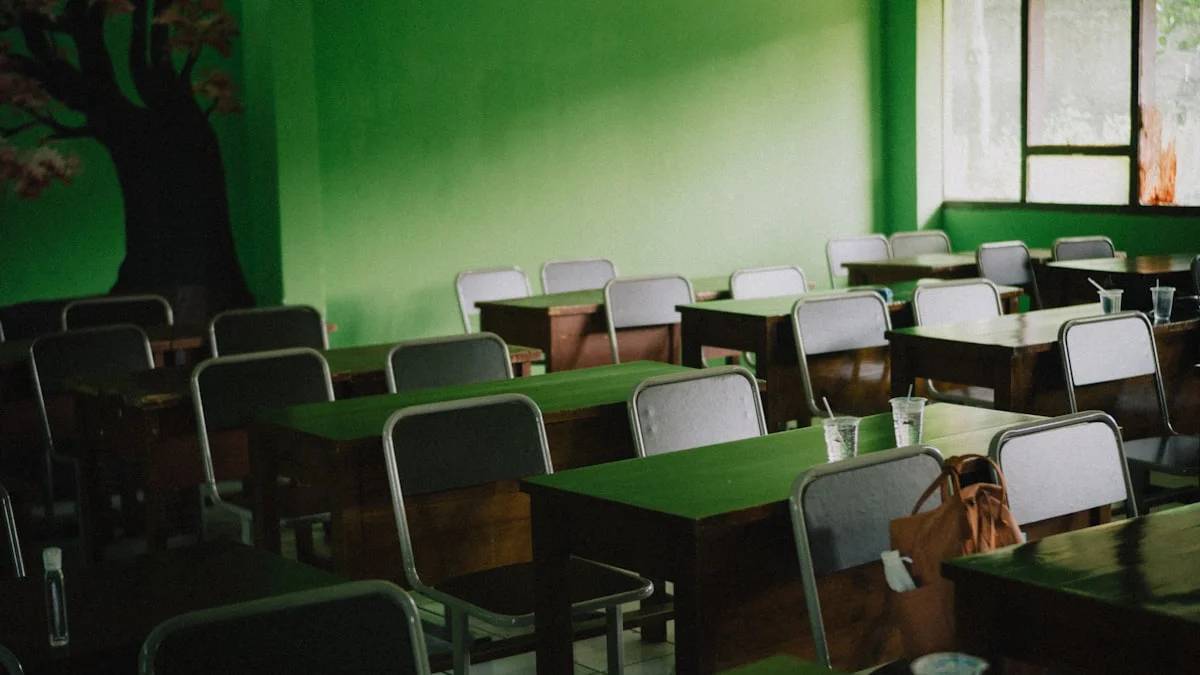
The teacher’s note says he can’t sit still and rushes through everything, the school has started using the word “behavior,” and meanwhile he snores like his grandfather and is impossible at 7 a.m., and nobody has put those two facts on the same page yet. If that’s your house, I want to reorganize the page, because teens falling asleep in class is one of the most misread signals in the whole childhood-sleep file.
Here’s the frame I’d hand every parent before the lectures start: the sleepy teenager is usually not lazy, not broken, and not testing you. The body is running on a clock that adolescence genuinely shifts, in a world that refuses to shift with it. And the smaller group, the kids whose exhaustion isn’t explained by the clock or the phone, need an adult who knows which details matter. Both groups start in the same place, which is why my sleep red flags guide treats this as a recognition problem rather than a discipline problem.
Key takeaways
- The teenage body clock drifts later during adolescence while school start times stay fixed, so an early alarm lands mid-night biologically.
- Ordinary sleep debt explains most classroom dozing: eight to ten hours needed, far less delivered, the deficit compounding weekly.
- Screens usually steal by time and content, not by light: the feed eats the hours and keeps young minds switched on.
- Sleep-deprived children rarely look sleepy. They look wound up, which is why the sleepiest kid is so often the one on the behavior chart.
- Snoring three or more nights a week plus daytime consequences is a pediatric red flag, and the pediatrician is the designed door.
The clock moves, the school doesn’t
The first fact is biology, and it isn’t a matter of opinion or maturity. During adolescence the circadian clock drifts later, so the teenager’s body genuinely isn’t ready for sleep at nine and genuinely isn’t ready for wakefulness at 6:30. This is measurable in sleep labs and it explains the Friday-to-Sunday swing you already live with: school nights run on an alarm, weekends run on the body’s actual schedule, and the two live roughly two hours apart, which is the same machinery adults experience as social jet lag.
The mismatch has a cost that compounds. Eight to ten hours is the need, the school-night reality is usually six or seven, and by Thursday the debt is a standing balance. The kid dozing through third period isn’t choosing it. He’s collecting on nights that were too short through no decision of his own, on a clock that wants a midnight bedtime and gets a 6:30 alarm instead. If you want the adult-sized explanation of the weekend mechanism, what is social jet lag covers it, and the teen version is the same physics with less autonomy.
Screens: the honest version
Now the part every parent already suspects, sized correctly. “When researchers pool the media studies that follow children and teenagers, the big ones averaging hundreds of kids at a time, the average effect of screens on sleep comes out small. The damage that does show up traces mostly to two things: content that keeps young minds switched on, and time spent scrolling that should have been time spent asleep.” Notice what that says and doesn’t say. The glow matters less than the arcade.
So the effective rules are about time and content, not photon-colored glasses. An e-reader has no notifications. A phone displaying a book has an entire arcade one swipe away, and at 10:40 you know exactly which one wins. The household version that actually holds: phones charge outside bedrooms, and the adults follow the same rule, because a hallway basket that includes the parents looks like fairness and one that spares only the parents looks like hypocrisy. “Teenagers can smell that from another zip code.” They also deserve the actual reasons rather than a decree, and they will test the rule for sport, and the rule survives testing as long as the adults in the house are visibly following it too.
When sleepy means something medical
Now the part I’d want every parent to read twice, because it’s the reason this post lives in the red flags cluster rather than the habits one. Sleep-deprived children rarely look like sleepy adults. They look wound up, which is why the sleepiest kid in the class is so often the one on the behavior chart. The teacher sees disruption. The body is showing you exhaustion wearing a costume.
The specific flag to watch: “The pediatric flag is snoring three or more nights a week paired with daytime consequences: sleepiness, or the stranger shapes it takes in kids, trouble concentrating, acting out, emotions with no floor, grades sliding for no visible reason.” Pediatric apnea is estimated to affect somewhere between one and five percent of children, and the American Academy of Pediatrics recommends that pediatricians screen for sleep problems, which means the door is designed to be walked through. “A child who snores and falls apart at homework time is not lazy, naughty, or broken, and the pediatrician is the right door, not a punishment and not an overreaction.” If the snoring details match, signs of sleep apnea lists what the doctor will want to hear, and the child-sized version of the whole question is in snoring in children when to worry.
There’s one more flag that applies at every age. Falling asleep involuntarily, mid-meeting, mid-conversation, despite genuinely adequate opportunity to sleep at night, is its own warning light, separate from the ordinary drained-by-Thursday feeling everyone runs on sometimes. If the nights were genuinely there and the days still collapsed, the nights weren’t the whole problem. That pattern gets a doctor promptly, not another mattress and not a stronger coffee order, and the coffee version never belonged in a teenager’s hands anyway.
What parents can actually do
The levers, in order of what I’d try. First, protect one wake time within about an hour across the whole week, because the weekend drift is what turns a mild school-week deficit into a Monday disaster, and the mechanism is in why sleeping in on weekends makes mondays worse. Second, the phone charges somewhere else, for everyone, and morning light near the wake time helps the clock find its way back earlier. Third, watch the snoring honestly for a week, because a phone left recording audio overnight can hand you the evidence a partner or sibling would otherwise have to bring.
And the framing matters more than the statistics: you’re not pathologizing your kid. You’re reading evidence with the one professional whose entire job is children. Parents I know have watched attention and behavior problems ease substantially once a sleep problem was finally treated, which is a strange and wonderful trade for one appointment. If the pattern persists for months despite honest nights and honest rules, what is CBT-I explains the structured treatment that exists for chronic insomnia, and it applies to older teens as much as adults.
Frequently asked questions
Why do teenagers’ body clocks shift later?
Adolescence brings a real, measurable drift in circadian timing, so teens genuinely get sleepy later at night and wake harder in the morning. It’s developmental biology, not defiance, and it’s why fixed school start times collide with teenage sleep.
How much sleep does a teenager need?
Eight to ten hours per the major sleep organizations, with most teens getting less on school nights. The weekly deficit compounds, which is why Friday afternoons and Sunday-morning lie-ins are the debt showing its statement.
Is my teen lazy if they sleep until noon?
The long sleep-in is usually the body collecting the week’s shortfall. Unrestrained it drifts the clock later, so the fix isn’t zero sleeping in, it’s keeping weekend mornings within about an hour of school-day wake time.
Can sleep deprivation look like ADHD or behavior problems?
In children it often does look exactly like that: trouble concentrating, acting out, emotions with no floor. Sleep-deprived kids rarely look sleepy, which is why the snoring-plus-behavior combination deserves a pediatrician’s attention before anything is concluded.
When is classroom dozing a doctor visit?
When it pairs with loud snoring three or more nights a week, pauses or gasping, morning headaches, or falling asleep involuntarily despite real opportunity at night. Any of that is a pediatric flag, and the appointment costs one morning.
Start with the cheapest lever this week: same wake time Saturday and Sunday, within the hour, phones out of every bedroom including yours, and just watch the snoring. The pediatrician visit, if the flags hold, is one morning. Recognition is not diagnosis. It’s a door, and doors are the department of the adults in the room.
This guide is educational, not medical advice. If sleep problems persist for months or wreck your days, see a doctor.