Bedroom & Sleep Environment
Why Your Bedroom Should Be Dark (and How Dark Is Enough)
By Nora Vale · June 8, 2026 · 7 min read
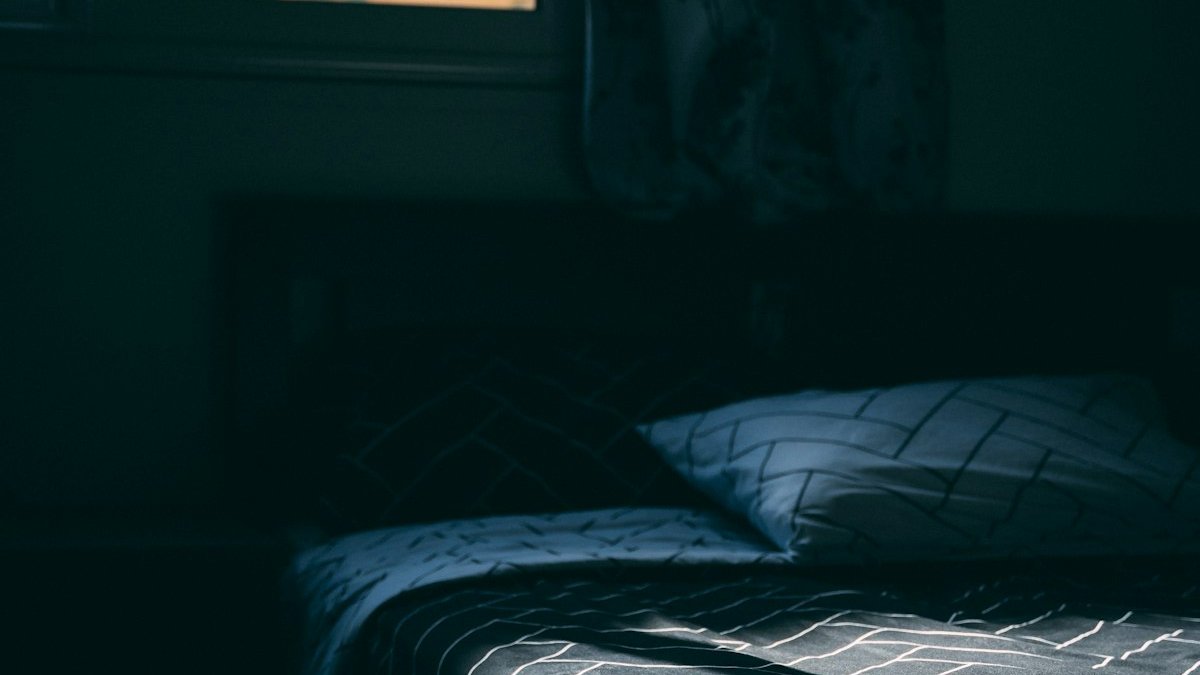
It’s 11:40 on a Tuesday and you’re doing the last round: dishes out of the sink, doors locked, lamps off. Then you lie down and notice the room isn’t actually dark. The router glows green across the floor. The clock burns blue. The television has a small white eye aimed at the bed, and two chargers pulse on the power strip. Seven little lights, if you count the way I did during one bad winter, and every one of them is talking to your brain while you try to sleep.
Here’s the part nobody tells you: your eyes never file a complaint about this. Your retinas keep reporting all of it to the brain long after you’ve stopped consciously seeing it, and the brain takes every report at face value. For most of human history, a lit room meant daytime, and daytime meant stay up. That’s the whole case for why your bedroom should be dark, and it happens to be the cheapest fix in the entire room. The other dials, temperature, bed, and noise, live in the guide to the bedroom sleep environment. Tonight is just about light.
Key takeaways
- Your retinas report light to your brain all night, noticed or not, and the brain treats every report as daytime.
- Dark means dark: tape the LEDs, cover the window glow, and charge your phone across the room.
- The hand test tells you when it’s dark enough: lights off, five minutes to adapt, hold your hand up.
- A dark room lowers the floor of your sleep problems. It doesn’t fix a mind that won’t shut up.
Why your bedroom should be dark
Light is the loudest signal in a silent room. Harvard researchers have shown that even modest evening brightness measurably delays melatonin, the hormone that rises in darkness and opens the door to sleep. So a bedroom that is almost dark isn’t almost fine. It’s a room where the brain has been handed evidence that day continues, and it acts on that evidence the way it always has, by keeping you half-ready for hours past midnight.
I didn’t connect this for a long time, and the reason is embarrassing. My bedroom looked fine in daylight, so fine that I spent a year blaming everything except the room. The book describes that winter better than I can: “None of it looked like a problem. It looked like a normal bedroom, which is exactly why it took me another year of lying awake to connect those pinpricks to the fact that my brain never quite slid under.” A room that breaks the body’s expectations keeps your brain, in its words, “half-dressed for a party nobody invited it to.” That phrase stuck with me because it explains the specific tiredness of a night spent in a bright bedroom. You slept, sort of. Nobody invited the party.
Tape first: the two-dollar pass
Start with the LEDs, because they’re the part you control in ten minutes. Electrical tape over the router light, a folded sticky note on the clock face, a square of masking tape over the television’s standby eye. That’s about two dollars and ten minutes, and it’s the closest thing to free sleep improvement I know. My husband thought the taped-over router looked ridiculous for about a week. Then he stopped noticing it, the way you stop noticing everything once the room is actually dark. Guests don’t judge your bedroom at midnight. They aren’t there.
The rest of the room runs on the same cheap logic. A fan earns its spot twice over, moving air and laying down a steady floor of sound, which is why I keep separate notes on white noise for sleep. None of this is a shopping trip. It’s tape, habit, and a fan you probably own.
Windows: the ugliest fix works best
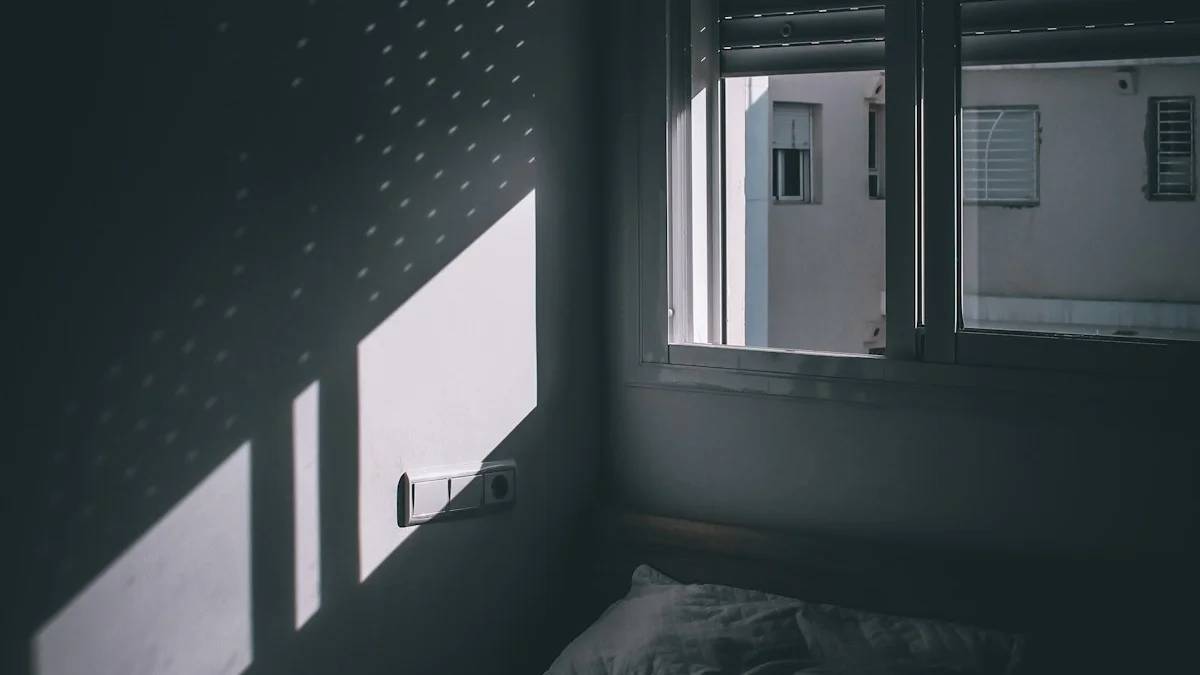
Then the windows, because a streetlight leaking through slatted blinds hits your retinas all night whether or not you register it. The cheap fix is what renters have always done: a dark blanket pinned over the frame, or foil pressed flat against the glass. Ugly and completely effective. The middle fix is a blackout liner hung behind curtains you already own. The proper fix is true blackout curtains on a wraparound rod, so light can’t sneak around the edges. I used the foil version for two years. Nobody saw it but me.
How dark is dark enough? Stand in the finished room with the lights off, give your eyes five minutes to adapt, and hold your hand up in front of your face. If you can see it clearly, there’s too much light. If you can only find it by waving, you’re close. Your eyes keep adapting for about twenty minutes, which is why a room that seemed fine when you walked in can still be bright enough to matter by midnight.
The phone on the nightstand
One more thing belongs in this section, and it’s the thing most of us sleep next to. Even face-down, a phone lights up when a message lands, and a dark room with a glowing rectangle on the nightstand isn’t a dark room. It’s a dim one with a notification habit. Charging it across the room fixes the light and, as a bonus, puts the alarm out of arm’s reach. If the real problem is that 10 p.m. is your scrolling hour, the honest answer is a replacement habit, and there’s a whole list of things to do before bed instead of scrolling that don’t involve a screen glowing at your face.
Darkness also works best as the last step of an evening rather than a substitute for one. The room can’t carry the whole night if the hour before bed is all inbox and news. When I finally stacked the tape-and-foil fix on top of learning how to wind down before bed, the two changes landed harder together than either did alone.
What darkness can’t do
Here’s the honest limit, and it stings. The winter I fixed my room, I taped every light, hung the foil, dropped the thermostat two degrees, and still had nights where I lay there doing math on the ceiling. The room had stopped arguing, and I was awake anyway, because a 4 p.m. coffee and a mind that wouldn’t close its tabs were doing the arguing instead. Dark is necessary, not sufficient. It sets the floor. Everything else in your night builds on that floor or ignores it.
So if you make the room properly dark and find yourself wide awake with your eyes open, the problem has moved inside your head, and the tools need to change with it. The cognitive shuffle for sleep is built for exactly that gap between tired and asleep, and it helps to understand why your brain wakes up when you lie down before you decide the darkness failed. It didn’t fail. It just was never the whole problem.
Frequently asked questions
How dark should a bedroom be for sleep?
Dark enough that after five minutes of adapting, you can’t clearly see your hand in front of your face. Standby dots and window glow count against you even after you stop noticing them.
Is a sleep mask enough instead of blackout curtains?
A good mask works, and it’s the right tool for travel or a shared room where you can’t touch the windows. It slips at some point in most nights, though, and it covers one pair of eyes instead of the room. I treat the mask as a supplement. The window still gets covered.
Do I need real blackout curtains, or is foil fine?
Foil or a pinned dark blanket is genuinely fine, and it’s the version I used for two years. If the look bothers you, a blackout liner hung behind your existing curtains is the middle step, and true wraparound curtains on a rod are the upgrade. Start ugly tonight, upgrade whenever.
What if my partner needs some light on?
Negotiate rather than surrender. A small, dim, warm-colored light on their side of the bed beats a ceiling light by a mile, and an eye mask on your side solves the rest. Two people in one room means the darkness is a shared decision, like the thermostat.
Start tonight, before dinner, in about fifteen minutes. Tape the router, sticky note the clock, pin a dark blanket over the worst window, and move the phone charger across the room. Then do the hand test and see what your room has been quietly saying about you. If you want the whole system, all four dials plus the worksheets, it’s in Sleep, Finally. The room is the floor everything else stands on. Make it dark first.
This guide is educational, not medical advice. If sleep problems persist for months or wreck your days, see a doctor.