Hormones & Sleep
Your Cycle and Nighttime Body Temperature, Explained
By Nora Vale · November 7, 2025 · 7 min read
Ten thirty on the fourth night before my period, and I was doing everything right. Feet warm, mind calm, phone in the kitchen, the whole checklist from a book I wrote myself, and sleep simply wasn’t arriving. I lay there deciding I’d broken some rule from an earlier chapter, and it took me an embarrassing number of cycles to check the calendar instead of the rulebook.
The rulebook was fine. The thermostat had moved. The link between your cycle and nighttime body temperature is small on paper and large in practice: after ovulation, your core runs warmer by an amount that sounds trivial until you remember the entire sleep-onset signal depends on your temperature falling. The wider context of hormones and sleep lives in the hormones and sleep guide, and this post is about the one week the thermostat works against you.
Key takeaways
- After ovulation, core body temperature sits about half a degree to a full degree Fahrenheit higher for roughly a week before a period.
- Sleep onset depends on temperature falling, so that warm week asks a nudged-up body to fall anyway, and worse sleep in this phase is documented across large groups.
- The workable move is scheduling, not effort: earlier wind-down, cooler room, boring book, lower expectations set on purpose.
- Three cycles of notes tell you whether your rough week is real and predictable, because memory is a terrible statistician.
- If sleep comes apart for months despite honest effort, that’s a conversation for a clinician, not another rule.
The half-degree that isn’t trivial
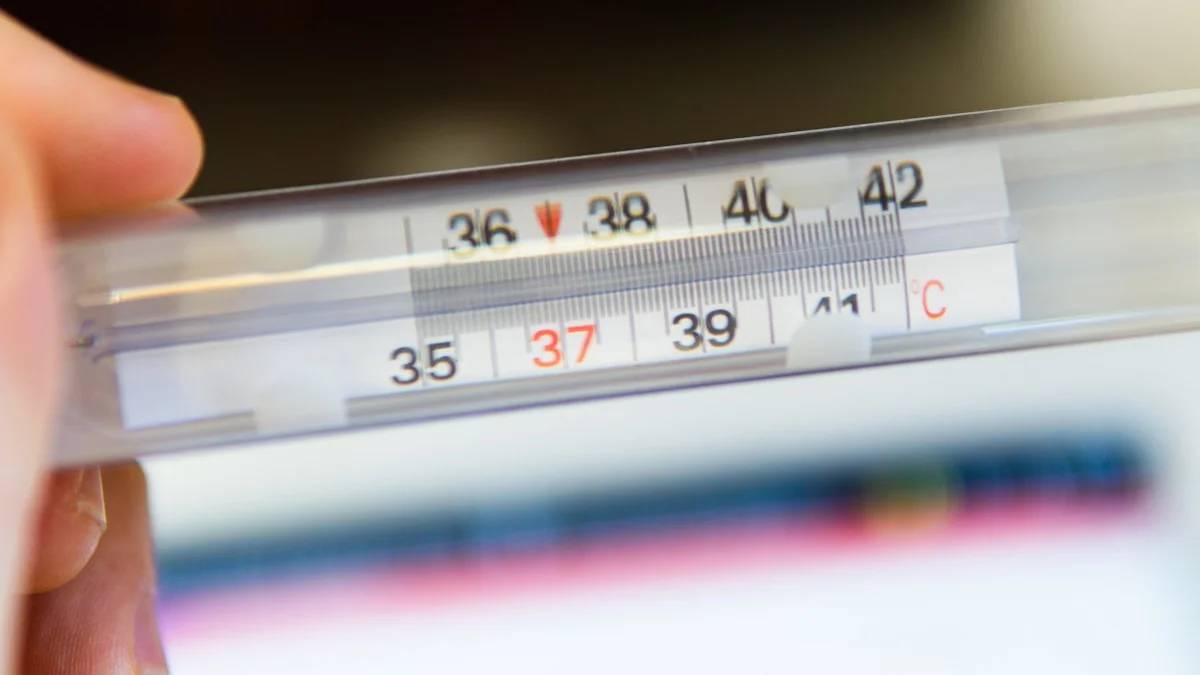
Here’s the mechanism, because it explains the whole week. After ovulation, the hormone progesterone rises, and one of its side effects is a bump in your baseline core temperature: about half a degree to a full degree Fahrenheit above usual, holding through the week or so before a period. It sounds like nothing. It isn’t.
Sleep onset rides on a falling temperature. Your body prepares for sleep by letting core heat escape, which is why a warm bath one to two hours before bed helps, and why cool rooms help, and why a fever can keep anyone awake. So every night in the warm phase, you’re asking a body that’s been nudged up to fall anyway. The machine works. The starting line moved.
From the inside, the week has a particular flavor. “It’s the fourth night before your period, you’re tired in a way that feels ancient, and yet at ten thirty you lie down and nothing happens; your feet are warm, your mind is calm, and sleep simply isn’t arriving, so you’re still there at eleven, deciding you’ve broken some rule from an earlier chapter.” You haven’t broken anything. Effort is the one thing this window doesn’t need.
What the research actually says
This isn’t folklore that women pass around and scientists ignore. Sleep researchers have documented worse sleep quality and harder mornings in the pre-menstrual phase across large groups of women, which matches what plenty of us could have told them for free. The pattern is real, measurable, and predictable, which is the best possible news, because predictable problems can be planned around.
The honest caveat sits right next to it: bodies vary. Some women sail through the warm phase untouched, some feel it for three nights, some for ten days, and some discover their rough week was actually something else wearing the cycle’s clothes. That last possibility is why tracking comes before tactics, and it’s the same principle that turned Christine’s six months of detective work into two weeks of notes in the flash chapter: “Memory is a terrible statistician. It rounds off Tuesdays.”
A notebook doesn’t flatter you. It just writes down what happened, which is exactly why it’s useful.
Planning the warm week instead of fighting it
The workable move is scheduling, not effort. If the pattern shows up on a calendar, you can plan lighter evenings for that week the way you’d plan around any standing appointment:
- Start the wind-down earlier. Not longer, earlier. The sequence stays the same; the runway gets extended, because the body needs more time to make the drop from a higher starting point.
- Cool the room harder than usual. Your baseline is running warm, so the room that felt right in the follicular phase reads warmer now. Drop the thermostat a notch, keep the fan in reach, and the piece on night sweats cooling tips has the full gear list if heat is a recurring theme.
- Pick the boring book over the inbox. Arousal blocks the perception of sleep pressure, and the warm week doesn’t need a second thief working the door.
- Set lower expectations on purpose. This is the strangest instruction and the one that does the most work. Planning a modest week costs you nothing. “A fought week costs you the week.”
- Log three cycles. One line a day: where you were in your cycle, how the night went, anything unusual. Patterns need two or three repetitions before they’ll confess, and the log from Appendix B works if you’d rather keep everything on one page.
Then the period starts, temperature eases back down, and sleep usually loosens on its own without you doing anything at all. The week ends. The plan just has to survive it.
The related piece worth reading is the post on luteal phase sleep problems, which goes deeper on the hormone side of the same week, and the one on period week insomnia if the rough nights cluster differently than you expected.
The limits I’d rather tell you first
The honest boundaries, before you build a life around a half degree. First, the cycle isn’t always the culprit. Thyroid changes, stress, alcohol, and medications all wear comfortable disguises, and the log exists partly to catch you blaming the calendar for someone else’s crime. That distinction belongs to blood work and a clinician, not to a notebook by the kettle.
Second, planning doesn’t repeal biology. The warm week may still cost you some sleep even when everything is done right, and that isn’t you failing the method, it’s the method being correctly sized for a body that moved the goalposts.
Third, the border. If sleep has come apart for months despite honest effort, or the disruption runs far beyond the usual week, that’s a conversation for a doctor, ideally one who listens, because hormone complaints have a sorry history of being waved out of the room. You deserve better than “that’s just your cycle,” which isn’t a diagnosis, it’s a shrug. If the first clinician shrugs, you’re allowed to find another.
Frequently asked questions
How does my cycle affect nighttime body temperature?
After ovulation, in the week or so before a period, core body temperature sits about half a degree to a full degree Fahrenheit higher than usual. Because the sleep-onset signal depends on your temperature falling, every night in that window asks a body that’s been nudged up to fall anyway.
Why can’t I sleep the week before my period?
Your thermostat got moved, not your discipline. Sleep researchers have documented worse sleep quality and harder mornings in this phase across large groups of women. Effort is the one thing this window doesn’t need, and blaming yourself for the remainder is both inaccurate and exhausting.
What helps sleep during the warm phase of the cycle?
Scheduling, not effort: an earlier wind-down, a cooler room than usual, the boring book instead of the inbox, and lower expectations you set on purpose. Then the period starts, temperature eases back down, and sleep usually loosens on its own.
Should I track my temperature for better sleep?
Track the pattern rather than the number: three cycles of notes will tell you whether your rough week is real and predictable, or whether it’s actually something else wearing the cycle’s clothes. Notebooks don’t flatter bodies, which is exactly why they’re useful.
When does cycle-related insomnia need a doctor?
If sleep has come apart for months despite honest effort, or the disruption runs far beyond the usual pre-period week, take the log to a clinician who listens. If the first one shrugs, you’re allowed to find another; the boring work you did first doesn’t cancel the visit, it makes it worth having.
The week is real, it’s on a schedule, and schedules can be planned around. Cool the room, start the evening sooner, set the bar low on purpose, and let the calendar carry what willpower can’t.
If you want the full system this comes from, with the hormones chapter alongside the light, caffeine, and wind-down work that holds it up, that’s the book: Quiet Core Reset.
This guide is educational, not medical advice. If sleep problems persist for months or arrive with symptoms you can’t explain, a doctor is the right door.