Shift Work & Jet Lag
A Night Nurse's Guide to Daytime Sleep
By Nora Vale · June 26, 2025 · 8 min read

I want to start this the way the research deserves: with respect, not tactics. Working nights is the hardest case in the entire book, and a night nurse sleep schedule runs against a body clock that has never heard of your roster. If you’ve been told to just try harder at sleeping by someone who has never worked a seven-to-seven, the failure in that sentence belongs to the advice, not to you. The shift work sleep guide holds the full method, and this piece carries the parts that matter most for the daylight side of the job.
Key takeaways
- Daytime sleep after nights runs one to four hours short by NIOSH’s numbers, and the fight has two parts: internal chemistry and the daytime world.
- The anchor sleep block, three to four protected hours at the same clock time daily, days off included, is the spine everything else hangs on.
- The room has to be cave-dark at one in the afternoon, which usually means covering the glass itself, and cheap fixes do the real work.
- Light is managed at both ends of the shift: bright early, dim late, dark glasses on the daylight drive home.
- Some schedules will never be fully fixed, and damage control is a legitimate outcome, not a failure.
Why sleeping at noon is a fight you didn’t pick
Your circadian clock is a physical system in the brain that responds to light and timing, and it can shift, but only slowly and only with the right inputs. You can’t bully it. Sleeping at noon means fighting chemistry that raises its own alerting signal as the day runs on, no matter how tired you felt at hour eleven of the shift, and the world piles on: daylight bright enough to fragment sleep through closed eyelids, delivery drivers, lawnmowers, a household talking at full volume because to them it’s the middle of an ordinary Tuesday.
The numbers make the scale of it plain. NIOSH puts daytime sleep after a night shift at one to four hours shorter than a normal night, and seven hours in bed can produce five hours of real sleep, then four, then three, until by the end of a run of nights the deficit stops feeling like tiredness and starts feeling like a different person wearing your clothes. Knowing the fight is structural changes how you judge yourself in week three, and it’s why the fix below is built as a negotiation with the clock rather than a demand.
The anchor sleep block: the spine of the whole schedule
“An anchor sleep block is a core chunk of three to four hours kept at the same clock time every single day, days off included, so your body finally has one protected window it can rely on no matter what the roster did to the rest of the night.” Start there. The rest of your sleep gets arranged around it, and everything else assumes you’ve built it.
Here’s what it looks like in practice. If you get home at eight in the morning and can usually sleep until early afternoon on workdays, your anchor might be nine to one, and you keep nine to one on your first day off too, even on Christmas, even while the rest of the world is at brunch. Breakfast at half past one is nobody’s dream. But it’s the price your body charges for knowing when sleep is coming, and the arithmetic compounds in your favor instead of against you once the window is predictable.
Two honest rules for choosing it. First, place the anchor where you can realistically protect it, usually soon after you get home rather than whenever you’d ideally sleep, because the world takes any block you leave undefended. Real beats ideal. Second, give any new anchor two weeks before you judge it, because clocks are slow to trust you and, once convinced, slow to let you down.
Days off are where nurses break it, and I understand exactly why. The temptation on your first free Saturday is to flip back to days completely, sleeping at night like a person with an ordinary job, and then Monday’s night shift arrives and your clock has no idea where it lives. “Flip-flopping feels like freedom. It costs like a hangover, and the bill arrives Monday night when the shift starts and your body files its objection.” You can still have your Saturday. Protect the anchor first and build the day around it.
A bedroom that can fight noon
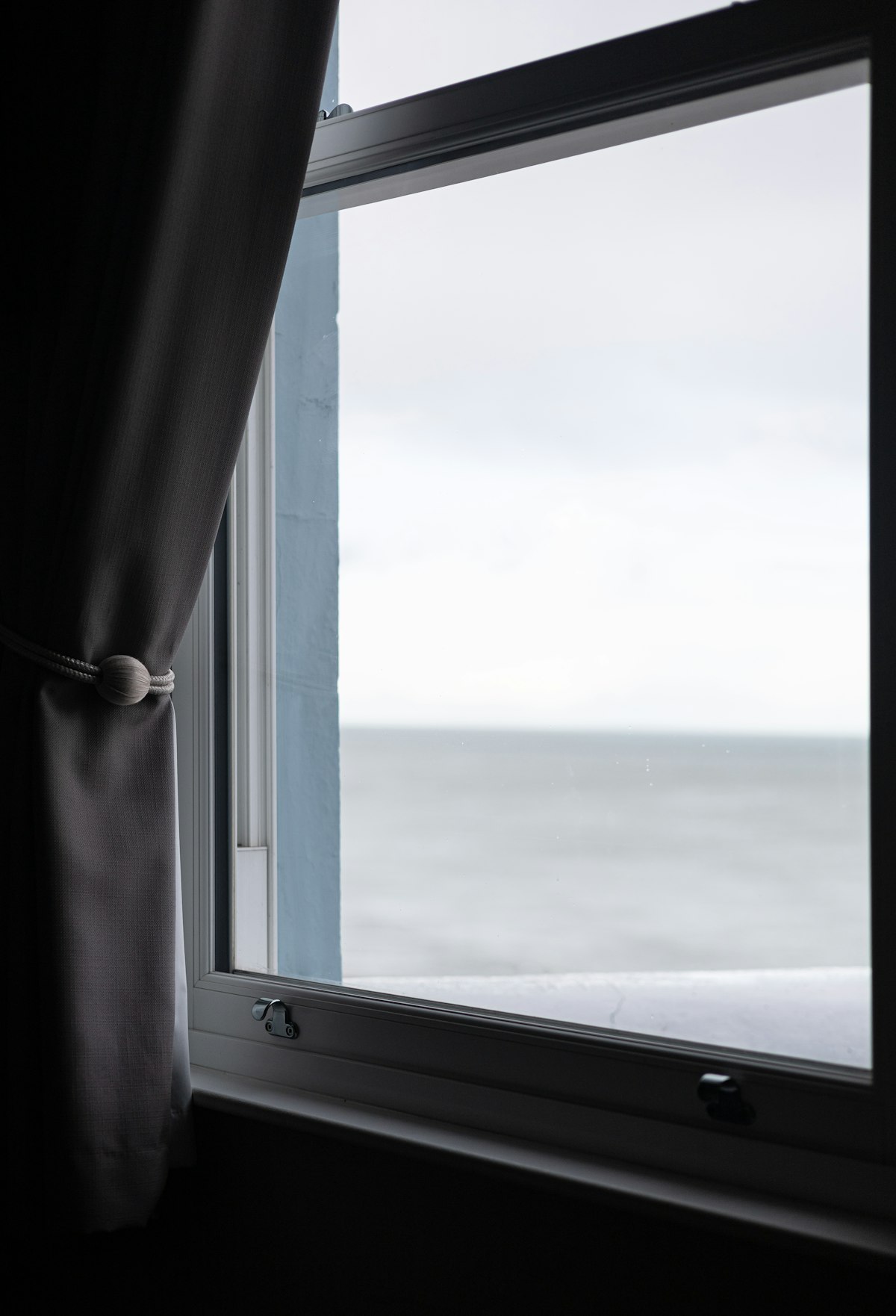
Ordinary curtains won’t cut it, because daytime light leaks around edges and through thin fabric, and even that gray glow is bright enough to shave pieces off your sleep. “Your bedroom needs to be cave-dark at one in the afternoon, which usually means covering the glass itself.” Cardboard cut to size and taped in place works, blackout fabric works, foil behind the curtain works and looks exactly as desperate as it is. It works anyway.
None of this needs to be expensive. The cardboard version costs nothing but an hour and some packing tape, decent earplugs run a few dollars, and a box fan handles the white-noise job as well as any gadget, because quiet is harder at noon than at midnight and a fan’s steady sound hides the on-and-off of a lawnmower better than silence does. “Spend the money on sleep, not on the story.” The important fixes in this room are the cheap ones, and the expensive ones mostly sell you the same darkness with better marketing.
Then handle the human part, because the room only does half the defense. Turn the ringer off, tell your family which hours are protected, and put a sign on the door if your household is old enough to read.
Light at both ends of the shift
The same lever that makes day sleep hard can work for you at both ends of the night. Bright light in the first half of the shift pushes your clock later, which is what you want it to do, so spend the early part of the night in the brightest reasonable environment the building allows. Then dim. In the last hour or two before home, drop the lights as much as the job permits, because bright light at the wrong end of the shift quietly undoes what the first half built.
The drive home is its own project. Morning sunlight is the strongest daytime signal your brain accepts, so a bright commute at eight in the morning tells your clock to wake up at the exact moment you need to crash, and NIOSH’s guidance suggests dark sunglasses on that ride to block the message. Yes, you’ll look odd. The one caveat is visibility: sunglasses are for daylight, not for driving in actual darkness or heavy rain, where seeing the road beats any protocol.
One more boundary belongs here, and it’s the only place in this whole subject where I get close to a must. Seventeen hours or more of wakefulness impairs reaction time roughly as much as a blood alcohol level around 0.05 percent, and plenty of night-shift commutes sit inside that window. Don’t drive home after a night shift when you can feel yourself losing the argument with sleep. Nap before the drive, take transit, split the ride with whoever shares your roster, call the car. Everything else here is a suggestion. That one isn’t.
The honest limits
Some schedules will never be fully fixed. The permanent night position you can’t leave, the rotation that runs backward and answers to a scheduler who doesn’t care, the unit where mandatory overtime eats the anchor block, and for those situations this whole approach is damage control, not a cure. That’s the truth of it, and damage control isn’t nothing: anchor sleep, a genuinely dark room, light managed at both ends, and strategic naps measurably shrink the damage, and they’re often the difference between a hard job with a working body and a hard job that grinds you down into someone you don’t recognize.
There’s also a line where this stops being a sleep-tactics problem. If you’re holding a reasonable version of all this for a couple of months and your body is still failing, falling asleep standing up at work, mood sliding, dozing off mid-sentence on the floor with your kid, then the move is a doctor’s conversation, with your sleep log in hand. That’s not quitting. That’s reading the evidence.
Frequently asked questions
Why is daytime sleep so hard after a night shift?
Because two forces stack. Your body clock raises alertness as the day runs on, so noon sleep fights chemistry pushing the other way, and the daytime world adds light, noise, and a household that doesn’t know it’s your midnight. The fix is a consistent target plus a room that can defend itself.
How much sleep do night workers lose?
NIOSH’s figure is one to four hours shorter than a normal night, which compounds across a run of shifts until the deficit stops feeling like tiredness and starts feeling like a different person wearing your clothes. The anchor block exists to stop the compounding.
What is an anchor sleep block and how do I choose one?
Three to four protected hours at the same clock time every day, days off included, placed where your real obligations collide with it least. Give a new anchor two weeks before judging it, and return to the same clock time the very next day whenever life eats it once.
How dark does a day-sleep room really need to be?
Cave-dark at one in the afternoon, which usually means covering the glass with cardboard, blackout fabric, or foil behind the curtain. Add earplugs or a fan for the noise half, and a sign on the door for the household half of the defense.
Is driving home after a night shift dangerous?
It can be, and it’s the one non-negotiable in this entire subject. Seventeen-plus hours awake impairs reaction time like a blood alcohol around 0.05 percent, night-shift commutes sit inside that window, and microsleeps at sixty miles an hour are not a rounding error. Nap first, take transit, split the ride, or call the car.
The full method, jet lag included, is in Sleep, Finally. The clock can be argued with, but never for free, and the anchor is how you stop overpaying.
This guide is educational, not medical advice. If your body keeps failing on a schedule you’ve managed well for months, a doctor’s conversation with your sleep log is the right next step.