Exercise, Naps & Sleep
Active Kids Sleep Earlier: The Movement-Bedtime Link
By Nora Vale · June 7, 2025 · 7 min read
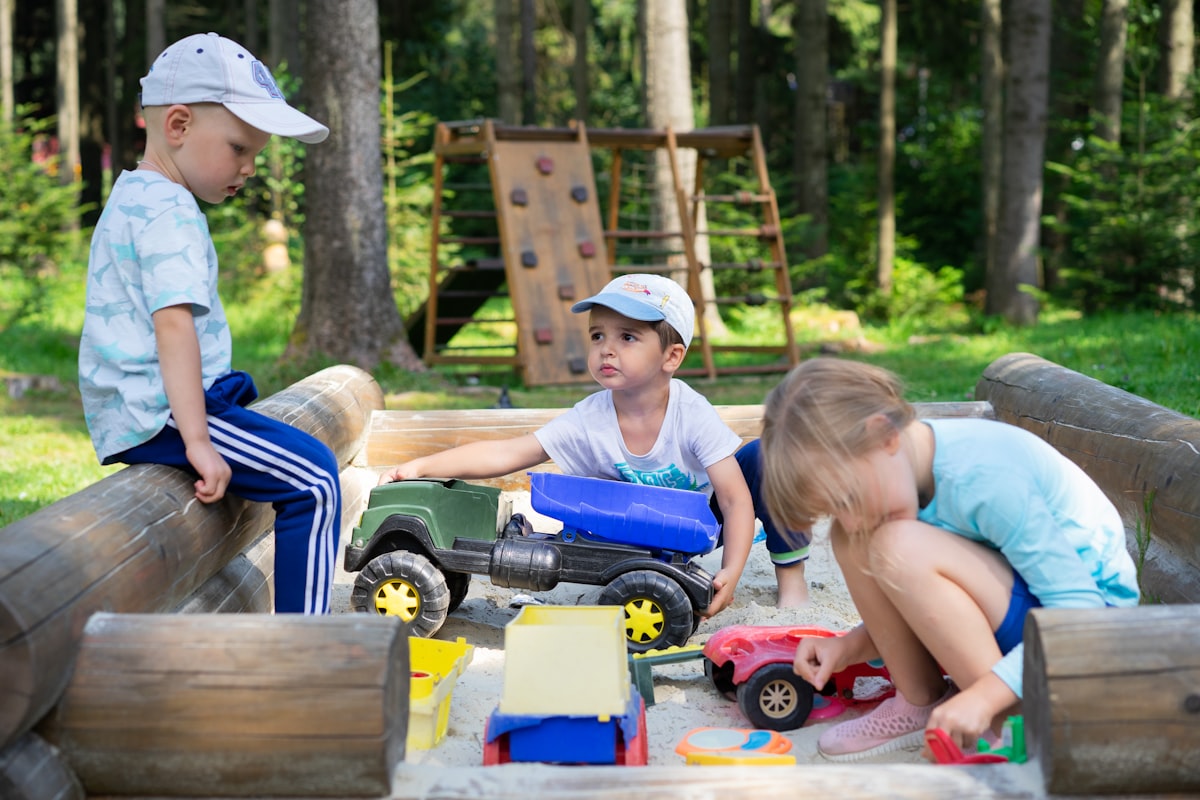
The neighborhood kids were jumping off the porch steps into a pile of leaves until dark last fall, and my neighbor watched them with real distress, convinced the wildness would cost everyone their bedtime. It cost nothing. The kids who spent the afternoon launching themselves at leaves were unconscious twenty minutes after lights-out, and the one who’d spent the same afternoon on the couch was the one negotiating at ten. Active kids sleep earlier, and the reason is less mysterious than parents hope. The exercise and sleep guide explains the mechanism for adults, and it runs identically in a nine-year-old.
Key takeaways
- Sleep pressure builds while you’re awake and rises faster when the body actually moves, which is why a spent kid falls asleep and a still kid negotiates.
- Any movement beats no movement, and the jump from nothing to something is the biggest jump available, at any age.
- Stairs, bike rides, playground sessions, leaf piles, and chores all count, because sleep doesn’t check whether it was an organized sport.
- Hard efforts need a one-to-two-hour cooling-off buffer before bed; easy movement in the evening is fine and often helps.
- Movement competes with screens for the same hours, and the evening half of the day decides which one wins the night.
The pressure mechanism, in kid terms
Every hour a child is awake, sleep pressure builds in the brain, faster when the body is doing things, and it drains during sleep. Movement raises the fill rate. A couch afternoon throttles it. A body that spent nothing by evening has nothing to pay sleep with, which is the entire physics of the seven o’clock negotiations that feel like a character flaw and are actually an accounting problem: the tank is underfunded, and the kid knows it even if he’d never say so.
The finding underneath all of this is unusually consistent. People who move at all sleep better than people who don’t, and the jump from nothing to something is the biggest jump available. The National Sleep Foundation’s surveys found vigorous exercisers about twice as likely to report good sleep, but the fine print is the part parents should read: light activity also beat sitting still, and moderate activity closed most of the gap. Your kid doesn’t need travel soccer. Your kid needs an afternoon that isn’t chair-shaped.
Exhausted like a drained battery rather than a worked muscle is the distinction a child’s night notices too, and it’s the difference between the leaf-pile kids and the couch kid at ten o’clock.
What counts on a school day
The bar for counts is hilariously low, and school days offer more raw material than parents credit. The walk or bike to school counts. Recess counts, twice. Playground after school counts, hauling the recycling counts, a race to the corner counts, and forty-five minutes of yard work on a Saturday usually overcounts, if my own lower back is any kind of credible witness, which it is. None of it looks like exercise. All of it is movement, and nobody’s sleep checks the outfit.
For a family version, the after-dinner walk is the highest-yield twenty minutes on the menu, because it’s movement and digestion and a screen-free slot all at once, and it parks everyone away from the kitchen and the couch, which is where the wind-down wants you anyway. In my house it became the standing answer to the seven o’clock fidgets, that restless hour when small people drift toward snacks or tablets. We walk to the corner and back. It isn’t exercise in any inspiring sense. It’s a habit that quietly pays rent, and kids who claim to hate exercise rarely notice they’ve done any.
The one timing rule: hard efforts, the travel-game kind, need to finish an hour or two before bed, because core temperature and heart rate have to come down before the body accepts the idea of sleep. That’s a cooling-off period, not a curfew, and everything gentle after dinner is fair game.
The evening counterweight: screens
Here’s the honest complication, and it’s the reason some genuinely active kids still sleep late. Movement competes with screens for the same hours, and an afternoon of bodily spending can be partially canceled by an evening of content and glowing light, which keeps arousal up regardless of what the muscles did at three. The kid who biked for two hours and then watched for three has run a deficit the bike can’t cover, because the fight happens at bedtime and the bike isn’t there.
This is why the movement link works best as a package. The active afternoon fills the tank, and a reasonably dim, reasonably screen-light evening lets the tank drain into sleep instead of evaporating against it. If your evenings currently run the other direction, do kids need a wind-down routine too is the repair manual, and why teens fall asleep in class covers the other end of the age range, where the tank is full and the clock is wrong. For the adults running the household, why sedentary days ruin sleep even when you feel tired is the same lesson wearing grown-up clothes.
Frequently asked questions
Do active kids really fall asleep earlier?
The mechanism says yes, and the surveys back it. Movement raises the fill rate of sleep pressure, the drowsy fuel that builds while you’re awake, and the National Sleep Foundation found even light activity beat sitting still for sleep quality in kids and adults alike.
How much movement does a kid need for better sleep?
Less than it looks like. Any movement beats no movement, and the jump from nothing to something is the biggest jump available. Bike raids, playground time, a family walk after dinner, and chores with actual lifting all count toward the same tank.
Can kids exercise too close to bedtime?
Hard efforts need the same one-to-two-hour buffer as adults, because core temperature has to come down. Easy movement in the evening is fine and often helps, since it spends the leftover restlessness the bedtime routine keeps tripping over.
Does screen time cancel out the movement benefit?
It competes for the same hours. An afternoon of movement followed by three hours of evening screens is a draw the movement loses, because the evening content and light keep arousal up regardless of how much the body spent earlier.
What if my kid moves all day and still won’t sleep?
Then movement was never the only thief, and the schedule, the light, or the wind-down deserves a look. If sleepiness turns into falling asleep at school, or nights stay broken for months, a pediatrician is the right door.
One honest limit before the promises start. Movement is a strong assist, not a cure, and a kid who sleeps badly despite real daily activity deserves a look at the rest of the schedule: wake time, light, wind-down, and the bedroom itself. And if the tiredness flips into falling asleep at school, or the nights stay broken for months, that’s a pediatrician conversation, not a parenting-failure spiral. For everyone else, the leaf pile is the sleep aid, and it costs nothing. The full movement chapter, naps included, is one chapter of the book.
This guide is educational, not medical advice. Persistent sleep problems in children deserve a pediatrician’s attention.