Shift Work & Jet Lag
Best Cooling Mattress Pads for Hot Summer Day Sleep
By Nora Vale · May 1, 2026 · 8 min read
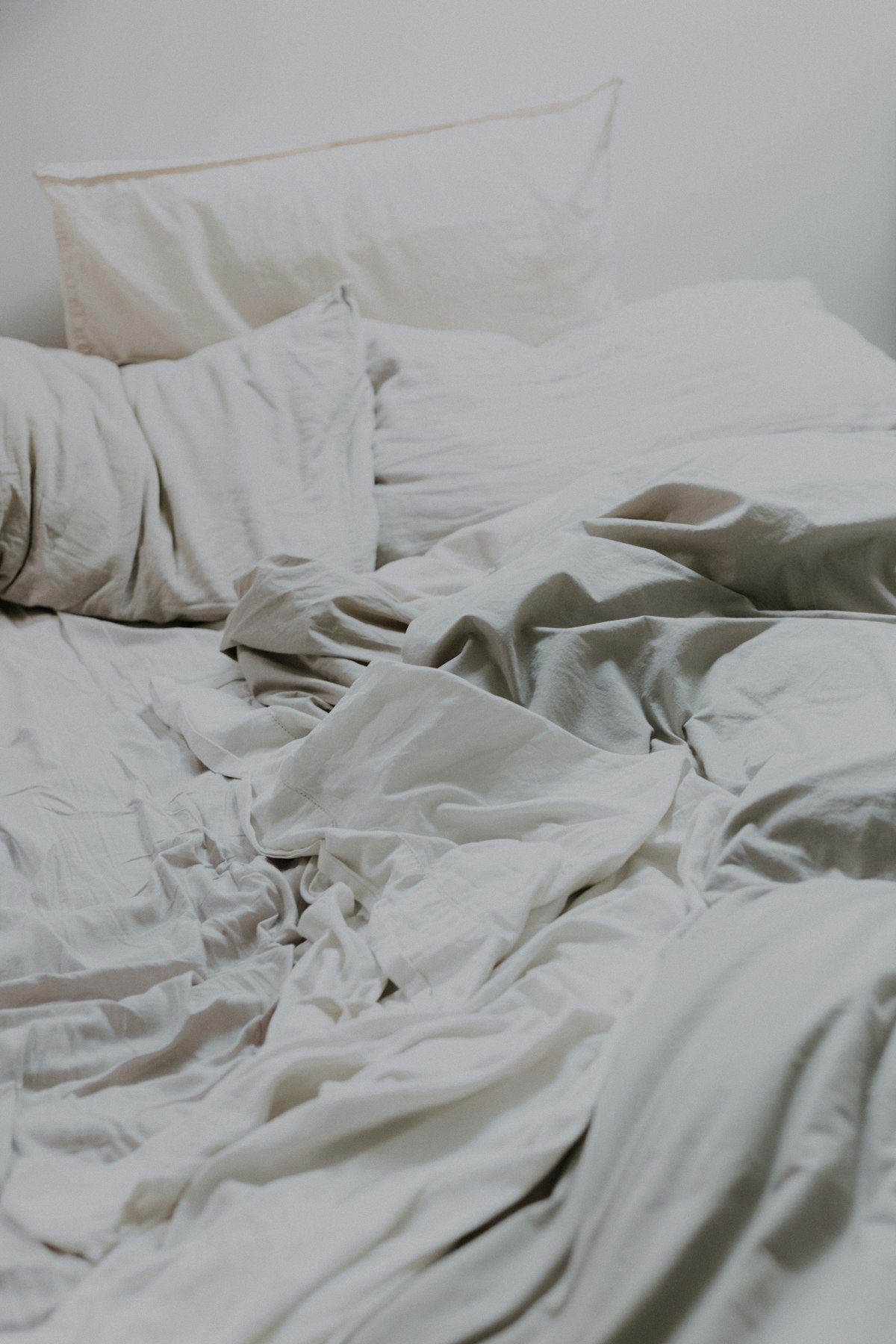
The cruelest joke about night-shift sleep in summer is that your body wants exactly one thing from the bedroom, a falling core temperature, and the sun is doing everything in its considerable power to prevent it. Night sleepers get the evening’s natural cooling for free. Day sleepers try to fall asleep at the thermal peak of the day, in a room that’s been baking since breakfast, and then we wonder why the mattress feels like a griddle. The book puts the day-sleeper’s whole situation in one line: “Your bedroom needs to be cave-dark at one in the afternoon, which usually means covering the glass itself,” and the same sentence applies to heat.
So the question of the best cooling mattress pad for day sleep deserves the honest treatment, including which products do physics and which do marketing, and what a night-shift sleeper’s room actually needs before any pad is worth a dime.
Key takeaways
- Sleep onset requires a falling core temperature, which afternoon heat actively fights.
- Passive gel and breathable pads feel cool briefly, then equalize; active systems genuinely pull heat.
- Blackout and cooling are separate battles; the dark must be won first or the cooling fights the sun.
- Pump noise is often a day-sleep feature, masking street sound the way a fan does.
- The cheap stack, foil, fan, warm shower, light bedding, solves half the problem before you spend.
Why your body cares about temperature this much
The biology first, because it explains every product claim you’ll read. Sleep onset is gated on your core temperature beginning its nightly drop, a few degrees of fall that evening normally delivers on schedule. Heat delays that drop, which delays sleep onset, fragments what follows, and shortens the deep-sleep portion you’re day-sleeping to protect in the first place. This is why hot summer nights produce that awful half-sleep where you wake sticky at intervals, and why the same night at 68 degrees behaves like a different mattress entirely.
For the day sleeper the deficit is doubled. You’re asking for the temperature drop at the hottest hours, in a room the sun has been charging for hours, often in a building designed to be closed and warm at night. The book’s shift-work chapters treat the bedroom as equipment that has to fight the daytime on purpose, and temperature is the second front after light.
The honest product taxonomy
Passive cooling is the first shelf, and the word that matters is feel. Gel-infused foams, phase-change covers, and breathable weaves pull heat from your skin at contact and then equalize with it, usually within twenty minutes of lying down. They’re genuinely nice at the moment of climbing into a hot bed, and they cannot keep a body cool across a whole afternoon of summer, because they have no way to move heat out of the system. Review them as comfortable toppers with a cold handshake, not as cooling.
Active systems are the second shelf, and the word is physics. Water-flow pads circulate cooled water beneath you from a small external unit, air systems push conditioned air through the mattress layers, and both genuinely remove heat from your body’s vicinity at a rate you can set and hold. That’s the category that solves the one-in-the-afternoon problem rather than greeting it politely, and it’s also where the price lives, from a couple hundred dollars for basic half-bed units to well over a thousand for the split-zone machines.
Two practical notes the reviews often skip. Half-bed coverage, under your side only, is enough for most people and halves the cost and noise. And a programmable schedule that pre-cools the pad before you get in matters more than the lowest achievable temperature, because the temperature drop at sleep onset is the biology you’re buying.
The room comes first, the pad second
No pad out-earns a room that’s still a greenhouse. The order of operations for a day-sleep bedroom: blackout the glass with foil, cardboard, or proper blackout fabric, because the book’s “cave-dark at one in the afternoon” standard also removes the solar oven effect; get air moving with a fan, which adds the white noise that masks the daytime street for free; strip the bedding to the lightest layer that survives; and take a warm shower an hour or two before bed, which paradoxically helps by dilating your vessels and accelerating the core dump afterward.
That stack costs almost nothing and, in milder climates, solves the problem outright. The expensive pad is the last upgrade, not the first, and buying it before the blackout is the classic mistake, an air conditioner politely losing to the sun through a curtainless window. The book’s broader advice for the shift worker’s budget fits here exactly: “Spend the money on sleep, not on the story.”
One more check before you buy: measure your actual room temperature across a couple of afternoons. If the room holds 75 or below with the blackout and fan in place, a passive layer may genuinely be all you need. If it’s holding 85, no pad under the sun will make that room a bedroom, and the money belongs in the glass and the cooling of the room itself.
The honest limits
Active pads have real drawbacks worth stating plainly. They cost real money, they need a maintenance window for water refills and cleaning, they add a device to a bedroom that some partners will negotiate over, and drier-air systems can feel cold in a way that needs adjusting for. None of that is a reason to skip one in a genuinely hot room; it’s the cost of the one gadget in this space that does the advertised physics.
The bigger limit is that temperature is one front of several, and a cool room with light leaking through the curtains, noise through the wall, or caffeine riding in your blood at one in the afternoon will still underperform. If daytime sleep stays broken after dark, quiet, cool, and anchored, the honest next stop is a physician, since persistent daytime sleeplessness despite good conditions deserves real diagnosis.
Frequently asked questions
Why is heat such a big deal for day sleep specifically?
Sleep onset needs a falling core temperature, and afternoon is when ambient heat fights that drop hardest. Night sleepers get the evening’s cooling for free; day sleepers work against the sun’s peak, so every degree removed from the room buys back biology that heat was delaying.
What’s the difference between pads that cool and pads that feel cool?
Passive gel and breathable covers feel cold at contact and equalize within about twenty minutes, buying comfort, not temperature. Active water or air systems genuinely remove heat and hold a set temperature. For summer day sleep, only the active category solves the actual problem.
Do I still need blackout curtains if I have a cooling pad?
Yes, because light and heat are separate battles. A pad under sunlit curtains is an air conditioner losing politely to the sun. The cave-dark standard comes first, and the cooling only pays off after the glass is handled.
Are active cooling pads loud?
The pumps hum like a fan on low, which for many day sleepers is a feature, since broadband noise masks street sound. Quieter units exist, placement helps, and you should test the noise in daylight hours, since your 1 p.m. tolerance is the one that matters.
What’s the cheapest effective setup before buying anything?
Foil or cardboard on the glass, a fan moving air, a warm shower an hour or two before bed, and light bedding. That stack solves half the problem for almost nothing and tells you whether an active pad earns its price in your specific room.
The book behind this site covers the day-sleep room in full, and you can get it here.
This guide is educational, not medical advice. If sleep problems persist for months or wreck your days, a doctor is the right door.