Racing Mind at Night
Body Scan for Sleep: The Quieter Cousin of Breathing
By Nora Vale · March 21, 2025 · 7 min read
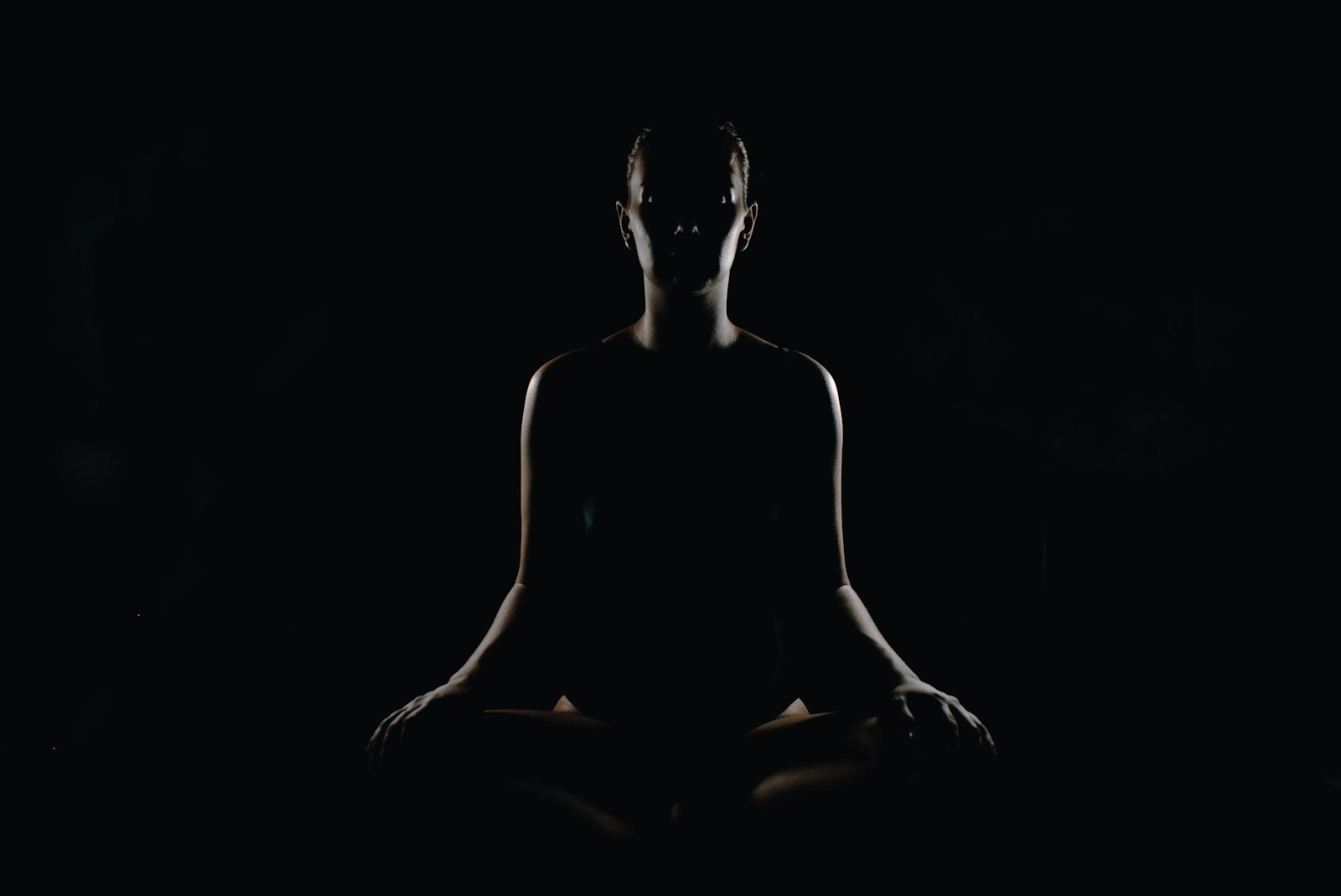
The first time I tried a body scan for sleep, I did it wrong in the most predictable way: I turned it into an exam. Feet, check. Calves, check, and those are tense, I should do something about that, and while I’m at it, is my breathing too shallow, and does everyone else’s breathing go fine without supervision. Twenty minutes later I was more awake than when I started, because I had given my brain a performance review to run at midnight.
If that sounds familiar, here’s the reframe that changed it for me. A racing mind at bedtime isn’t a malfunction, and the scan isn’t a sedative. It’s a boring job for a brain that can’t idle on command. The full context is in the racing mind at night guide; this post is the quieter, slower tool from that kit, the one that works from the body inward instead of arguing with your thoughts.
Key takeaways
- A body scan means moving attention slowly from feet to face, one slow breath per stop, noticing without fixing anything.
- It works by subtraction: a mind scanning its toes can’t simultaneously run the 3 a.m. status meeting.
- The evidence is honest, not miraculous: relaxation training improves sleep with moderate effects that grow over one to two weeks.
- Fixing the tension you notice defeats the whole mechanism. You’re a tourist, not a mechanic.
- Pick one body tool and keep it. Collecting techniques is sleep effort in a costume.
Why giving your mind a boring job beats arguing with it
Every tool that ever worked for me runs on the same principle: find the mind a job absorbing enough to crowd out worry and boring enough not to wake you up. Worry needs a storyline. It needs momentum, stakes, a next scene. A mind that’s “scanning its toes can’t simultaneously run the 3 a.m. status meeting. You haven’t defeated the worry; you’ve out-competed it for attention.”
That’s the whole mechanism, and it explains why the scan has to be dull on purpose. If the job is interesting, you stay awake to do it. If it’s pointless, the mind keeps trying to quit and return to the argument about your career, and the quitting and returning is where sleep sneaks in. The scan works by subtraction, not force. You’re not pushing sleep toward yourself; you’re stepping out of its way.
I used to think this was motivational-poster logic until I noticed what actually happened on the nights I tried to reason myself to sleep. The reasoning was the arousal. Every counterargument I composed gave the worry another scene to respond to. The scan gives it nothing to respond to. You can’t debate a kneecap.
How to do a body scan for sleep tonight
The mechanics take one paragraph, which is part of why people distrust them. Lie down, close your eyes, and move your attention slowly from your feet to your face. Spend one slow breath at each stop. Notice whatever each part is doing without fixing any of it.
The thirty-second tour version: feel your feet against the sheet, then your calves, your knees, and upward, one slow breath per station. Thighs, hips, belly rising and falling, chest, hands, arms, shoulders, jaw, the small muscles around your eyes. By the time you reach the face, most people have either drifted off or drifted near enough that the difference stopped mattering.
A few details I learned the slow way:
- Noticing is not fixing. If a shoulder is tight, you note it the way you’d note a parked car, and move up to the neck. The repair instinct is the effort trap in miniature.
- Boring beats clever. Don’t invent a glowing light traveling up your spine unless it genuinely bores you. Plain attention is enough.
- Skipping is allowed. Miss a body part, double back, lose count. Losing the thread is success here, not failure.
- No grade at the end. If you fall asleep around the knees, the scan worked perfectly. Nobody checks whether you finished.
If you drift off, that’s the tool winning. If you get to the top of your head and you’re still wide awake, don’t grade yourself and don’t start over; that grading is the same trap wearing a lab coat.
What the evidence honestly says
I promised myself I wouldn’t oversell this, so here’s the real picture. The method descends from a relaxation technique developed back in the 1920s and 1930s, and the modern evidence rates it honestly: relaxation training improves sleep with moderate effects that grow over one to two weeks of practice. A skill, not a switch.
That word moderate matters. If you arrive expecting anesthesia, you’ll quit on night three and file the whole category under things that don’t work for me. The honest framing is that relaxation is a dial, not a sedative, and dials work best when your hand already knows where they are. Which is why daytime practice helps here too: five minutes on the couch at 4 p.m., or on the bus home, builds the motion while nothing is at stake.
If you want the body-based tool with the flashiest recent research, that’s slow breathing with a long exhale, which I cover in breathing exercises for sleep. A 2023 Stanford study published in Cell Reports Medicine found five minutes a day of cyclic sighing beat mindfulness meditation on mood and daily arousal after a month. But the scan and the breath are the same family, occupying the body first and letting the mind quiet down second, and for many people the scan wins precisely because breathing makes them self-conscious. Some people start monitoring their breath the moment anyone says to watch it, and then the breath becomes another performance. If that’s you, the scan is your door.
The one-tool rule, and why I collect techniques at my own risk
Here’s the instruction that comes close to being a law in this chapter of my life: pick one body tool, not five. People in their worst sleep weeks collect techniques the way castaways collect supplies, auditioning a new one every night, and the collecting becomes its own version of the effort problem. One practiced tool outranks five sampled ones.
I have been the collector. Monday the body scan, Tuesday the 4-7-8, Wednesday an app with a soothing voice and an annual plan. Every audition was secretly a test, and every test was a question my brain was delighted to stay awake and answer. When I finally stuck with the scan alone for two weeks, two things happened. It started working more nights, and, more telling, I stopped checking whether it was working.
So practice on a boring night, before you need it. Pick an ordinary Tuesday when you’re mildly tired and nothing is on fire, and run one scan like a fire drill, five to ten minutes, low stakes, no grade. It will feel silly, which is exactly the condition under which it becomes learnable. On the night your mind genuinely races, a familiar motion has a chance. A tool you’ve never used will not save you at 1 a.m.
And if the bed itself has started to feel like an exam room, where even lying still feels graded, that’s a different problem and a different tool; the stimulus-control fix is to get up briefly and reset, which I cover in should you get out of bed when you can’t sleep. For the nights when the mind runs the meeting with no agenda, the word game in the cognitive shuffle for sleep pairs well with the scan, and the mechanism behind all of this is laid out in why your brain wakes up when you lie down. If you want a slot for the scan before you’re under the covers, the wind-down routine has one waiting.
Frequently asked questions
What is a body scan for sleep?
A relaxation practice where you move attention slowly from your feet to your face, spending one slow breath at each stop and noticing whatever each part is doing without fixing any of it. It occupies the body first and lets the mind quiet down second, which is the opposite order from how most of us try to fall asleep.
Does a body scan actually help you fall asleep?
The honest evidence: the method descends from progressive relaxation developed in the 1920s and 1930s, and relaxation training improves sleep with moderate effects that grow over one to two weeks of practice. Moderate, not miraculous. It’s a skill, not a switch, and it needs daytime practice like any other skill.
How long should a body scan take?
Five to ten minutes in bed, one slow breath per body part from feet to face. If you drift off somewhere around the knees, the scan worked. There is no score and nobody checks whether you finished the tour.
Should I fix the tension I notice during a body scan?
No. The instruction is noticing without repairing. Fixing turns the scan into one more job, and a job at midnight is the exact thing keeping you awake. Note the tight shoulder the way you’d note a parked car, and keep moving upward.
Body scan or breathing exercises, which one should I pick?
One body tool, not five. Slow breathing with a long exhale has the stronger recent research, but if monitoring your breath makes you self-conscious, the scan is the quieter cousin and the better fit. Practiced beats recommended, every night of the week.
The rest of the kit, worry page, shuffle, breath, and the honesty about what none of them promise, is in Sleep, Finally. Start at your feet. Leave your shoulders out of it.
This guide is educational, not medical advice. If trouble sleeping three or more nights a week lasts three months or more, that pattern has a name and a treatment, and a doctor is the right door.