Hormones & Sleep
Can a Sleep Tracker Show Cycle Sleep Changes?
By Nora Vale · July 22, 2026 · 6 min read
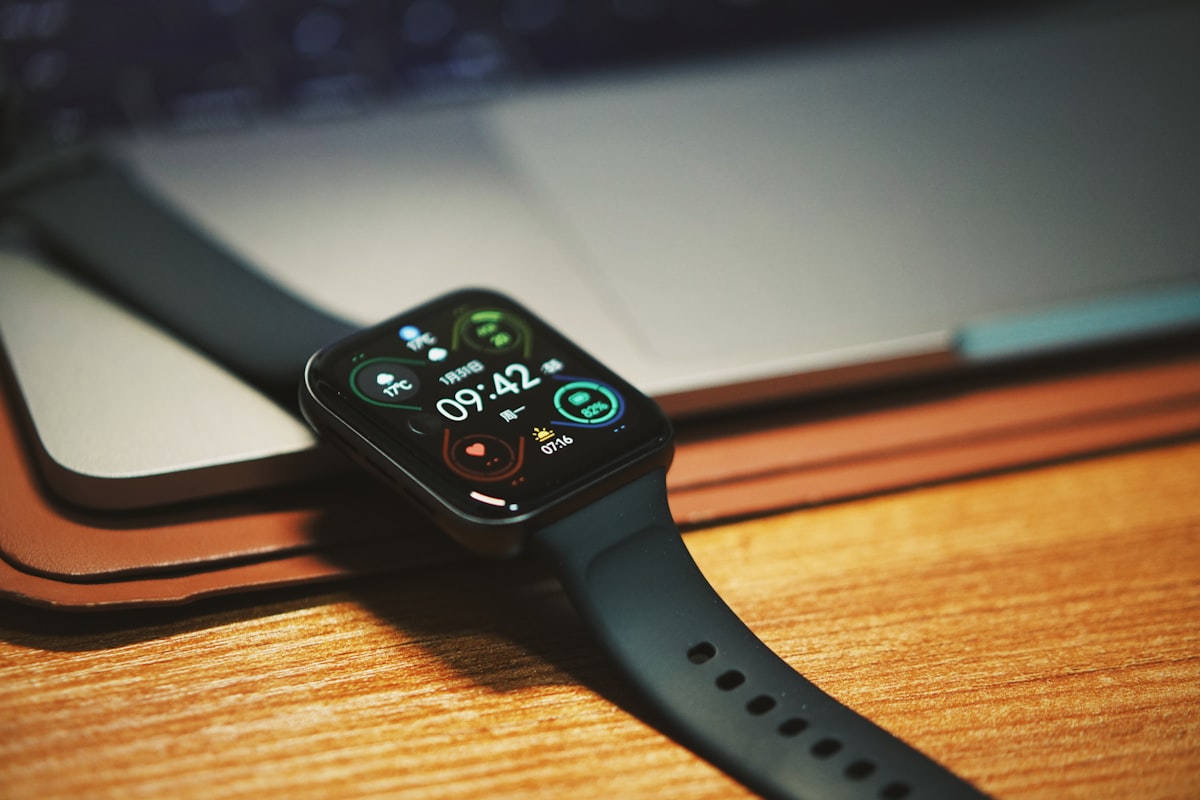
Every so often, someone shows me their tracker’s monthly view: six weeks of sleep-stage bars, and the dips that line up, uncannily, with the second half of their cycle. The data is real, the pattern is real, and the question that follows is where it gets complicated: so is this measuring my hormones? The honest answer about sleep tracker cycle changes is that the tracker sees the shadow, not the thing. What it measures, duration, wake count, a rough guess at deep sleep, genuinely does shift across the cycle. What it can’t measure is the hormones doing the shifting, and knowing that boundary is the difference between a useful tool and a misleading one.
The hormones and sleep guide gives this topic its own honest framework, and the framework has a warning built in: the book’s 28-day plan includes a day titled “Fire the tracker (or tame it),” because the same device that shows you patterns can also hand you a morning anxiety ritual. This post keeps both halves: what the tracker genuinely reveals, and where it stops.
Key takeaways
- Trackers honestly capture duration, wake count, and rough deep-sleep trends, and those do shift across the cycle.
- The luteal week is the predictable dip: body temperature rises half a degree to a degree, and sleep often fragments.
- Stage estimates are inferences, not measurements. Read trends across weeks, never single nights.
- No consumer device measures hormones. The tracker sees the shadow, not the cause.
- If checking the tracker makes mornings anxious, the book’s advice is blunt: two weeks off it entirely.
What actually changes across the cycle, tracker or no tracker
The underlying physiology first, because it explains what the tracker is seeing. Across the menstrual cycle, body temperature follows a pattern: lower in the follicular phase, rising by roughly half a degree to a degree Fahrenheit after ovulation and staying elevated through the luteal phase, the week or so before the period. Sleep, which uses a falling temperature as part of its onset and maintenance machinery, often fragments in that warmer window. The book dedicates real space to that week: “the fourth night before your period, you’re tired in a way that feels ancient, and yet at ten thirty you lie down and nothing happens.” The chapter’s verdict is blunt and kind: “You haven’t broken anything. Your thermostat got moved.”
So the pattern the tracker shows is real: slightly longer sleep latency, more wake-ups, sometimes less deep sleep in the luteal week, resolving after the period starts. For many women the pattern repeats with enough regularity that two or three cycles of data make it visible, and that visibility is genuinely useful. Knowing that a rough week is coming lets you plan it, per the book’s luteal-week rule: “A modest week costs you nothing. A fought week costs you the week.” Luteal phase sleep problems and period week insomnia cover the week itself; your cycle and nighttime body temperature covers the temperature mechanism.
What the tracker measures, honestly, and what it guesses
Here’s the honest anatomy of the device on your wrist. Consumer trackers are, in the book’s words, “decent at bedtime consistency and genuinely bad at knowing when you were quietly awake, which is precisely the data an insomniac tortures herself with.” That sentence divides the tracker’s outputs into trustworthy and aspirational.
Trustworthy-ish: bedtime and wake time, total time in bed, total estimated sleep, wake count in broad strokes, and heart rate trends. These come from movement and pulse, and they’re good enough for spotting patterns, especially the weekly and monthly kind, which is exactly the cycle question.
Aspirational: sleep-stage breakdowns. The deep/REM/light percentages are inferences from heart-rate variability and movement, not measurements of brain activity, and they can be confidently wrong on any given night. The luteal deep-sleep dip the research finds is real at the population level, but your device’s stage chart on a specific Tuesday is a guess wearing a graph. Read the trend line across two or three cycles. Ignore the single-night stage report, especially the morning it tells you your rough night was “restful.”
The deepest limit is the one that matters for this post: no consumer device measures progesterone, estrogen, or any hormone. The correlation between cycle phase and sleep metrics is visible in the data; the cause lives in blood work, and the book’s line about its own notebook applies to the tracker’s: “A notebook that honest is still worth keeping. It just isn’t a lab.”
How to use a tracker for cycle questions without fooling yourself
The method that works is unglamorous, and it’s the same one the book teaches for every pattern-hunting job: weeks, not nights, and a cycle reference, not memory.
First, give it two or three full cycles. “Fill it in for fourteen days, not seven,” is the book’s rule for logs, and the cycle version needs even longer, because a single cycle is one data point wearing a costume. Second, record cycle dates alongside sleep data, either in the tracker’s cycle feature or in your own log, because the overlay is the whole trick: the pattern only shows when sleep quality and cycle week sit side by side. Third, read the monthly view, not the morning score. You’re looking for the shape, the dip that recurs in the same phase, not the quality of any one night.
Fourth, pair the tracker with the morning log line. The book’s one-to-five morning grogginess rating, ninety seconds with coffee, captures how the night actually felt, which is the outcome that matters and the thing the tracker is worst at. The tracker shows the shape; your rating shows the cost. Together they’re worth more than either alone, and sleep tracker for hormone changes covers the tracker side of this in its own right.
And fifth, act on the pattern rather than admiring it. If the luteal dip is real in your data, the book’s luteal-week plan is the response: earlier wind-down, a cooler room, lower expectations on purpose, “a modest week.” The data’s job is to end the guessing that you’re doing something wrong, and its verdict, “You haven’t broken anything. Your thermostat got moved,” is the sentence to keep.
When the tracker becomes the problem
The book’s caution here is specific enough to quote at length, because it’s aimed at exactly the person most likely to be reading this: “If you wear a sleep tracker, today it loses its nightly authority: no more morning scores, no more chasing numbers, and if checking it makes you anxious, take two full weeks off it entirely.” The device that shows you your luteal pattern can also convince you, one orange bar at a time, that you’re bad at sleeping, and the anxiety it manufactures fragments the very sleep it’s measuring.
The taming version: check the monthly view, not the morning score; keep the device off the phone’s home screen; and if a week of morning scores has you dreading bedtime, take the two-week vacation without guilt. The book’s replacement instrument is almost funny in its simplicity: “Your morning grogginess, graded honestly on the log’s one-to-five scale, is a better instrument than the wrist.” It measures the thing you actually care about, which is whether you feel like a person, and it never once uses the word “readiness.”
Honest limits
This is a commercial-intent post, so let me be the reviewer who says the uncomfortable thing: there is no consumer tracker that measures hormones, whatever the marketing implies, and cycle-feature predictions from wrist data are correlations with a confidence interval, not a diagnosis. If your tracker suggests a cycle pattern that’s severe, worsening, or outside the normal luteal shape, the tracker’s job is done and a clinician’s begins: the book’s ceiling on all notebooks applies. “Notebooks record. Labs read. I can’t.”
And if the pattern you’re hoping to find isn’t there, if your sleep looks flat across the cycle while your symptoms say otherwise, that’s information too, and it means the sleep problem has another suspect, which the fundamentals and the doctor conversation are better positioned to find than a wrist device.
Frequently asked questions
Can a sleep tracker show sleep changes across my menstrual cycle?
Partly. Trackers honestly capture duration, wake count, and (roughly) deep-sleep proportion, and across a cycle those do shift, especially in the luteal week, when body temperature rises and sleep often fragments. What the tracker can’t capture is the cause: no consumer device measures the hormones driving the pattern.
How accurate is a wrist tracker at measuring sleep stages?
Rough. Consumer trackers are decent at bedtime consistency and wake count, and genuinely bad at knowing when you were quietly awake, which the book calls out directly. Stage estimates are inferences from movement and heart rate, not measurement, so read trends, not single nights.
Will a tracker tell me if my cycle is affecting my sleep?
It can show the correlation if you look at weeks, not nights: overlaying sleep quality against cycle dates for two or three cycles reveals luteal patterns that single nights hide. That’s the tracker at its best. It can’t tell perimenopause from a thyroid problem from PMS, which is a clinician job.
Can tracker obsession make sleep worse?
It can, and the book addresses it directly: no more morning scores, and if checking the tracker makes you anxious, take two full weeks off it entirely. Your own honest one-to-five morning rating is a better instrument than the wrist for judging how you slept.
The complete method, what to track, what to ignore, and how to plan the week your cycle hands you, is in Sleep Finally.
This article is educational, not medical advice. Cycle patterns that are severe, worsening, or atypical belong with a clinician, not a wrist.