Hormones & Sleep
Do Bedroom Fans Actually Help Night Sweats?
By Nora Vale · June 29, 2026 · 6 min read
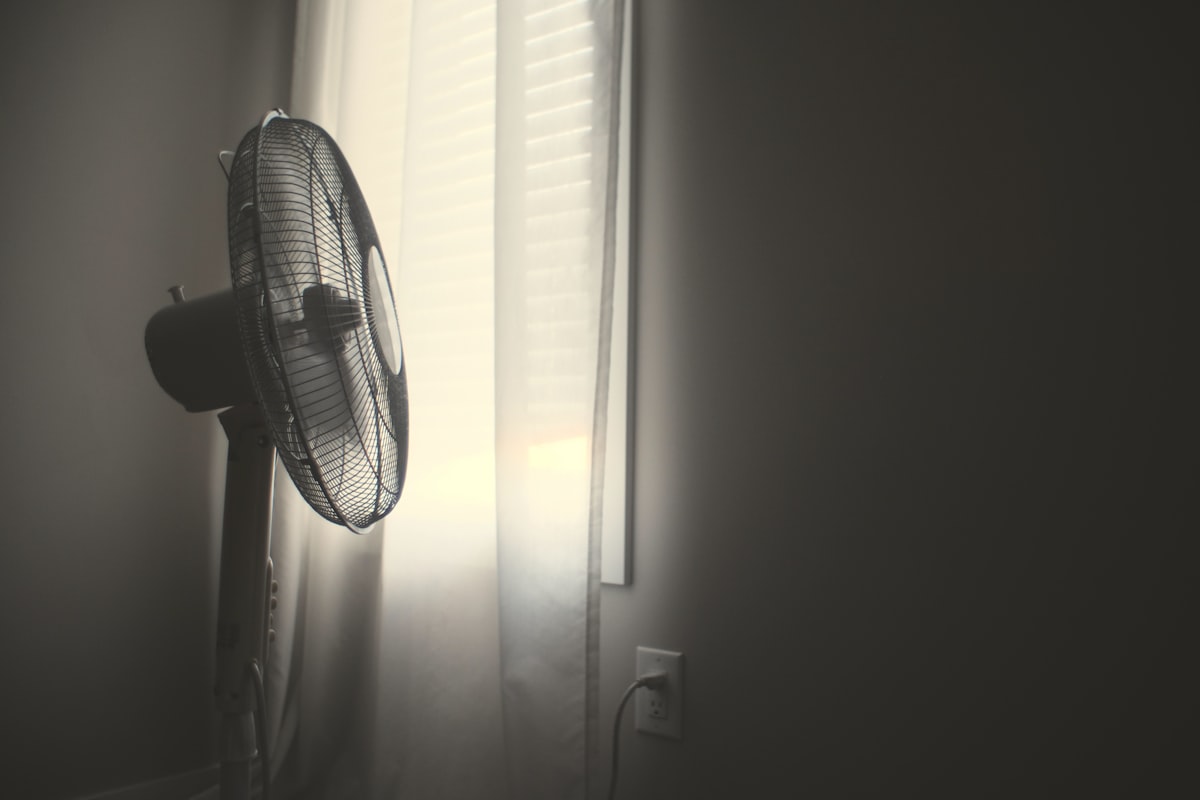
The fan is the most democratic tool in the whole night-sweat kit: cheap, available, and sitting in a closet in half the bedrooms in the country already. And it’s also the tool most people misjudge, because they expect it to do a job it was never going to do. So before the honest mechanics, the honest frame: fans for night sweats work, and they work on the aftermath. If you’re waiting for a fan to prevent the flash, you’ll be disappointed. If you want the drenched, awake, sheet-flipping phase to be shorter, the fan delivers.
The frame comes from the hormones and sleep guide, which keeps this whole subject honest with one sentence: “The flash itself is rarely what wrecks the night. What wrecks it is the sequence afterward.” The heat starts it, “The worry finishes it,” and the fan is equipment for the middle, the drenched part, where minutes of misery either get shortened or stretch into a fully awake hour.
Key takeaways
- Fans work by speeding evaporation and carrying warm air away, which shortens the aftermath of a flash.
- No fan prevents the flash itself. The book is blunt: no amount of fan can stop a chemical event from starting.
- Across the body beats directly at the face: better evaporation, less eye and throat drying.
- The fan doubles as steady sound, masking the small noises that wake you between flashes.
- The fan is one layer of the cooling playbook, and the trigger log does the work the fan can’t.
The mechanics: what moving air actually does
Two things happen during the drenched phase of a flash, and both are problems moving air solves.
The first is sweat. Your body is dumping heat by dumping moisture, and sweat only cools you when it evaporates. Still, humid air around a damp body slows evaporation to a crawl, which is why the drenched phase can stretch on while you lie there doing arithmetic about the alarm. Moving air replaces that saturated boundary layer with drier air, and evaporation speeds up. This is the fan’s primary job, and it’s physics, not marketing: the wet phase shortens because the moisture leaves your skin faster.
The second is the warm air itself. The heat radiating off your body accumulates in the pocket of air around you, under the covers, in the curve of your pillow. A fan exchanges that pocket for room air, which at 65 to 68 degrees is doing useful work. This is why the fan pairs so well with a cool room: the room sets the baseline temperature, and the fan keeps your body’s own heat from building a warmer microclimate inside it.
The book’s own position on the fan is affectionate and specific, calling it a fire extinguisher for flushes, and the fire-extinguisher metaphor is exactly right: an extinguisher doesn’t prevent fires, it shortens them. Same tool, same logic.
How to set it up, honestly
The setup matters more than the fan, and most of it is free.
Position the airflow across your body, not at your face. Evaporation is the goal, and the largest damp surface wins; a jet of air at your face mostly dries your eyes and throat and annoys you. Low or medium beats high for all-night use, and if your fan oscillates, the sweep prevents the cold-spot problem where one shoulder freezes while the rest of you does nothing.
Keep it reachable. The flash doesn’t wait for you to get out of bed, and the book’s whole cooling system is designed around minimizing the waking: the layers you can shed from inside the bed, the one foot out first, the cold pack by the bed. The fan belongs in that system, switched from low to higher the moment a flash starts, which means its controls live within an arm’s reach of where you sleep. If your fan’s dial is across the room, the setup is wrong regardless of the fan.
Decide in advance whether it runs all night or on demand. Some women keep it on low continuously and like the steady sound, which does double duty masking the small noises that wake you between flashes, a mechanism the book values highly: “a fan’s steady sound hides the on-and-off of a lawnmower better than quiet does, and it’s the change in sound that drags you up out of sleep.” Others run it only during flashes to avoid the drying. Try both for a week each; your skin and sinuses will vote.
The gear itself doesn’t need to be expensive, and the book’s economics of fans are refreshingly blunt, from the neighboring chapter on day-sleep rooms: “a box fan from the hardware store handles the white-noise job as well as any gadget.” The high-end bedside fans are quieter and prettier, and if noise is your second problem, best fans for white noise while you drift off reviews that job specifically. But the evaporation job doesn’t care about the price tag.
What the fan can’t do, and what does that work instead
The honest ceiling comes from the book’s own flaw section, stated before you find it the hard way: “They can turn five drenching wake-ups into two. They can shorten the flashes. They can’t erase them, because no amount of fan can stop a chemical event from starting, and pretending otherwise would make this a brochure instead of a book.”
So the fan lives in a system, and the system is worth knowing, because each layer covers what the others can’t:
- The room at the bottom of the 65 to 68 degree range, because the baseline determines how far the flash has to climb, covered at why 65 to 68 degrees is the sleep sweet spot.
- Layered bedding with exits: flat sheet, light blanket, comforter you shed in stages, one foot out first. Tight tucking is the enemy.
- Moisture-wicking fabric against your skin, synthetics or merino, never cotton for this job, covered at best moisture-wicking pajamas for night sweats and which bedding is best for night sweats.
- The cold pack by the bed, wrapped in a thin towel, against neck or wrists, the book’s own move for shortening a flash mid-event.
- The trigger log, which outperforms everything above, because removing a trigger removes flashes entirely rather than shortening them.
The log deserves the emphasis, because it’s the one layer that works upstream. “Memory is a terrible statistician. It rounds off Tuesdays,” and two weeks of one-line morning notes found Christine’s triggers, alcohol and spicy food, hiding in plain sight inside an ordinary week. Night sweats cooling tips assembles the whole playbook, and does alcohol make night sweats worse covers the most common trigger specifically.
When the fan bothers more than it helps
Some honesty for the minority report. A fan blowing all night can dry eyes, nose, and throat, and for people prone to dry sinuses or morning sore throats, that’s a real cost. The moving air on sweat-damp skin can also overshoot: the flash ends, the sweat evaporates, and the evaporative chill keeps going, waking you cold at 3:40, which is its own special misery. If either of those is you, the fixes are distance, oscillation, a lower setting, or a timer that runs the fan for the first half of the night and lets the room take over later.
And if the fan’s noise bothers you more than its breeze helps, the white-noise machines reviewed at best white noise machines for light sleepers can take over the sound job while the temperature job moves to the room and the bedding.
Honest limits
The fan is a comfort tool with a modest ceiling, and this post would be dishonest if it implied otherwise. It shortens the aftermath. It doesn’t reduce the number of flashes, it doesn’t cool the room by itself, and in a genuinely hot room it can only move warm air around, which is why summer heat waves need their own plan at how to cool a bedroom without air conditioning and hot summer nights: adjusting your evening routine.
And the medical boundary holds here as everywhere: night sweats that are severe, sudden, one-sided, or accompanied by other new symptoms are not a fan problem, and they’re a clinician conversation, not a gear upgrade.
Frequently asked questions
Do fans actually help with night sweats?
Yes, but on the aftermath, not the cause. Moving air speeds evaporation of sweat and carries warm air away from your body, which shortens the drenched phase of a flash and makes falling back asleep faster. No fan stops a hot flash from starting, because no amount of fan can stop a chemical event.
Where should the fan point for night sweats?
Airflow across your body, not directly at your face, works best for evaporation, and many women keep it on a low or medium setting all night rather than scrambling for a switch mid-flash. Position it where a hand can reach it from bed, because the flash doesn’t wait for you to get up.
Can a fan make night sweats worse?
It can, for some people. A fan blowing directly on you all night can dry your eyes, nose, and throat, and the chill of moving air on sweat-damp skin after a flash can leave you cold enough to wake again. Low settings, distance, and oscillation manage most of this.
Is a fan enough by itself?
It’s one layer of the cooling playbook, not the whole thing: room at the bottom of the 65 to 68 range, layered bedding with exits, moisture-wicking fabric, a cold pack by the bed, and the trigger log. The log does the work the fan can’t, finding your triggers so some flashes never start.
The complete cooling playbook, room, layers, fan, and the trigger log that works upstream, is in Sleep Finally.
This article is educational, not medical advice. Severe or sudden night sweats, especially with other new symptoms, belong with a clinician.