Wind-Down Routines
Earplugs for Sleep: A First-Timer Buying Guide
By Nora Vale · June 2, 2026 · 8 min read
You’re standing in the drugstore at 9 p.m., holding a green foam cylinder that costs less than lunch, and the label promises up to 30 decibels of peace. Nobody explains the catch. Half of first-time buyers conclude by Friday that their ears are the problem, when the real issue is that nobody teaches how a plug goes in or what the number on the box can honestly deliver, and that gap is exactly why earplugs for sleep get written off by people who never got a fair trial.
This is the buying guide I wish came taped to the peg: what foam, silicone, and wax plugs actually do, how the fit works, what a sensible first kit costs, and where the honest limits sit. It’s one dial in a larger system, the same system I walk through in the wind-down routine guide. The cheap dial, too.
Key takeaways
- Foam plugs labeled around 30 decibels deliver roughly half of that in real ears, and only when they’re fitted properly.
- The fit is the whole product: roll, reach over your head, pull the ear up and back, insert, hold until it expands.
- A pair costs about two dollars, and a full travel kit lands near twelve, which happens to be the book’s entire spending cap for gear.
- Plugs turn the volume down; a steady fan blurs the on-and-off pattern that actually wakes you, so the two work as a pair.
- Earplugs don’t fix a racing mind, and a room that goes quiet can make the ceiling math louder.
Why earplugs for sleep beat a fan alone
Here’s the machinery, because it decides what you should buy. Your brain doesn’t care much about steady sound; it cares about change. A highway hum fades into the background within minutes, but a door slam, a dog two yards over, or a snore that starts without warning sets off a brief arousal in the brain, sometimes with a spike in heart rate, even on nights you never surface enough to remember. Steady sound goes unlogged. The job splits in two, then: the plug cuts the peak off every burst, and a fan lays a floor of sound under the whole night so each new noise stands out less against it. One without the other leaves gaps, and the gaps are what wake you.
If you want the full case for that floor of sound, including the part where the research is thinner than the marketing, I covered it in my post on white noise for sleep. And if the noise in question snores, the same layering playbook runs through how to sleep with a snoring partner. Plugs first. Fan second. Conversation, ideally at breakfast, third.
The fit is the whole product
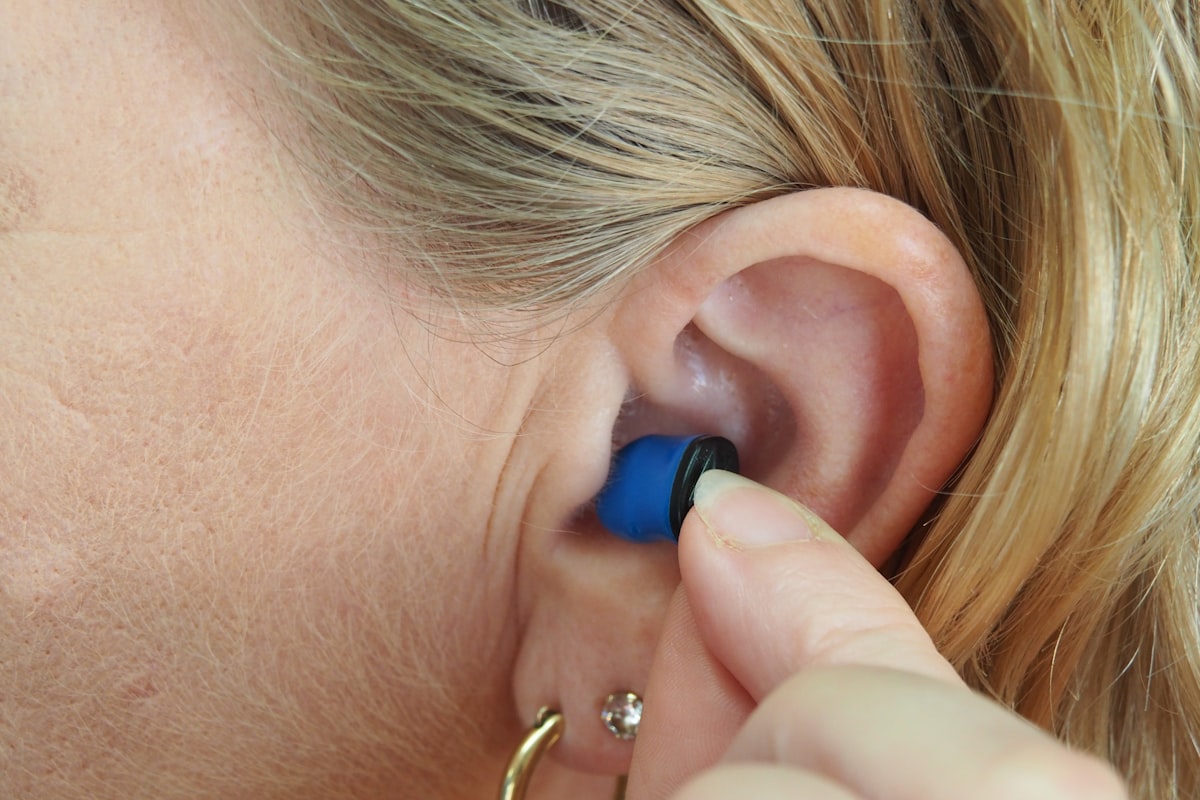
The fitting instructions fit in one breath, and they’re the difference between a plug that works and a plug that catches on the pillow all night. Roll one between your fingers into a thin cylinder, reach over your head with the opposite hand, pull the ear up and back, insert the plug, and hold it in place while it expands. The hold is the step everyone skips, and a plug half-seated blocks almost nothing. The book’s version is blunter than mine: “Most people who say they can’t wear earplugs were never taught this. It changes the math.” Ten seconds, done.
Fit beats brand, and it isn’t close. A two-dollar plug seated properly outperforms a thirty-dollar silicone one hanging half out of your ear, and a full box costs less than the shipping on most premium sleep gadgets. Buy a multipack with a couple of sizes, because ear canals differ, and the pair that seals your left ear may buzz loose on the right.
What a first kit actually costs
Tom drives long-haul and sleeps in a different hotel three or four nights a week, in rooms with streetlight blazing through half-inch curtain gaps and ice machines that thump at midnight. He can’t renovate any of them. So he carries the room instead, in a zippered pouch that costs about twelve dollars all in, holding “foam earplugs, a full box, with a spare pair stashed in the truck,” plus a small roll of electrical tape for the LED lights, two binder clips and a dark T-shirt to pin the curtain shut, and bed socks for the rooms the heater forgot.
Ten minutes of setup, any room, and the same pouch handles your own bad nights: the renovation that starts next door, the heat wave that puts the window unit on the wrong wall, the neighbor’s Tuesday lawnmower. The plugs are the one item worth owning even if you never travel, and the rest of the kit is tape, clips, and socks. Nothing in it needs upgrading. The book pairs this pouch with habits that cost nothing at all, like parking the phone in the kitchen overnight instead of on the nightstand, which I unpack in should I charge my phone outside the bedroom.
What earplugs can’t do
Here’s the honest flaw. The winter I fixed my room, I taped every light, dropped the thermostat, and bought the pillow that finally matched my shoulder, and some nights I still lay there, wide awake, doing math on the ceiling. A quiet room with a loud head is its own genre of failure, and plugs can make it stranger, because once the outside noise goes away, the inside noise is all that’s left. If that’s your version of the problem, the answer lives earlier in the evening, not deeper in the ear canal.
Two more limits, quickly. Foam plugs deliver about half their label in the real world, so a 30-decibel rating gets you closer to a whisper than to silence, and side sleepers go through a break-in stretch where the pillow fights the fit for a few nights. Hygiene matters too: replace foam pairs every few uses, wash reusable ones, and if you’ve had an ear infection or you tend to build up wax, ask a doctor before plugs become a nightly habit. Mild fullness the first week is common. Pain is not.
Frequently asked questions
What kind of earplugs are best for sleep?
Foam, for almost everyone. Cheap foam plugs give the highest noise reduction per dollar, and they’re replaceable, which matters for hygiene. Moldable silicone and wax putty are the fallback if foam irritates your canals or refuses to seat, and flanged reusable plugs are fine for travel. Start with a multipack of foam in a couple of sizes before you spend real money.
How do I stop earplugs from falling out at night?
Mostly, fit them deeper and hold them longer on the way in. Roll the plug tight, reach over your head, pull the ear up and back, insert, and hold a full ten seconds while it expands. If they still work loose, you’re rolling them too loosely or your canals run small, which a smaller size or a soft wax putty usually solves.
Can earplugs damage your ears or cause earwax buildup?
Rarely, and mostly through hygiene rather than the plug itself. Reusing dirty foam pairs or skipping the hand-wash can push wax deeper or invite irritation. Replace foam plugs every few nights, wash reusable ones, and skip plugs entirely during an ear infection or after ear surgery unless a doctor clears you. Pain is a stop sign. Mild fullness the first week is not.
Do earplugs block out snoring completely?
No, and any product promising silence is overselling. Real-world reduction runs about half the label, so roughly fifteen decibels, which turns a snore into a rumor rather than a no-show. Pair the plugs with a steady fan so the on-and-off pattern of the snoring blurs into the floor, and that combination carries most people through most nights.
Do I need expensive custom earplugs for sleeping?
Not at first, and maybe never. Custom molds make sense for people who wear plugs nightly for years or whose canals simply don’t hold standard shapes. Everyone else should spend two dollars and learn the fit, because a properly seated foam plug beats an expensive one worn wrong. Buy the cheap lesson first.
The two dollars that don’t need upgrading
My stance, after trying the expensive versions first: the two-dollar plug, fitted properly, is the best deal in sleep, and it’s the only item on that shelf that works the first night you use it. No upgrade path, no charging cable. Start with a multipack, learn the roll-and-hold, put a fan underneath for the floor of sound, and give the whole thing a week before you judge it.
And keep the whole evening in view, because plugs are one dial among four. The room still has other jobs, starting with why your bedroom should be dark, and the hour before bed matters more than anything you wear in your ears. The worksheets for the full system are in Quiet Core Reset. Cheap works. A green cylinder and ten seconds of patience are enough.
This guide is educational, not medical advice. If earplugs cause pain, drainage, or lasting muffled hearing, stop and talk to a doctor, and bring recurring sleep trouble to one as well.