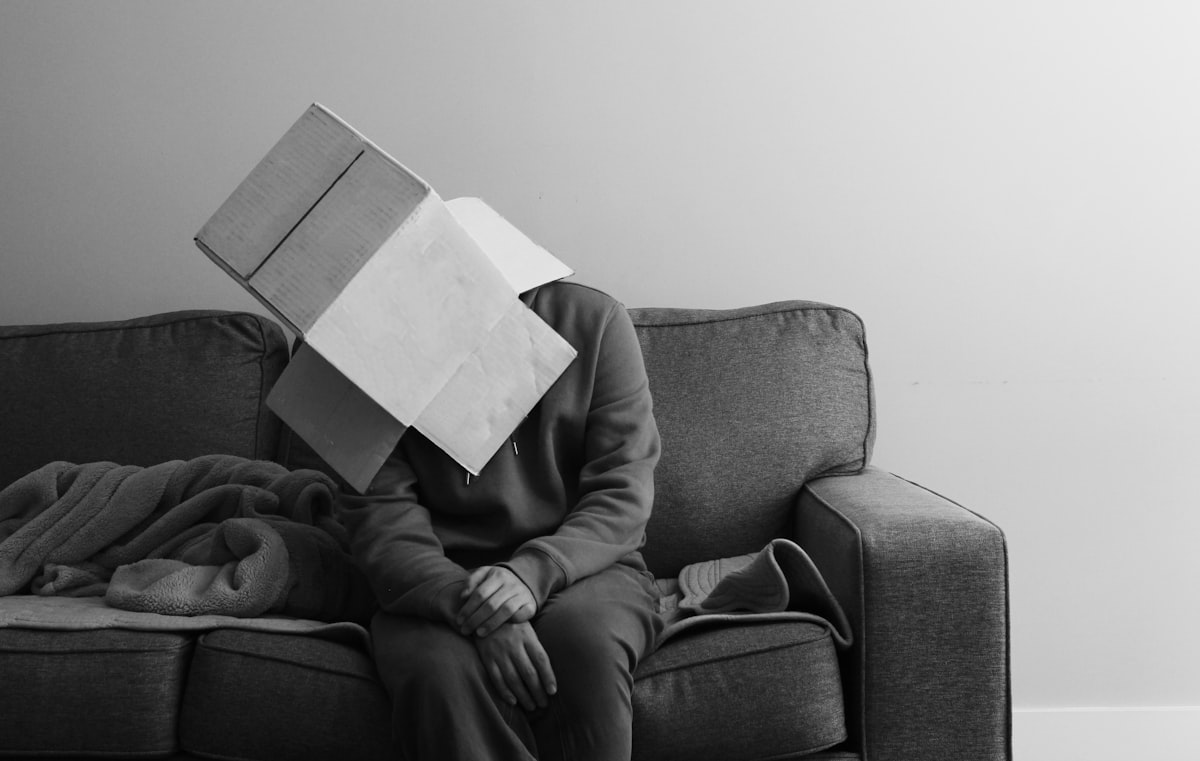
Stress & Cortisol
How to Fall Asleep When You're Stressed and Tired
By Nora Vale · July 24, 2026 · 7 min read

Nine minutes into a call with my sister I fell asleep mid-sentence, woke at the sound of my own silence, and then lay awake until two. That night taught me the sentence I’ve needed ever since: exhaustion is not a sedative. You can be tired the way stone is heavy and still be wide awake at midnight, because stress and sleep pressure run on separate systems. This post is about the gap between them, and the fuller guide to the whole mess is in the stress and sleep guide.
Key takeaways
- Stress doesn’t look like a problem. It looks like your life, which is why nobody suspects it.
- Worry blocks the perception of sleep pressure: the fuel is full, the gauge is broken.
- Trying harder is the trap. Effort is arousal, and it’s precisely what keeps you awake.
- The fix runs earlier and duller: a worry page at the kitchen table, boring occupancy in bed.
- In genuinely bad weeks, protect one anchor, the wake time, and let the rest slide.
Tired and wired at the same time
Here’s the confusion that keeps this problem alive: you did everything right today, you’re running on five hours, and yet midnight finds you rehearsing a conversation from Tuesday. It feels like a malfunction, or a character flaw, or a verdict on your evening choices. It’s none of those. “stress doesn’t look like a problem. It looks like your life.” The carpool, the comment with a subtext, the sink of dishes at nine. Nobody files that under stress. Everybody files it under Tuesday, and then the body writes the report anyway.
The mechanics are simple enough to hold. Sleep pressure, the tiredness you can feel, builds all day like a rising gauge. Worry doesn’t drain the gauge, it blocks the needle, so your body can be carrying a full tank of sleep pressure while the reading on your dashboard says nothing’s there. “The fuel gauge is what’s wrong, and the fuel gauge is worry.” I read my own years of this as a personal defect before I understood it as a chemistry report, and the reframe isn’t just comforting, it’s diagnostic: it tells you which tools can work.
Cortisol, the awake chemical, deserves its fair shake here too, because it isn’t a villain, it’s a shift worker with a fixed schedule: a spike after waking, a slide through the day, a floor around midnight. The trouble isn’t the spike. “The problem was never the spike. The problem is what constant worry does to the rest of the curve.” A brain on chronic worry flattens that healthy hill into a plateau of alertness that runs from breakfast to bedtime, and midnight lands on a plateau. The mechanics are in cortisol and sleep explained if you want the whole curve.
The trap: trying harder
The instinct, stressed and exhausted at midnight, is to try. Force the eyes shut, run the relaxation routine with one eye on the clock, do the math on how many hours are left if I fall asleep right now. Every one of those is effort, and effort at midnight is arousal wearing a bedtime costume. You can’t fall asleep, so you try harder, and the trying is precisely what keeps you awake. Nobody’s fault. It’s just how the system is wired: sleep is something you permit, not something you perform.
You’ve probably caught the proof without naming it. Asleep on the couch at eleven, rigid in bed at midnight, same brain, same exhaustion. The couch doesn’t ask anything of you. The bed, on stressed nights, has quietly become an exam room, and lying there working at sleep is just the exam taken with more effort. Which is why the recommendation that sounds most counterintuitive is the one that holds: stop trying to sleep, and give the mind a job so boring it forgets to try.
There’s a version of this trap with a clock in it, and it deserves its own warning: checking the time. Every clock check is a fresh calculation, six hours left, five and a half, and each calculation is a small dose of alarm that resets the effort. If you take one mechanical rule from this post, take that one.
What actually works: earlier and duller
The fix has two halves, and the first half happens before you’re tired. The worry page: two to three hours before bed, at the kitchen table, a line down the middle of a page, worries on the left, the next concrete step on the right, or the legal entry “nothing tonight.” The point isn’t solving anything at 8 p.m. The point is showing your brain the meeting exists, so it stops holding the meeting at 1 a.m. Hannah, from the book, ran hers at 6:30 between homework and dishes, and within two weeks her midnight brain stopped litigating the carpool. The full method is in the worry journal method.
The second half happens in bed, and it’s occupancy, not relaxation. The cognitive shuffle: pick a neutral word, piano or ladder, and for each letter picture a random image, two seconds each, pear, igloo, oatmeal, no order, no story. Worry needs a storyline, and a mind shuffling letters can’t run one. Or slow breathing with the exhale longer than the inhales, a few rounds, then let it settle. A 2023 Stanford study published in Cell Reports Medicine found five minutes of daily cyclic sighing beat mindfulness meditation for mood and resting breathing rate, which is more support than most sleep tricks get, and it’s still just breathing, free and undramatic.
One rule above both: practice them on a calm night. A tool learned at 2 a.m. in desperation is a tool you don’t have, because the desperate version needs skills the desperate night won’t lend you. Ten minutes of shuffle on an ordinary Tuesday is what makes the shuffle available on the bad Thursday. The full toolkit is in how to fall asleep when stressed, and the mechanics of the shuffle itself are in cognitive shuffle for sleep.
The honest fine print
Some weeks this will all feel like a bucket in a rainstorm, and I’d rather say so than sell you. The caregiver weeks, the deadline weeks, the weeks where the load is what it is: no breathing pattern empties those. On those weeks, protect the one thing that keeps the rest of the system from sliding, the wake time, the same alarm every day, and let everything else pass. The goal was never a lighter load. The goal is keeping the load out of the mattress. My own life, for the record, stayed exactly as stressful. The nights stopped joining in.
And there’s a line where a blog post ends: three or more bad nights a week for three months, or falling asleep mid-sentence in daylight as a regular event, is doctor territory, the kind of appointment that should start with the words you’re having now. Going is not defeat. It’s the same experiment, run with better equipment.
Frequently asked questions
Why can’t I fall asleep even though I’m exhausted?
Because tired and wired are not opposites. Worry blocks your perception of sleep pressure, so the fuel is there but the gauge is broken. The exhaustion is real, and the stress is running the dashboard.
How do I fall asleep when I’m stressed and tired?
Stop trying, then get boring. Handle the worries on paper a couple of hours before bed, then in bed occupy the mind with the cognitive shuffle or long-exhale breathing. Sleep returns when you step out of its way, not when you push.
What should I do in the moment at midnight?
Nothing clever. Pick the dull tool you practiced on a calm night and run it: random images letter by letter, or slow breaths with the exhale longer than the inhales. Don’t argue with the stress and don’t check the clock.
Should I go to bed earlier when I’m stressed and tired?
Usually no. Earlier bed on a wired brain means more empty hours for the inbox to perform in, and it trains lying awake in bed. Keep your ordinary bedtime, run the worry page earlier in the evening, and let sleep pressure do some of the pulling.
When is this bigger than a blog post?
When it’s three or more bad nights a week for three months, or when falling asleep mid-sentence during the day becomes normal. Those are doctor conversations, and going is not defeat.
The chapter behind this post lives in Sleep, Finally. Tonight’s version: one page, one line down the middle, at the kitchen table while it’s still daylight enough to mean it.
This guide is educational, not medical advice. If stress and insomnia hold on for months, a doctor or a CBT-I specialist is the right door, no shame in that.