Screens & Sleep
The $10 Alarm Clock Swap That Ends Phone Excuses
By Nora Vale · July 16, 2026 · 7 min read

The phone is on the nightstand because it’s your alarm clock, and nobody ever questions the alarm clock. That’s the whole defense, and it’s airtight until you price the alternative: “The highest-yield screen rule I know, the one that changed my nights more than any glasses, app, or setting, costs about ten dollars.” You buy a real alarm clock. The phone stops sleeping next to you. That’s it. The 10 dollar alarm clock isn’t a gadget recommendation, it’s the removal of the last honest excuse the phone had, and everything else in this piece is what it changes. The full picture of screens at night is in the screens and sleep guide.
Key takeaways
- “the phone is two thieves working together”: a small sun on your face and a job with worse hours.
- The alarm is the phone’s last respectable excuse. A $10 clock retires it.
- “The feed will still exist at 7 a.m. Your sleep window won’t.”
- Docking the phone moves the light, the feed, and the job in one motion.
- Night mode and glasses treat the small thief. The dock handles both.
The two thieves, priced correctly
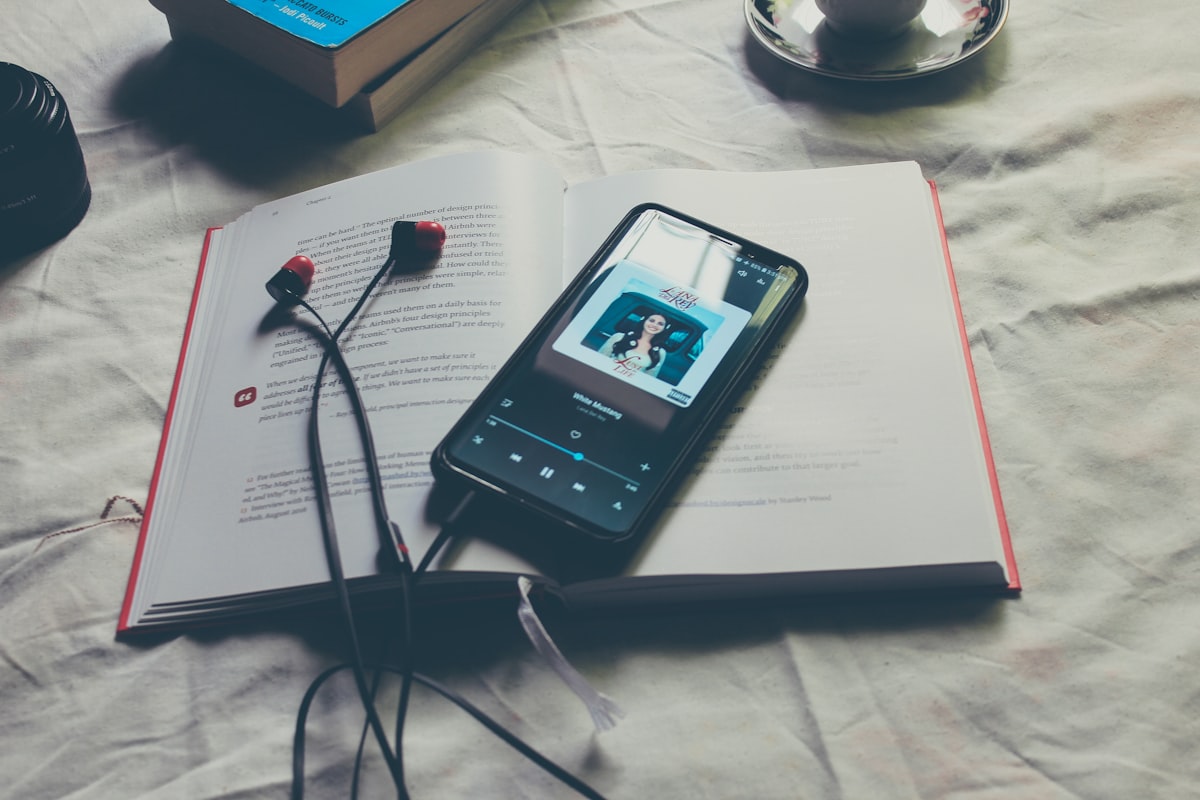
The phone in bed is two problems sharing a rectangle. The famous one is the light: “A phone is a small sun you hold about a foot from your face,” and it arrives during the shallow half of the night when sleep is easiest to tip out of. The ignored one is the job. “it’s a feed engineered to be more interesting than sleep, and it’s a job, because somewhere in that scroll sits an email you’ll feel obliged to have an opinion about.” Any one of the three can stretch a wake-up. All three arrive together, in one hand, in the dark, and the industry sells you a dimmer for the first one.
That’s why the glasses and night-mode conversation is mostly a priced-wrong conversation. Blue light got the headlines; the feed got the hours. A man named Tyler got into bed at 10:50 to check the time for a morning race, and at 11:37 he was staring at the ceiling doing the math on six hours of sleep, with no memory of most of the 45 minutes in between. Ask him what he got out of it and he’ll tell you the truth: nothing. “Thousands of very good engineers, with bonuses tied to his thumb, refined that design for a decade. Tyler wasn’t weak. He was outnumbered.”
Why the dock works when apps and filters don’t
The dock does in one motion what three settings try to do in three. Move the phone across the room and you’ve moved the light source out of pillow range, retired the job for the night, and removed the feed from reach at the exact moment your judgment is at its worst, all at once. “It’s also the rule people resist hardest,” and the resistance tells you how much the design is worth: an app would have to out-argue ten thousand engineers every night. A distance out-argues them once, permanently, for ten dollars.
There’s a decision-time rule that pairs with it. Decide the docking at 9 p.m., not at 11, because the 11 p.m. version of you is negotiating for the feed and will lose. Morning-you buys the clock. Evening-you approves the docking. Midnight-you never gets a vote, which is the entire trick. If your phone lives on the nightstand as your alarm, the anatomy of that habit is in phone as alarm clock problem, and the fuller case for the move is in should I charge my phone outside the bedroom.
What to do with the hole it leaves
Here’s the part the productivity posts skip: the dock removes 45 minutes and doesn’t fill them, and an empty evening slot gets backfilled by the feed within a week unless something boring takes the space on purpose. Fill it with things that end on their own and come without a feed. A paper book. A shower. A show with auto-play turned off, because “Auto-play is a setting, not weather,” and turning it off is two free minutes tonight. The staging for that half hour is in what to do the hour before sleep, and if the doomscrolling has deeper roots, how to stop doomscrolling at night handles the mechanics.
Expect the first nights to feel itchy. That’s the withdrawal doing its work, not evidence the swap failed. Tyler’s result after docking was six out of seven nights, and the seventh was bad-news night, because no rule makes the news good. It just stops the news from eating an hour of your sleep as a side effect.
The lifeline version, for real exceptions
The bare rule loses to real life for some people, and honesty about that keeps the rule alive. A sister three time zones away whose day is your midnight. A partner on the road. A group chat that only gets good after ten. For those, the planned version beats the ambush: allow exactly two names to ring through, keep the ringer on while the phone docks across the room, and move the conversations that can move to earlier in the evening. The author keeps one exception herself, for a friend who works nights. “A rule you keep beats a rule you admire.”
Frequently asked questions
Why does a 10 dollar alarm clock matter so much?
It retires the only honest reason the phone sleeps beside you, which is the alarm. Once a real clock owns the wake-up, the phone can charge across the room or in the kitchen, which moves the light, the feed, and the job out of pillow range in one motion. Nothing else at that price does all three.
What does the phone actually cost me at night?
It’s two thieves working together: a light source a foot from your face and a slot machine that asks your brain a question with every swipe. The light is the smaller thief. The feed, and the 45 minutes it eats invisibly, is the one that does the real damage, and no setting hands those minutes back.
Isn’t night mode enough?
Night mode dims the smaller thief only. If the content wakes your mind up, it barely matters that the screen is dim. The clock swap treats both thieves at once, because distance works on light, feed, and job without a firmware update.
What if I need the phone for real calls at night?
Use the lifeline version: allow exactly two names to ring through, keep the ringer on across the room, and move the conversations that can move to earlier. A rule you keep beats a rule you admire, and the two-name version is one people actually keep.
The book behind this chapter, with the full evening protocol, is Sleep, Finally. Buy the clock, dock the phone across the room tonight, and let the feed wait until morning.
This guide is educational, not medical advice. If being reachable at night is a work requirement, the two-name lifeline version is the honest compromise, and persistent sleeplessness deserves a doctor rather than a settings change.