Screens & Sleep
Audiobooks Before Bed: A Screen-Free Wind-Down
By Nora Vale · September 3, 2026 · 7 min read
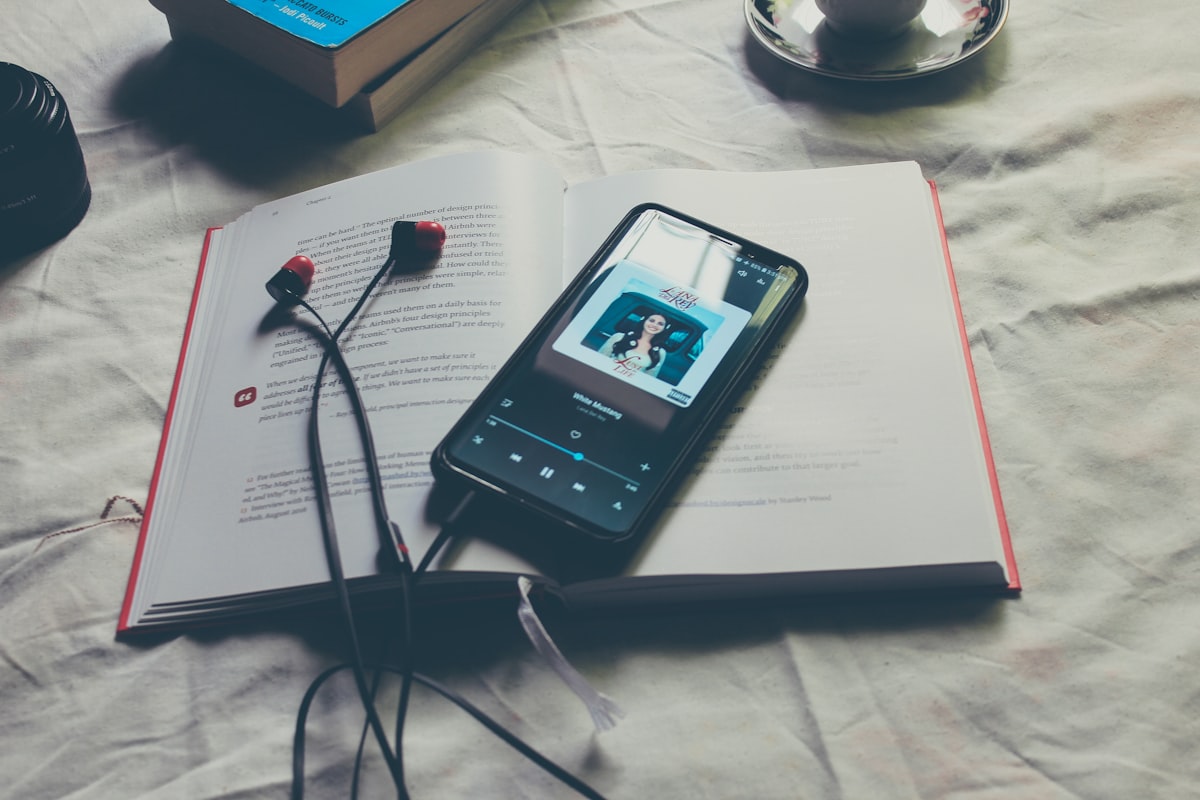
The phone went to the kitchen two years ago, and I stand by every word of that campaign. But the ruling left a vacancy: the last twenty minutes of my evenings had been narrated to me by strangers, and it turned out I missed being told a story while the light was low. The e-reader took over most nights, and paper took the rest, but there’s a third option I don’t see praised often enough, and it saved some of my worst travel nights.
Audiobooks before bed pass the test almost nothing on a screen passes, and this post is about why they pass, how to set them up so they actually work, and the one trap that turns a good habit back into a feed. The full case against the phone lives in the screens and sleep guide.
Key takeaways
- Audio leaves the light thief out of it entirely; a low-volume book read by a familiar voice is one of the gentlest ends an evening can have.
- The test for any bedtime habit is two questions: can it end on its own, and does it come with a feed. Audiobooks pass both, if you set them up right.
- The timer is not optional. It’s the difference between a story that fades and a voice talking until dawn.
- Content still matters: pick dull, familiar books with no cliffhangers, because a thriller runs the same ambush design as an auto-played episode.
- Phone or dedicated device changes the math, since a phone puts the feed one swipe away from the story.
Why audio passes where screens fail
Run the two-question test that settles any bedtime habit. Can it end on its own, and does it come with a feed. If the answers are yes and no, in that order, it can probably stay.
An audiobook with a sleep timer answers yes: the chapter ends, the voice stops, the room goes quiet without your hands touching anything. And it carries no feed, no comments, no next episode counted down from five, no rectangle asking your brain a question with every swipe. That last part is the big one, because the research on screens at night keeps finding the same thing: the damage traces mostly to content that keeps minds switched on, and to time scrolling that should have been time asleep. If the content wakes your mind up, it barely matters that the screen is dim.
Audio sidesteps both thieves at once. There’s no light, and the job it gives your mind is exactly the right shape of job: “find the mind a job absorbing enough to crowd out worry and boring enough not to wake you up.” A story read in a low voice does precisely that. It occupies the part of you that would otherwise be drafting emails on the ceiling, and it doesn’t try to make you sleep, which is the one thing none of the good tools ever try to do.
I’ll confess the record here: a familiar-voiced show at low volume has carried me to sleep more nights than I can count. The library supplies the books for free, which puts this in the same price bracket as the rest of the system, which is to say nothing.
The setup that actually works
Because the difference between a wind-down and a stealth feed is all in the configuration, here’s the setup:
- The timer is the whole game. Set it for twenty to forty minutes, so the book ends while you’re under and the night stays quiet. A voice talking at three in the morning fragments your sleep even if you’ve learned to ignore it, and the timer is what turns the audiobook into something that ends on its own.
- Pick the book like a wind-down, not a hobby. A story you’ve read before, a subject that interests you mildly, a narrator whose voice you like. No thrillers, no cliffhangers, nothing where the chapter ends mid-kidnapping, because the hook is the same design as the auto-play countdown, and your curiosity is the lever it pulls.
- Keep the volume low and the light off. The device screen goes dark, the lamp goes off, and the voice runs alone. If you need light to operate anything, that’s a sign the setup needs fixing before the story starts.
- Prefer a dedicated device. An old phone with everything else deleted, a basic MP3 player, a speaker controlled from outside the bedroom. The reason is the swipe: a phone displaying an audiobook has an entire arcade one gesture away, and at 10:40 you know exactly which one wins. The e-reader rule applies in audio too; the piece on e-readers before bed makes the same argument for reading.
- Give it a fixed slot. Same time, same book, most nights, so the voice becomes a cue your body reads like a sentence it knows by heart. Conditioning, not magic.
One honest extra, learned from my own worst habit: don’t rewind obsessively the next night. Missing half the book is the method working. You were never supposed to finish the chapter.
The trap: when the audiobook becomes a feed
Every good habit in this cluster has a version that quietly turns back into the thing it replaced, and the audiobook’s version looks like this. The book lives on your phone. The phone is in the bed. Between chapters, the app suggests, the screen lights, and one swipe to check one thing costs you forty minutes you don’t remember agreeing to spend.
The fix is structural, not moral. Thousands of very good engineers refined that design for a decade, and you weren’t weak the last time you lost to it, you were outnumbered. So put the feed out of reach rather than promising yourself you’ll resist it: dedicated device, phone docked in the kitchen, the story arriving through a speaker instead of a screen. Distance does what do-not-disturb never could.
And the placement matters as much as the device. The audiobook belongs inside a wind-down with a shape, not floating in an unstructured evening. If the voice is the mind slot, the body slot and room slot still need their ten minutes, and the template in the guide to how to wind down before bed holds all three. If you find the story consistently failing to carry you under, that’s worth reading honestly too; the piece on why scrolling keeps you awake covers the arousal mechanics that any input, even audio, can trip if the volume or the stakes run high.
Frequently asked questions
Are audiobooks good before bed?
They’re one of the best screen-adjacent options, because audio leaves the light thief out of it entirely, and a story gives your mind a job with the right shape: absorbing enough to crowd out worry, boring enough not to wake you. The only hard requirement is the sleep timer, so the voice ends on its own instead of talking until dawn.
What’s the test for whether a bedtime screen habit is safe?
Two questions: can it end on its own, and does it come with a feed. If the answers are yes and no, in that order, it can probably stay. An audiobook with a timer passes both, while a phone playing one is riskier, because the feed sits one swipe from the story.
Do audiobooks help you fall asleep faster?
They help by occupation, not sedation. A dull story occupies the mind that would otherwise be running tomorrow’s meetings on the ceiling, and sleep, which was never actually lost, wanders back in on its own. The tools that work never try to make you sleep, and the audiobook is no exception.
What kind of book works best at night?
Something with a story but no stakes you care about, ideally something you’ve read before, because familiar stuff doesn’t carry a hook. Thrillers and cliffhanger-heavy books borrow the same ambush design as an auto-played episode, and your curiosity is the lever they pull.
What if I fall asleep and miss half the book?
That’s the method working. Losing the thread is success here, not failure; you were never supposed to finish the chapter. Keep the timer set, pick books you don’t mind rewinding, and resist the urge to go back and find what you missed, because the story owes you nothing after the lights go out.
The voice in the dark is the oldest sleep technology we have. Put it on a timer, keep the feed out of the bedroom, and let somebody read you under.
If you want the full system this comes from, with the screens chapter alongside the light, caffeine, and wind-down work that holds it up, that’s the book: Quiet Core Reset.
This guide is educational, not medical advice. If sleep problems persist for months or arrive with symptoms you can’t explain, a doctor is the right door.