Bedroom & Sleep Environment
Where Should the Bed Go in a Small Room? A Practical Guide
By Nora Vale · May 23, 2025 · 6 min read
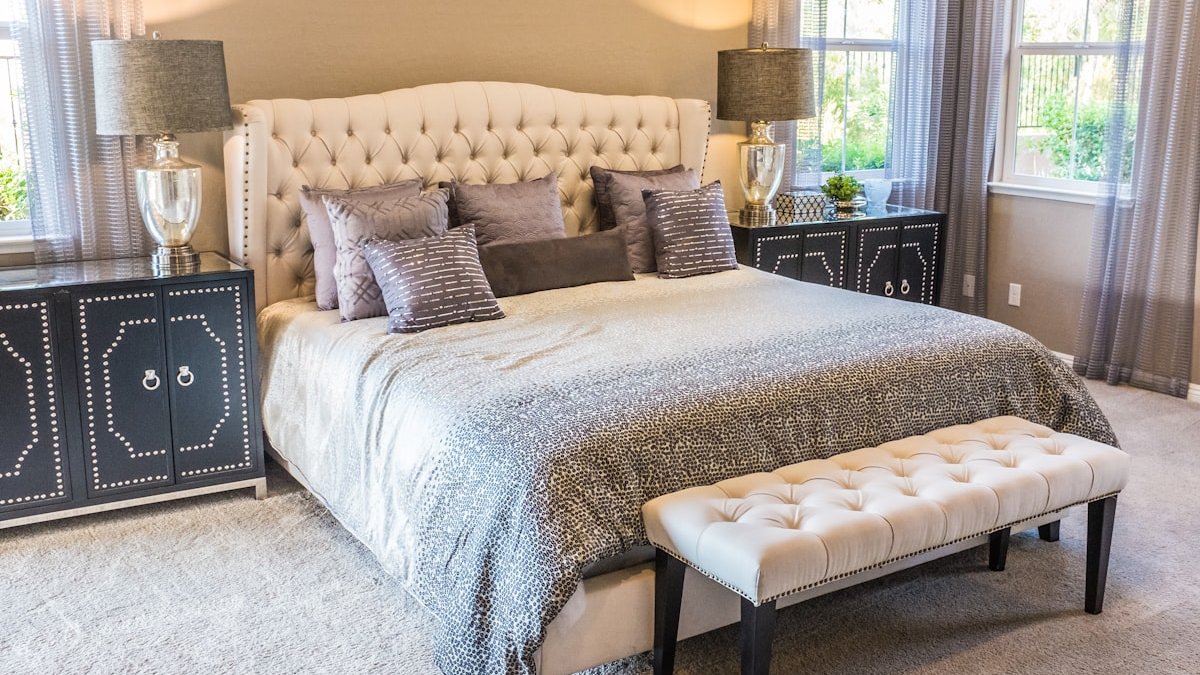
A reader named Priya had a room that would make any placement guide weep, and the bed wasn’t the problem. The bed was working three jobs. The desk held her work laptop and a stack of unfolded laundry, a drying rack stood in the corner, and most nights she watched television from under the duvet. So the bed meant email, chores, and episodes, and her brain had no idea which one it was being asked to do at 11 p.m. The desk had arrived during a deadline two years earlier and never left, one reasonable addition at a time, until the room had a résumé instead of a purpose.
I tell that story first because the search for the perfect bed placement usually starts in the wrong place. The geometry matters a little. What the bed means matters a lot more. The full framework lives in the bedroom sleep environment guide; this post is the small-room version.
Key takeaways
- Placement has real but modest value: farthest wall from the door, solid wall behind the headboard, window avoided when you can.
- What the bed is used for outranks where it sits. A bed that means only sleep conditions your brain; a bed that means three things confuses it.
- In a small room, the highest-value move is usually removing a job from the bedroom, not moving the bed.
The placement rules that actually matter
Start with the physics your body responds to, because the room either honors three old expectations or breaks them. Darkness means the night shift can start, a falling core temperature means it’s time, and steady quiet means nothing is about to happen. “When a room honors those three expectations, falling asleep is mostly automatic; when the room breaks them, your brain spends the night half-dressed for a party nobody invited it to.”
Against that backdrop, here’s the honest placement list, cheapest reasoning first.
Put the headboard against a solid wall if the room allows it. It drafts less, vibrates less, and gives the bed the settled feel your sentry brain reads as safe. Keep the bed off the shared wall with a noisy neighbor or a laundry closet when you have the choice, since the wall transmits the compressor thump you’d otherwise sleep through.
Avoid putting the bed directly under a window when another wall exists. Streetlight, morning sun, and winter drafts all meet the pillow first there. If the room forces it, and small rooms often do, the placement problem becomes a window problem, and the window is fixable with foil, a blackout liner, or a pinned dark blanket. I used the foil version for two years and nobody saw it but me.
Leave a sliver of access to both sides if you can. A bed pushed wall-to-wall works, plenty of people sleep that way, but two-sided access makes the 3 a.m. return trip less of an expedition, which matters more than feng shui ever will.
That’s the whole geometry worth arguing about. Rooms don’t sabotage sleep in ways you can photograph; they sabotage it in lux, decibels, and degrees. A bed three feet further from the door changes none of those numbers.
The bed means one thing
Here’s the rule that beats every placement chart: the bed is for sleeping, and everything else in your life has somewhere better to happen. Priya’s fix didn’t involve moving the bed at all. It happened on a weekend, which she swore mattered: drying rack to the bathroom, desk to the living room wall, one rule for the television, and the laptop stopped coming to bed entirely. Nothing was bought and nothing was installed. Within about a week she was falling asleep faster, and the reason isn’t mystical. The bed started meaning one thing again, so lying down in it became a cue instead of a question.
This is the same logic that decides what you do at 3 a.m., and it’s worth spelling out because small rooms make it harder to follow. When the bedroom is also the office, every laptop in view files a counter-report at bedtime. The bed becomes a cue for alertness, the way a dentist’s chair is a cue for dread before anyone turns the drill on. Rooms teach. A bedroom that says one word when you walk in, and the word should be sleep, is worth more than any square footage.
If you can’t evict the desk because the room genuinely won’t allow it, contain it instead. Close the laptop and slide it into a drawer at a fixed minute, face the desk away from the bed, and put tomorrow’s first task on a scrap of paper so the open loop has somewhere else to live. Every loop you close at nine-thirty is a loop your sleeping brain doesn’t have to hold open.
What to do when the room is genuinely tiny
Some rooms offer one wall for the bed and nothing else, and the honest advice there is to stop optimizing placement and start spending the ten minutes on the dials that pay. Tape the LED dots, because “electrical tape over the router light, a folded sticky note on the clock face, a small square of masking tape over the television’s standby eye” costs about two dollars and is the closest thing to free sleep improvement I know. Drop the temperature a couple of degrees or crack the window. Layer the bedding so two bodies can run two climates four inches apart instead of holding a thermostat war.
Noise is the other small-room tax, and it’s about change, not volume. Your brain doesn’t care much about steady sound; it cares about surprises, which is why a fan earns its spot twice over in a tight room, moving air and laying down the steady floor of sound that makes the hallway thump stop mattering. Foam earplugs, rolled thin and inserted properly, turn a snore or a street into a rumor. More on both in white noise for sleep and how to sleep with a snoring partner.
And if the small room is temporary, a studio, a sublet, a stretch at the in-laws’, borrow the trucker’s trick: a zippered pouch with earplugs, tape, two binder clips and a dark T-shirt, and bed socks, about twelve dollars. “A room doesn’t have to be yours to work. It just has to stop arguing.”
What placement can’t do
The honest limit belongs here, because this is the chapter where people spend money hoping geometry will do biology’s job. The room is necessary, not sufficient. It sets the floor, and the rest of the book builds on that floor.
I fixed my own room completely one winter. Taped every light, hung the foil, dropped the thermostat, bought the pillow that finally matched my shoulder. And some nights I still lay there wide awake doing math on the ceiling, because the 4 p.m. coffee, the 9 p.m. wine, and a mind that wouldn’t close its tabs were doing the arguing instead. A perfect room with a chaotic life gives you a nicer place to lie awake in.
So place the bed sensibly, strip it back to meaning one thing, fix the cheap dials tonight, and then check the day side of the ledger. If the nights stay broken for weeks after the room is right, that isn’t failure, it’s data pointing somewhere else, most likely at your days. The best temperature for sleep numbers and the case for why your bedroom should be dark cover the two dials that matter most, and the full system, room included, is laid out in Quiet Core Reset.
Frequently asked questions
Where should the bed go in a small room?
Wherever it fits with the least traffic: usually the wall farthest from the door, headboard against a solid wall, and off the window if another wall exists. Then stop optimizing geometry and put the ten minutes into darkness, temperature, and what the bed gets used for, because those carry far more of the night.
Is it bad to put a bed under a window?
It’s a second-tier placement, not a disaster. Drafts, streetlight, and morning sun all reach the pillow first there. If the room forces it, blackout the glass with a liner or a pinned blanket and the placement stops mattering much at all.
Does my desk belong in the bedroom?
If the room is big enough for both, keep the desk for work and the bed for sleep. In a small room, the desk is exactly how the bed ends up meaning three things at once, which is the more expensive problem. If it can’t leave, close it and face it away at a fixed minute.
What if my bed has to share the room with a TV?
Watch from a chair or the couch, not from under the duvet. The television in the room is survivable; the television watched from the bed is what teaches your brain that the bed means episodes, and the bed that means three things is a question your brain has to answer at 11 p.m.
Can bed placement fix my sleep on its own?
No. The room is necessary, not sufficient. Placement, darkness, cool, and quiet set the floor, and coffee, wine, and a busy mind can still cost you the night on top of a perfect floor plan. Fix the floor first, then read the day.
This guide is educational, not medical advice. If sleep trouble persists most nights for months, a doctor is the right door, not a new floor plan.