Stress & Cortisol
Why Anxiety Is Worse at Night (and What to Do)
By Nora Vale · April 8, 2026 · 7 min read
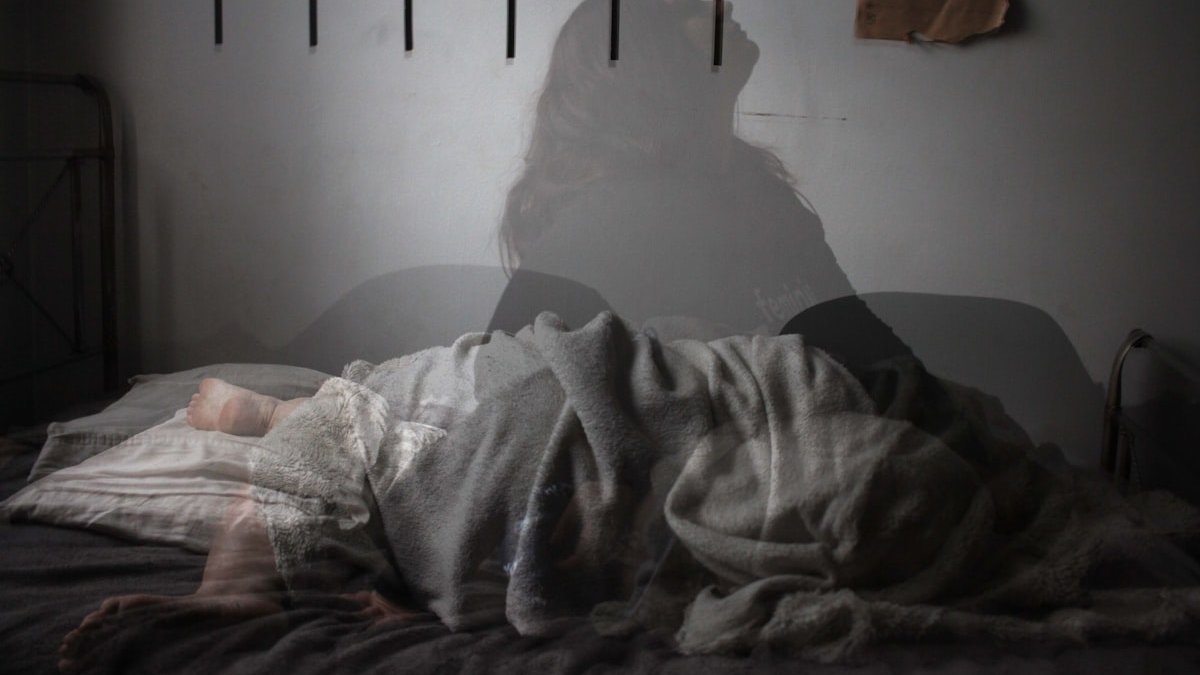
My worst hour for anxiety has always been the one where nothing was happening. Eleven at night, lights off, day finished, nobody needing anything, and my brain picks exactly that moment to run the highlight reel of every awkward thing I’ve said since 2019. If you’ve wondered why anxiety is worse at night when the day was objectively fine, the honest answer is that the night isn’t producing the anxiety. It’s the first time all day the noise has stopped, and the worry, which was there the whole time, finally has the room to itself.
Understanding that order matters, because most people do it backwards. They treat the midnight spiral as the problem and try to solve it in bed, at midnight, with the exact tool that never works: thinking harder. This post walks through why the night amplifies worry, what your stress chemistry is doing at that hour, and the two moves that actually take the pressure off. The full picture lives in my guide to sleeping under stress.
Key takeaways
- Night doesn’t create anxiety. It removes distraction, and worry that was drowned out all day finally gets the stage.
- The bed is the first quiet place the alarm gets loud enough to hear. The anxiety lived in your day.
- A stress system that never fully resets keeps arousal idling high around the clock, and researchers call that state hyperarousal.
- Fighting worry at midnight never works. Scheduling it earlier in the evening does: same time, same chair, paper, two columns.
- If wrecked nights run three or more a week for three months, that’s a doctor conversation, not a discipline problem.
The distraction theory: night removes the noise
Here’s the plainest version. Your days are loud in a specific way: not calm, exactly, but occupied. Email, traffic, tasks, a coworker’s comment, dinner to make. Worry has to compete for the stage, and it mostly loses, which is why you can feel perfectly fine at four in the afternoon about something that flattens you at eleven. Nothing new happened. The competition went home.
Then you lie down, horizontal and still, with nothing to operate, and the brain does what brains do with unfiled paperwork. It starts filing. That’s not malfunction, that’s the night shift of an organ that spent all day taking notes. My own version runs old conversations on a loop, a disagreement from a Tuesday rerun at full volume in a dark room, and I spent years thinking something was wrong with me rather than noticing the simplest fact about it: the rerun never played while I was carrying groceries. It needed me horizontal.
That’s also why the bedroom gets blamed unfairly. For years mine did, because the bedroom was where I noticed the trouble, and the trouble lived in my days. The bed was simply the first quiet place the alarm got loud enough to hear, the way you finally hear the refrigerator’s hum the moment everything else in the kitchen stops. If your spiral starts the moment your head hits the pillow, why your brain wakes up when you lie down maps that specific trap in detail.
The chemistry: your alarm clock never stood down
There’s a second layer under the distraction one, and it’s physical. A smoke alarm has one job: shriek when there’s fire, then reset and go quiet. A chronically stressed body is a house where the alarm never fully resets, keeping up a low chirp all day and all night for months, and researchers describe that state as hyperarousal, so literal a term that people with chronic insomnia show higher resting heart rates and warmer core temperatures in broad daylight, hours before anyone has tried to sleep. The night is when you notice. The day is where it lives.
Cortisol, the main stress hormone, is supposed to run a clean shift: lowest around midnight, a morning spike after waking, a long slide all day back down to the floor. Chronic worry redraws that hill into a plateau, and eleven o’clock arrives carrying chemistry that ten hours earlier would have passed for nine a.m. Your midnight body is running hours stale and still fully staffed. If you want the hormone’s full shift schedule, fair trial included, it’s in cortisol and sleep explained.
The cruel twist is the same one that catches everyone: idling high doesn’t feel like stress from the inside. It feels like personality. I spent years certain I was simply a night person with an anxious streak, when my body had been marinating in alertness since every morning commute and had never once been shown the exit. You can’t feel a baseline. You can only feel departures from it.
Why fighting it at midnight never works
The instinct at 11:40 is to argue the worry down right there in bed, and it feels productive for about four minutes. It never is. Trying to think your way calm in a dark room is effort, and effort is exactly the fuel the arousal system runs on, which is why the spiral tends to end at two, not at midnight. Trying to relax is just effort with a spa soundtrack.
There’s also a conditioning problem you can’t see while you’re inside it. Every night you lie in bed rehearsing worst cases, you teach your brain that the bed is where worry performs, and within weeks the mattress itself becomes a cue for the spiral. That’s how a temporary stressful month turns into a sleeping problem that outlives the stress, and it’s the mechanism stimulus control was designed to break. The method, including the twenty-minute rule, is in what is stimulus control, and if the 3 a.m. version of this wakes you in the middle of the spiral, why do I wake up at 3am every night covers that window too.
What works instead is moving the worry earlier in the evening, where it belongs, and that’s the next section.
Give the worry a scheduled slot
The move that changed my nights wasn’t relaxation, it was scheduling. A worry page: paper, two columns, the worry on the left and the next concrete step on the right, written two to three hours before bed, run as a standing appointment at the same time every evening, easy days and hard ones alike. A brain objects less to a problem than to an open loop, and the page turns loops into appointments. A brain that interrupts your evening with worry is a colleague who doesn’t trust that the meeting will actually happen, and it stops walking in once the meeting becomes reliable.
One rule carries surprising weight: midnight never counts as a window, because a worry page written at midnight is just worry that found a pen. If a worry shows up at two in the afternoon, you don’t argue with it, you write three or four words on a scrap and say the time out loud: window’s at seven. Filed with a date, a worry loses most of its urgency on the walk back to whatever you were doing. The full method, including what a repeated right-hand column is telling you, is in the worry journal method.
The page needs one partner move between dinner and bed: something dull, physical, and low-stakes, a walk around the block, a shower, folding laundry, ten minutes of weeds. None of it would impress anyone. That’s the point. These tasks give an idling-high system the only evidence it accepts that the day’s emergencies have ended, and the evening version is laid out in how to decompress after work.
One honest limit. Some weeks are genuinely bad: a diagnosis, a job ending, a move with boxes to the ceiling. On those weeks, sleep hygiene is a bucket in a rainstorm. The page gets written, the walk happens, and the night is wrecked anyway, because no technique talks a real fire out. I’ve carried the bucket. It gets you wet and it feels like failing. Lower the bar to one anchor, the wake time, and keep that one perfectly while the rest floats.
My own version settled like this: window at seven, walk after dinner, and a life that stayed exactly as stressful. The nights stopped joining in. That’s the whole promise, and it’s the only one worth making.
Frequently asked questions
Why does anxiety get worse at night specifically?
Three reasons stacked. Distraction disappears, so worries you drowned out all day finally get the stage. Lying still removes every competing task. And a stress system that never fully stood down keeps arousal idling high exactly when your cortisol curve is supposed to reach its floor. The night amplifies what the day was already holding.
Is nighttime anxiety a sign of something serious?
Usually it’s an arousal system that never got proof the day ended, not a sign of danger. The chest-pounding at midnight is chemistry answering a parking lot remark from nine hours earlier. If it comes with waking gasping for air, or wrecked nights run three or more a week for three months, stop reading and make the appointment.
Why do I only feel anxious when I try to sleep?
Because the bed is the first quiet place the alarm gets loud enough to hear, the way you finally hear the refrigerator’s hum when everything else stops. The anxiety lived in your day. The bed is just where you notice it, which is why bedroom upgrades fix so little of it.
Should I get out of bed when anxiety hits at night?
Yes, if you’ve been awake roughly twenty minutes and feel more wired than sleepy. Staying in bed teaches your brain that the bed is where worry performs. Get up, keep the lights dim, do something dull on paper, and go back when your eyes actually close in a chair first.
How long until nighttime anxiety calms down?
If you give the worry a scheduled slot earlier in the evening, the midnight interruptions usually start thinning within two weeks, not two nights. The worry doesn’t disappear. It learns it has office hours, and the evenings stop being one long low boil.
This guide is educational, not medical advice. If anxiety keeps you up most nights for three months, that pattern has a name and a treatment, and a doctor is the right door.