Bedroom & Sleep Environment
Why Even Small Lights Can Disrupt Your Sleep
By Nora Vale · March 20, 2026 · 7 min read
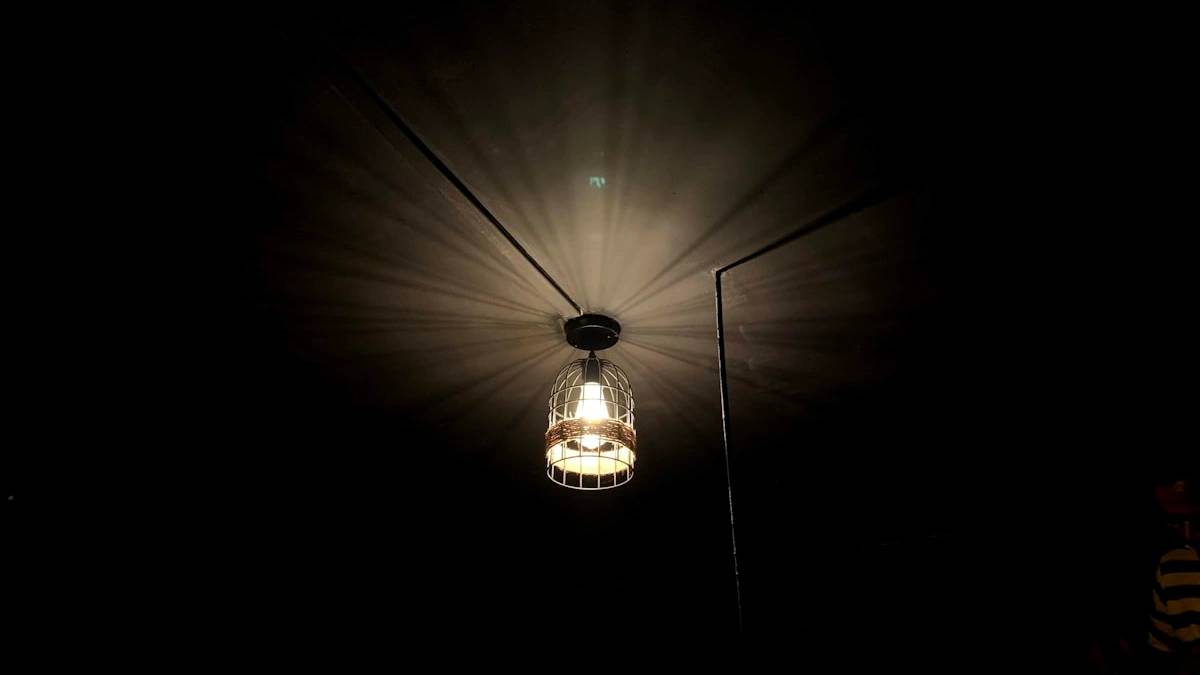
One bad-sleep winter, I lay in bed and counted the small glowing lights in my bedroom. Seven. A router, an alarm clock, a television idling in standby, two phone chargers, and a smoke detector blinking green at the ceiling, every one of them bright enough that I could have read by its light if reading had been the plan. None of it looked like a problem. It looked like a normal bedroom, which is exactly why it took me another year of lying awake to connect those pinpricks to the fact that my brain never quite slid under. If you’ve fixed your schedule and your evening routine and still wake unrested, the relationship between light and sleep is probably still quietly broken somewhere in your room. The full four-dial system lives in the bedroom sleep environment guide, and this post is the light dial.
Key takeaways
- Your retinas report illumination to the brain all night, whether or not you consciously notice it, and the brain takes every report at face value.
- Harvard researchers have shown that even modest evening brightness measurably delays melatonin, the hormone that rises in darkness and opens the door to sleep.
- The LED test costs two dollars and ten minutes: electrical tape over the router, a sticky note on the clock, masking tape on the standby eye.
- Windows need the same treatment, because a streetlight through slatted blinds hits your retinas all night.
- The hand test decides “dark enough”: lights off, five minutes, raise your hand. Clearly visible means too bright.
Why the brain can’t ignore seven glowing dots
Here’s the mechanism, and it’s older than any bedroom. For most of human history a lit room meant daytime, and daytime meant stay up. Your retinas keep reporting illumination to the brain long after you’ve stopped consciously noticing it, and the brain takes every report at face value. The standby dot, the window glow, the charger across the room: those report to your retinas all night, noticed or not.
The cost isn’t dramatic, which is why nobody connects it. Harvard researchers have shown that even modest evening brightness measurably delays melatonin, the hormone that rises in darkness and opens the door to sleep. A room full of pinpricks never quite delivers the darkness signal, so the brain spends the night half-dressed for a party nobody invited it to. You don’t wake up blaming the smoke detector. You wake up blaming your age, your mattress, or your worry list.
Rooms don’t sabotage sleep in ways you can photograph; they sabotage it in lux and decibels and degrees, which are invisible until you measure them. Nobody measures their own bedroom until something breaks. Tonight you just need to notice seven glowing dots and change them, which is the entire skill.
The LED sweep, ten minutes and two dollars
Start with the dots, cheapest first.
- Tape the electronics. Electrical tape over the router light, a folded sticky note on the clock face, a small square of masking tape over the television’s standby eye. My husband thought the taped-over router looked ridiculous for about a week, and then he stopped noticing it, the way you stop noticing everything once the room is actually dark.
- Dock the phone across the room. Even face-down, it lights up when a message lands, and a dark room with a glowing rectangle on the nightstand isn’t a dark room, it’s a dim one with a notification habit. The full custody arrangement is in should I charge my phone outside the bedroom, and the alarm-clock excuse gets its own hearing in phone as alarm clock problem.
- Then the windows. A streetlight leaking through slatted blinds hits your retinas all night whether or not you register it. The cheap fix is what renters have always done: a dark blanket or blackout fabric pinned over the frame, or foil pressed flat against the glass, ugly and completely effective. The middle fix is a blackout liner hung behind your curtains; the proper fix is true blackout curtains on a wraparound rod. I used the foil version for two years. Nobody saw it but me.
The order matters because the dots cost nothing and the windows take a Saturday. Do the dots before dinner tonight. If your whole dark-room project needs a plan, bedroom setup for better sleep assembles all four dials in one place.
The hand test for how dark is dark enough
Here’s the test I use, and it needs no equipment. Stand in the finished room with the lights off, give your eyes five minutes to adapt, then hold your hand up in front of your face. If you can see it clearly, there’s too much light; if you can only find it by waving, you’re close.
The five minutes matter, because your eyes keep adapting for about twenty minutes, which is why a bedroom that seemed fine when you walked in can still be bright enough to matter by midnight. What counts is the light that stays. Run the test after the tape and the foil, not before, and run it again after any furniture rearrangement, because a lamp you moved in March can be aimed at your pillow by accident.
One honest note if you share the room: someone who wants a nightlight isn’t wrong, they’re just running a different experiment. A sleep mask plus tape on whatever faces your side of the bed is the compromise that lets both of you keep sleeping. Guests don’t judge your bedroom at midnight. They aren’t there.
What the room can’t do
Now the flaw, because it stings and I’d rather you hear it from me. The winter I fixed my room, I taped every light, hung the foil, dropped the thermostat, and bought the pillow that finally matched my shoulder. And some nights I still lay there, wide awake, doing math on the ceiling. The room had stopped arguing, and I was still up, because the 4 p.m. coffee, the 9 p.m. wine, and a mind that wouldn’t close its tabs were doing the arguing instead. A perfect room with a chaotic life gives you a nicer place to lie awake in.
So darkness is necessary, not sufficient. If you’ve made the room genuinely dark and the nights still run thin for weeks, the evidence is pointing somewhere else, most likely at your days: light, caffeine, alcohol, and the clock all sit upstream. If your room is dark but the 3 a.m. still arrives, why do I wake up at 3am every night is the next page, and if wine is on the suspect list, why wine makes me wake up at night has its alibi check.
Frequently asked questions
Can a small LED really disrupt sleep?
Yes. Your retinas keep reporting illumination to the brain long after you’ve stopped consciously noticing it, and the brain takes every report at face value. For most of human history a lit room meant daytime, so the seven-dot bedroom never quite delivers the night signal.
How dark is dark enough?
Lights off, five minutes for your eyes to adapt, then hold your hand up in front of your face. If you can see it clearly, there’s too much light; if you can only find it by waving, you’re close. What counts is the light that stays, not how the room looked when you walked in.
What’s the cheapest way to darken a bedroom?
Electrical tape over the router, a sticky note on the clock, masking tape on the TV’s standby eye: about two dollars and ten minutes. For windows, a dark blanket or foil pressed against the glass is the renter’s classic, and it’s ugly and completely effective.
Does dim light delay melatonin even if I fall asleep fine?
It can. Harvard researchers have shown that even modest evening brightness measurably delays melatonin, and a delayed signal can show up as lighter sleep and more surfacings rather than as lying awake. The reporting doesn’t pause when you do.
My partner needs a nightlight. What do I do?
A sleep mask on your side plus tape on the lights facing you is the honest compromise. Per-side solutions beat thermostat-war versions of the same argument, and the goal is a room that stops arguing with both of you.
Two dollars and ten minutes, before dinner. Tape the light tonight. The rest of the room project, temperature, bed, and noise, is in Sleep, Finally.
This guide is educational, not medical advice. If sleep trouble persists for months despite a dark, cool, quiet room, that’s data worth bringing to a doctor.