Screens & Sleep
Why Falling Asleep With the TV On Hurts Sleep Quality
By Nora Vale · March 18, 2025 · 7 min read
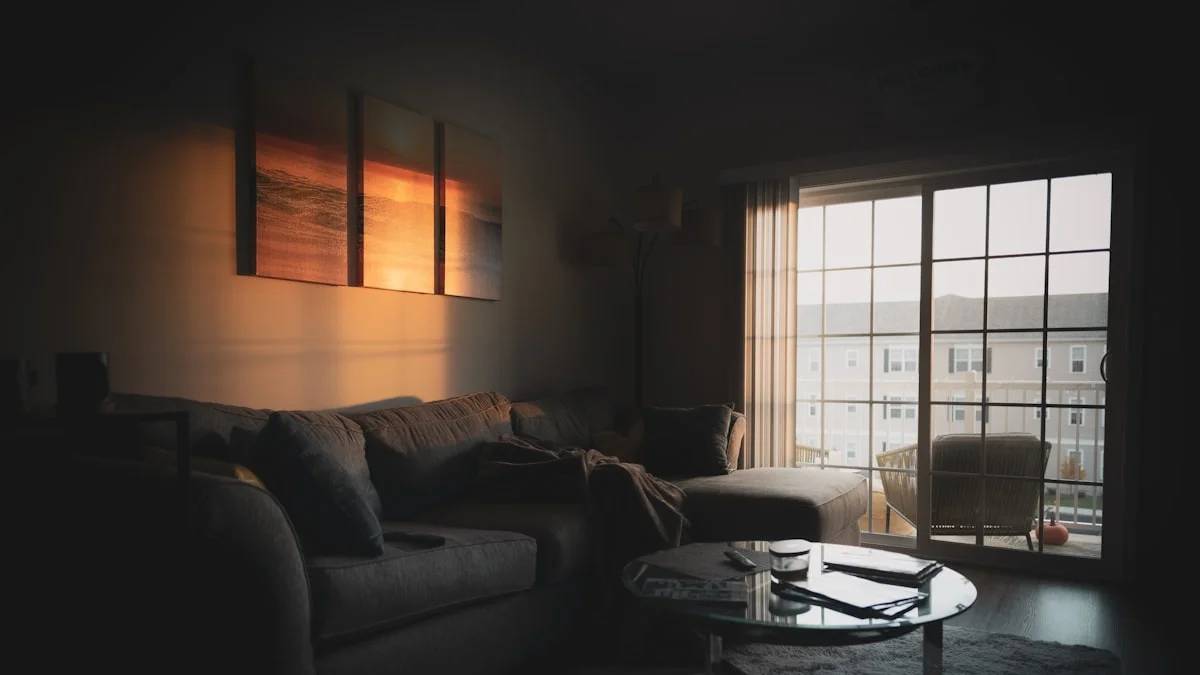
My worst sleep of last winter came from a show I loved. I fell asleep on the couch most nights, TV still talking to nobody, then moved to bed at some point I don’t remember, and woke at three without knowing why. It took me a month to connect the two. The television wasn’t helping me fall asleep. It was paying for the first hour of unconsciousness with the second half of the night.
The short version: a TV on sleep quality works like a slow leak. You get the wind-down, the dim room, the low voices, and it all feels like rest. Then the light keeps flickering after your eyes close, the audio keeps changing, and part of your brain stays on shift duty. The whole picture of how screens treat evenings lives in the screens and sleep guide. This post is the television corner of it, because the TV gets a pass the phone never does.
Key takeaways
- A TV left on keeps your brain partly on watch after you drift off, and sleep fragments in the second half of the night.
- The problem is change, not volume. Your brain adapts to steady sound in minutes and never adapts to shifting light and audio.
- A fan or white noise machine gives you the sound without the flicker, for about the price of a pizza.
- Watching on the couch with a stop time and a rerun keeps the comfort and drops most of the cost.
What the flicker does after your eyes close
Here’s the part nobody feels happening. Your eyelids are not blackout curtains. Light still arrives, and it arrives in bursts, because a television is never one brightness. Scenes cut, commercials flare, the camera pans, and every change is a small event the older parts of your brain are built to notice. You don’t wake up. You just surface a little, again and again, and each surfacing spends a little of the deep sleep you came for.
The book’s line about a bedroom full of small glowing lights applies here: none of it looked like a problem, and that was the trick. A television idling in standby was one of seven pinpricks in my bedroom, and the one actually playing was worse than all six others combined. The room had been arguing with my body quietly, and I had been losing without knowing a fight was on. A TV left on is that argument, running in high definition.
Sound works the same way, and this is the useful mechanism to steal. Your brain doesn’t care much about steady sound; it cares about change. A fan hums the same note for eight hours and disappears from your attention in minutes. A show has dialogue, pauses, music swells, a laugh from nowhere. Every shift is a fresh question your brain answers while you sleep. Deep sleep is the thing the first half of the night is supposed to stack, and a changing soundtrack keeps interrupting the delivery.
The light half of the problem
Even a dim television in a dark room is still a light source aimed roughly at your bed, and evening light tells the timing equipment in your brain that the day is still running. The honest dose matters, the same way it matters for phones. An hour of a calm cooking competition at low brightness is a modest dose. A wall-sized screen running until 2 a.m. across from your pillow is not, and sleeping directly in front of one means your whole sleep window happens inside that glow.
People reach for the volume as the fix, which treats the wrong half. Muting a playing television leaves a flickering rectangle in a dark room, which is a night light with a plot. If the set stays on, the honest minimum is a sleep timer, screen off, because the picture is the louder half of the pair. The setting takes under a minute, and it’s free, which is my favorite price for sleep improvements.
The couch rule beats the willpower rule
The fix that worked for me wasn’t deciding to watch less. It was deciding where. The television gets one rule: if you want it at night, you watch it on the couch, and the bedroom stays the bedroom. The reason is simple. Rooms teach habits as surely as anything else, and a bed that means one thing makes lying down a cue instead of a question. A bed with a TV running over it means two things, and your brain splits the difference at 11 p.m.
Two small settings carry most of the weight. First, turn off auto-play, because the service counting down from five and starting the next episode is the reason one show becomes three. The countdown is a hook placed exactly where your decision used to be, and auto-play is a setting, not weather. Second, set a stop time, even a soft one. Watching something you chose, in the living room, with the lights low, is the gentle end of the screen spectrum. That’s a fair trade for an evening. Falling asleep in front of it, night after night, is a subscription nobody meant to sign up for.
If you genuinely need sound to sleep
Some people sleep better with audio, and that’s legitimate. The swap matters more than the quit. A fan is the cheapest option in the house, and a white noise machine costs about the same as one month of a streaming service, and both run steady, which is the entire trick. Steady sound gets adapted to. Changing sound gets checked. The white noise option has its own post if you want the comparison, and the bedroom setup guide covers the four dials that matter in the room itself.
There’s also the rerun loophole, and I’ll defend it. Old episodes, shows you’ve already seen, documentaries about rivets: familiar stuff doesn’t carry a hook, because you already know who dug the hole. Producers save their best ambush for the unknown. A rerun can’t ambush you. If you’re going to watch at night anyway, the rerun is the honest choice, on the couch, with a stop time.
One honest limit before the questions. A television is rarely the whole story. My three a.m. wake-ups had a wine habit and a late coffee feeding them too, and the TV was just the suspect I’d never interviewed. If you clean up the evening screen and the nights stay broken, the room was one dial of four, not the whole dashboard. That’s the room’s job in general: it sets the floor, and the rest of the night is built on it.
Frequently asked questions
Is it bad to sleep with the TV on every night?
Most nights, yes, and the cost lands in the second half of the night rather than the first. The changing light and audio keep part of your brain on watch after you drift off, so sleep fragments. If you need sound, a fan or a steady noise machine is a fairer trade, because your brain adapts to steady sound and never adapts to change.
Does the TV really wake me up after I fall asleep?
It can, and the connection is easy to miss. The screen keeps shifting brightness and the audio keeps changing, and each change is a small event your brain checks. Plenty of people surface at 2 or 3 a.m. for months before connecting it to the set still playing in the corner. A week with the set off is the cheapest test I know.
What if I can’t fall asleep without background noise?
Swap, don’t quit. A fan or white noise machine gives you the sound without the flicker, and steady sound is exactly the kind your brain stops noticing within minutes. The white noise guide breaks down the options if you’re choosing between them.
What should I watch in the evening instead?
Watch on the couch with the lights low, and pick the calm end of the menu. A rerun is the honest choice, because familiar episodes don’t carry the cliffhanger ambush, and turn auto-play off so the service stops making the decision at the credits. Keep a stop time, even a loose one, and the bedroom stays for sleep.
The show will be there tomorrow, same appetite, same cliffhanger, fully refilled. The sleep window is the only thing in the arrangement that closes, so let the remote do its job and let the bedroom go quiet.
This guide is educational, not medical advice. If poor sleep persists for months despite a quiet, dark bedroom, a doctor is the right door.