Bedroom & Sleep Environment
Fan Noise and Sleep: Why Fans Help Some and Bother Others
By Nora Vale · March 24, 2025 · 7 min read
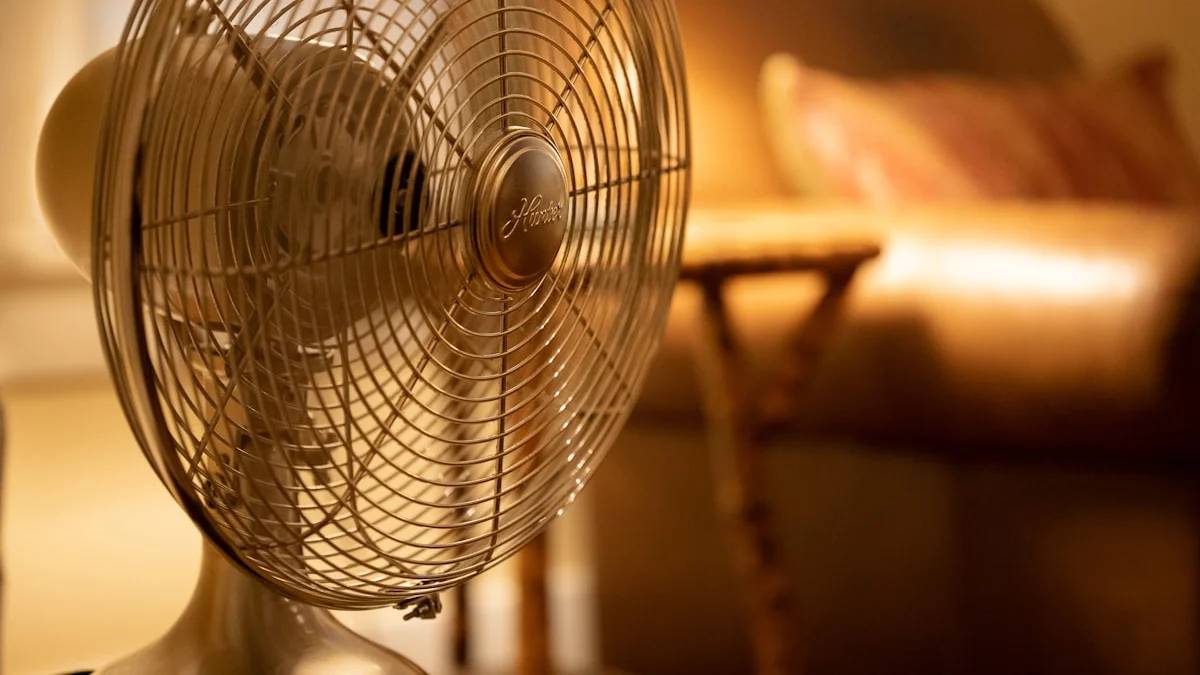
The box fan on my nightstand saved my sleep one July, and my sister called it a helicopter two months later. Same machine, same room, same volume. She spent a week in my guest bed while her apartment was being painted, and by night three she was ready to negotiate with the fan. I slept through all of it: the neighbor’s dog, the Thursday garbage truck, her 5 a.m. alarm.
Both of us were right. That’s the confusing part about fan noise and sleep. The sound was doing one narrow job, masking, and that job only matters if your nights contain the kind of noise a fan can cover. It also sits fourth in line among the bedroom sleep environment dials, after light, temperature, and the bed, which means it can be set perfectly and still lose to a glowing window or a warm room.
Key takeaways
- A fan helps by laying down steady sound, and your brain adapts to steady sound within minutes. What it treats is change, not volume.
- The same fan bothers other sleepers for concrete reasons: cycling on and off, oscillation, volume, cold drafts, and dry air. All of them are fixable.
- Conversation level or below, running all night, aimed away from your face. That’s the whole setup.
- A fan blurs a partner’s snoring, but the snoring itself is the snorer’s medical problem, not yours to endure.
- The room sets the floor. Coffee, wine, and a busy mind can still wreck a night with a perfect fan.
Why fan noise and sleep get along
One bad-sleep winter, before I trusted any of this, I lay in bed and counted the small glowing lights in my bedroom. Seven. A router, an alarm clock, a television in standby, two chargers, and a smoke detector blinking at the ceiling. “None of it looked like a problem. It looked like a normal bedroom, which is exactly why it took me another year of lying awake to connect those pinpricks to the fact that my brain never quite slid under.” I taped the router within the week, and my husband thought it looked ridiculous for about six days.
The fan belongs to the same argument. Your brain runs a sentry all night, and the sentry has one rule: log anything that changes. The book puts it in a single line: “your brain doesn’t care much about steady sound; it cares about change.” A highway hum fades away within minutes. A door slam never does, and neither does a snore that switches on and off, or a furnace that kicks on at 3 a.m., which is its own middle-of-the-night wake-up problem.
Masking is the fix that follows. “A fan or a white noise machine lays down a steady floor of sound so every sudden noise stands out less against it, the way a candle stops looking bright at noon.” The garbage truck still drives past your window. It just stops being the loudest event of your night.
Why the same fan bothers someone else
My sister’s verdict was about physics. She wasn’t reacting to the idea of a fan; she was reacting to what that particular fan was doing, and the list of usual suspects is shorter than you’d think. Five of them, in the order I’d check.
Cycling comes first. A fan plugged into a thermostat or a smart plug turns the steady floor into an on/off pattern, which is the exact shape of noise the sentry never files. If your fan clicks off at 2 a.m. and back on at 2:40, you own the worst of both: bursts at your lightest sleep, then a fresh change to log.
Oscillation comes second. A head that swings shifts pitch and airflow on every pass, and some brains track that sweep the way they’d track a dripping tap.
Third, plain volume. A fan on high can cross the conversation threshold, and above it the masking starts adding a noise load instead of subtracting one, which is the opposite of the point.
Fourth, cold. Moving air on your face and neck can drop you a degree past comfortable, and people who sleep cold feel it as a draft the warm-blooded never notice. Hot sleepers feel the same breeze as mercy, which is why the fan shows up in almost every list of cooling tricks for night sweats.
Fifth, dry air. Waking with dry eyes and a scratchy throat usually means the fan is aimed at your face all night, and pointing it at a wall fixes the draft and the dryness at the same time. Some people also just track the hum. If after a full week the fan still gives your brain something to count, retire it, because adaptation usually wins but not always, and a sound you resent isn’t doing its job.
How to run a fan so it actually helps
“Keep the volume at conversation level or below, steady all night. Loud masking becomes its own noise problem, and then you own two problems.” That sentence carries most of the setup. The rest is placement: away from your face, aimed at a wall or the ceiling, blades dusted, because a dusty blade adds a rhythmic wobble that hands the sentry a fresh job.
Run it all night. Skip the timer setting, because a machine that shuts off at midnight hands the room back to the bursts exactly when your sleep is lightest, which is the problem the fan was solving. If the breeze bothers you but the silence is worse, a white noise machine does the same job without moving air, and the trade-offs are laid out in what white noise actually does.
For a snoring partner, the order matters. The book’s first recommendation is foam earplugs plus the steady fan, because the on/off pattern of the snore is what trips the micro-awakenings, and a steady floor of sound blurs that pattern before it reaches you. The combination costs about four dollars.
It travels, too. Tom drives long-haul and sleeps in a different hotel three or four nights a week, and the kit he carries costs about twelve dollars: a full box of foam earplugs, electrical tape for LED lights and curtain gaps, two binder clips and a dark T-shirt to pin a thin curtain shut, and a pair of bed socks. Ten minutes of setup turns any roadside room into one that obeys the same rules as his bedroom at home. “A room doesn’t have to be yours to work. It just has to stop arguing.”
What a fan can’t fix
Here’s the limit, stated plainly. “So the room is necessary, not sufficient. It sets the floor, and the rest of the book builds on that floor.” The winter I fixed my room, I taped every light I could find and still spent certain nights doing math on the ceiling with the fan running steady, because a 4 p.m. coffee and a mind that wouldn’t close its tabs were doing the arguing instead.
Snoring deserves its own honesty. An ordinary snorer runs between 50 and 60 decibels, aimed at your ear from about eight inches away. “You’re not being delicate. That’s a real noise load, night after night, and it deserves a real answer instead of a resentful elbow.” Masking and fitted plugs carry most ordinary snoring nights. What they can’t do is make the snoring itself fine, because chronic loud snoring can flag sleep apnea, which is common, badly underdiagnosed, and very treatable, and a partner is usually the first person to notice the pauses and the gasping. The nudge that works is the plain sentence: “Your snoring scares me a little, and I read that it can mean something worth checking.” The full playbook lives in how to sleep with a snoring partner.
Two sleepers, one bedroom
Back to my sister. The negotiation ended boringly, which is how the good ones end: the fan stayed, pointed at the wall on my side of the bed, and she got a pair of foam earplugs, fitted properly, and slept through her last two nights in a room that never changed its mind.
That’s the general shape of the answer. When two sleepers disagree, split the jobs instead of arguing about the appliance: the person who wants sound keeps it, aimed away, at conversation level or below, and the person who hates it gets fitted plugs or a machine on their side only. Couples manage temperature the same way with per-side bedding, and sound yields to the same trick.
Set it up tonight. Judge the setup after a full week, not a single night, because your sentry needs a few nights of the same floor before it fully stands down. And if the fan is right and the room is right and you’re still awake at 2 a.m., the problem has moved out of the bedroom, and the rest of the system, worksheets included, is in Sleep, Finally.
Frequently asked questions
Why does fan noise help some people sleep?
A fan lays down a steady floor of sound your brain adapts to within minutes, so every sudden noise stands out less against it. The fan is really treating change, not volume.
Can fan noise actually make sleep worse?
Yes, usually for concrete reasons: a fan that cycles on and off with a thermostat, an oscillating head that shifts pitch, volume above conversation level, or a cold draft aimed at your face. Every one of those has a fix.
Is it safe to sleep with a fan on every night?
At conversation level or below, yes. The World Health Organization’s good-sleep target for bedrooms is around 30 decibels, roughly a whisper, and a fan on low sits comfortably under that.
Should the fan run all night or shut off?
All night, or not at all. A timer hands the night back to the sudden noises right when your sleep is lightest, which is the exact problem the fan was solving.
What if my partner and I disagree about the fan?
Split the jobs. The person who wants sound keeps it, aimed at a wall, and the person who hates it gets properly fitted foam earplugs or a machine on their side only.
This guide is educational, not medical advice. If noise keeps wrecking your nights for months, or a partner’s snoring comes with pauses and gasping, talk to a doctor.