Bedroom & Sleep Environment
Why Hotel Beds Feel Better Than Yours
By Nora Vale · July 16, 2025 · 9 min read
You check into room 1409 at 11:40 p.m., six hours after the flight was supposed to land, and by the second night you’re pricing the mattress on your phone. I did this for years. Three hotels in a row, three prices screenshotted, one very patient husband.
Here’s the unromantic answer to why hotel beds feel better than yours: the room is dark, it’s cool, it’s quiet, and the bed means exactly one thing. You arrive with huge sleep pressure and no laptop, and a room you had no hand in decorating happens to obey the four dials from the bedroom sleep environment guide. The bed is the least of it. Which is good news, because the rest of the bundle costs almost nothing to copy.
Key takeaways
- Hotel rooms win on the cheap dials: dark, cool, quiet, and a bed that means sleep and nothing else.
- Sleep debt is part of the magic. You check in exhausted, which flatters the mattress.
- The bed is one dial of four, and the industry sells it as all four.
- Tom’s twelve-dollar travel kit turns any roadside room into one that obeys the same rules as home.
- You can rebuild most of the effect at home for the price of tape and a pillow, and it still won’t rescue a night ruined by wine and a racing mind.
Why hotel beds feel better than yours
Start with what a hotel room actually is, physically. Thick curtains that close completely, because nobody wanted a gap in the first place. A thermostat nobody fights over. A hallway instead of a highway, a television you never turn on, and a bed containing a laptop exactly zero nights out of seven. Compare that to your bedroom: the router’s green star, the streetlight stripe, the duvet that turns the room into a sauna by 2 a.m., and three nights a week when you answer email from under the covers.
None of those differences photograph well. Rooms don’t sabotage sleep in ways you can see in daylight, which is why the bed collects the credit. The dark, the cool, and the quiet work invisibly, and a brain that had spent months half-dressed for a party suddenly lands in a room that honors the old expectations, so falling asleep goes mostly automatic and you file the miracle under “mattress.”
There’s also a selection effect nobody in the mattress industry will mention. You check in tired. Delayed flight, long drive, strange city, big meeting tomorrow, your sleep pressure is enormous, and enormous sleep pressure makes almost any surface look brilliant. Then you go home, sleep in your own bed on an ordinary Tuesday with ordinary cortisol, and conclude your mattress stopped working.
What the mattress actually contributes
Now the skeptic’s pass, because the bed is the section with price tags. “The mattress industry would like you to believe the bed is destiny. It isn’t. It’s one dial of four, and the most expensive one, so let’s be skeptical here first.” One dial of four. It earns its keep only if it holds your spine neutral, flat and supported with no shoulder sinking or hip propped up, and medium-firm beat extra-firm in a Spanish randomized trial of people with back pain.
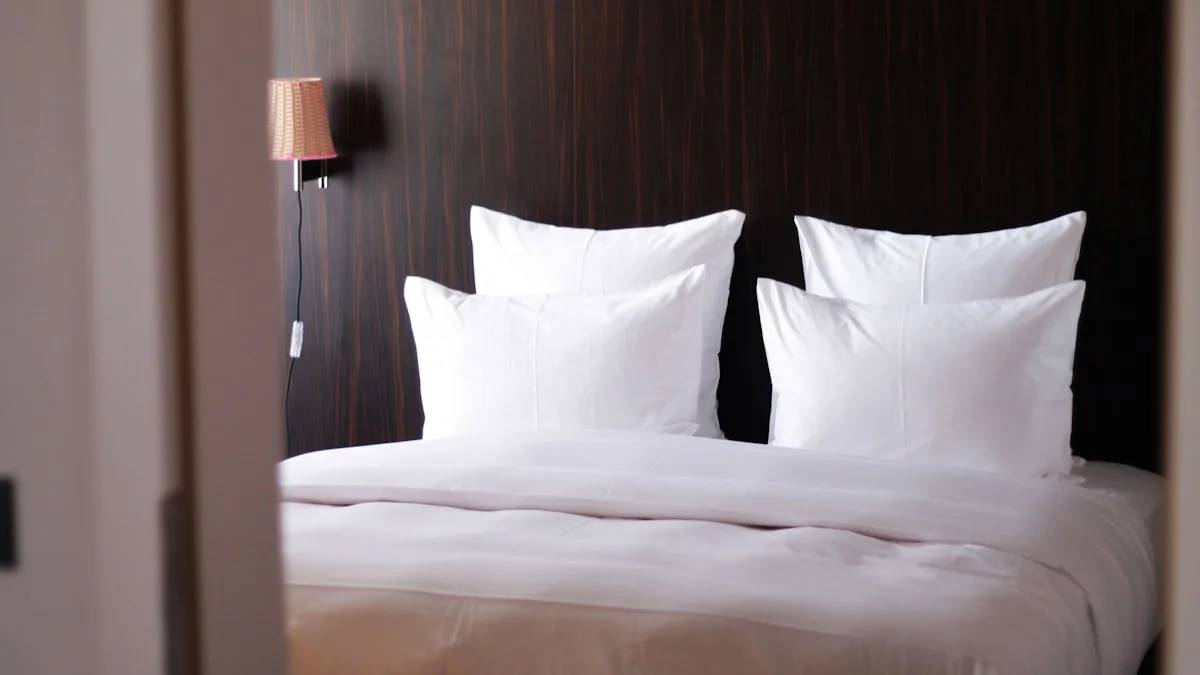
The pillow matters more than the mattress upgrade you’re eyeing. “The pillow is the gap-filler, and it’s where twenty dollars beats two thousand.” Side sleepers need enough pillow to keep the ear roughly in line with the shoulder, back sleepers need medium or low, and stomach sleepers need almost nothing at all. Hotels know this. It’s why they stock four pillows in two firmnesses, which makes the pillow the cheapest part of the whole hotel setup to copy at home.
So before you buy, run the honest test I laid out in when to replace your mattress: sag, morning soreness, and the hotel tell, which now comes with a catch. Sleeping better in hotels is evidence. But it’s contaminated evidence until you’ve fixed the light, temperature, and noise at home, because half the effect was never in the bed.
The twelve-dollar room you can carry
Tom drives long-haul and sleeps in a different hotel three or four nights a week. Streetlight through a half-inch curtain gap, ice machines thumping at midnight, thermostats that ignore him entirely, and for years he figured good sleep was a weekend thing that happened at home if he was lucky. Then he started carrying the room. The kit lives in a zippered pouch in his duffel and costs about twelve dollars:
- foam earplugs, a full box, with a spare pair stashed in the truck
- a small roll of electrical tape, for LED lights and curtain gaps
- two binder clips and a dark T-shirt, to pin a thin curtain shut against the frame
- a pair of bed socks, for rooms the heater forgot
Ten minutes of setup, any room. Tape the LED, clip the curtain shut, plugs in, socks on, and a thermostat that ignores him gets answered with an extra blanket instead. He told me the kit turned hotels from something he endured into something he sleeps in. “A room doesn’t have to be yours to work. It just has to stop arguing.”
The room was never about ownership. It’s about the four signals, and Tom can install all four in any roadside room in ten minutes, for about the price of lunch.
Rebuilding the same room at home
The pouch has a domestic twin. Every piece costs less than the flight that took you to the hotel, which is the quiet scandal of the whole conversation about hotel beds.
Start with light. It’s the loudest signal in the room. Electrical tape over the router star, a sticky note on the clock face, tape on the television’s standby eye, and a blackout fix for the window stripe, which I’ve written up in why your bedroom should be dark. If you sleep days or fight a streetlight, the same physics scales up in a blackout bedroom for day sleep.
Temperature next. It works backward from intuition: your core has to drop a degree or two before your brain agrees the night has begun, so a cool room is the invitation and a warm one is the argument. The workable range and the one-week self-experiment live in the best temperature for sleep, and the warm-shower trick, taken one to two hours before bed because the cooldown after it is the real signal, gets its own post in does a warm shower before bed help.
Then the bed’s job description. Take the laptop out of it permanently, move the laundry somewhere else, and give the television one rule: couch only. That’s Priya’s reset, done on a weekend with nothing purchased, and within a week her bed meant one thing again, so lying down became a cue instead of a question.
One more piece. Add the layering system, a duvet plus lighter layers you can shed at 2 a.m. without properly waking, and per-side bedding if you share the bed, and you’ve built a room that answers thermostat arguments with another blanket instead of a war.
What a perfect hotel room can’t fix
Here’s the honest flaw, and I know it personally. It stings. The winter I fixed my own room, I taped every light, hung the foil, dropped the thermostat, and matched the pillow to my shoulder. Some nights I still lay there wide awake, doing math on the ceiling, because the 4 p.m. coffee, the 9 p.m. wine, and a mind that wouldn’t close its tabs were doing the arguing instead. Hotel rooms sell you the floor, not the whole night. “So the room is necessary, not sufficient. It sets the floor, and the rest of the book builds on that floor.”
The same ceiling applies away from home. The conference dinner wine, the 6 a.m. flight anxiety, the fourth night in a row in a different city: no twelve-dollar kit outruns those. You end up with a much nicer place to lie awake in, which is worth something, but the room was never the whole house.
Frequently asked questions
Why do hotel beds feel better than mine?
Because the bundle around the bed is better, not just the bed. Hotel rooms run dark, cool, and quiet, the bed means sleep and nothing else, and you usually arrive with enough sleep pressure to make any surface feel miraculous. The mattress is the least of it.
Is it the mattress or the room?
Mostly the room. The mattress is one dial of four and only matters if it fails the spine test: sag, morning soreness, or a body folded out of neutral. Fix light, temperature, and noise for a week before spending four figures on foam.
How can I make my bed feel like a hotel bed?
Copy the bundle. Tape the LEDs, blackout the window, drop the thermostat into the 60 to 68 range, layer the bedding instead of running one heavy duvet, and fit the pillow to your sleep position, where twenty dollars beats two thousand. Then evict the laptop.
What should I pack to sleep better in hotels?
The twelve-dollar kit: foam earplugs, a small roll of electrical tape, two binder clips plus a dark T-shirt for the curtain gap, and bed socks. Ten minutes of setup turns any roadside room into one that obeys the same four rules as home.
Why do I still sleep badly in a nice hotel?
Because the room sets the floor and your body sets the rest. Alcohol at dinner, a racing mind, and a week of short nights will override any mattress. If the mind is the noisy part, work on the wind-down, not the bedding.
Before your next check-in
Do the home audit first. Count the glowing dots, check the curtain gap, drop the thermostat two degrees, and evict the laptop for one week. If your bedroom then sleeps like a hotel, you’ve saved yourself two thousand dollars, and if it still doesn’t, you finally have clean evidence for the mattress conversation instead of a screenshot of room 1409. The worksheets for all four dials, and the reset that walks through them in order, are in Sleep, Finally. That’s the whole house.
This guide is educational, not medical advice. If you snore loudly, wake gasping, or feel exhausted despite enough hours in bed, talk to a doctor.