Screens & Sleep
Why Scrolling Keeps You Awake
By Nora Vale · April 14, 2026 · 7 min read
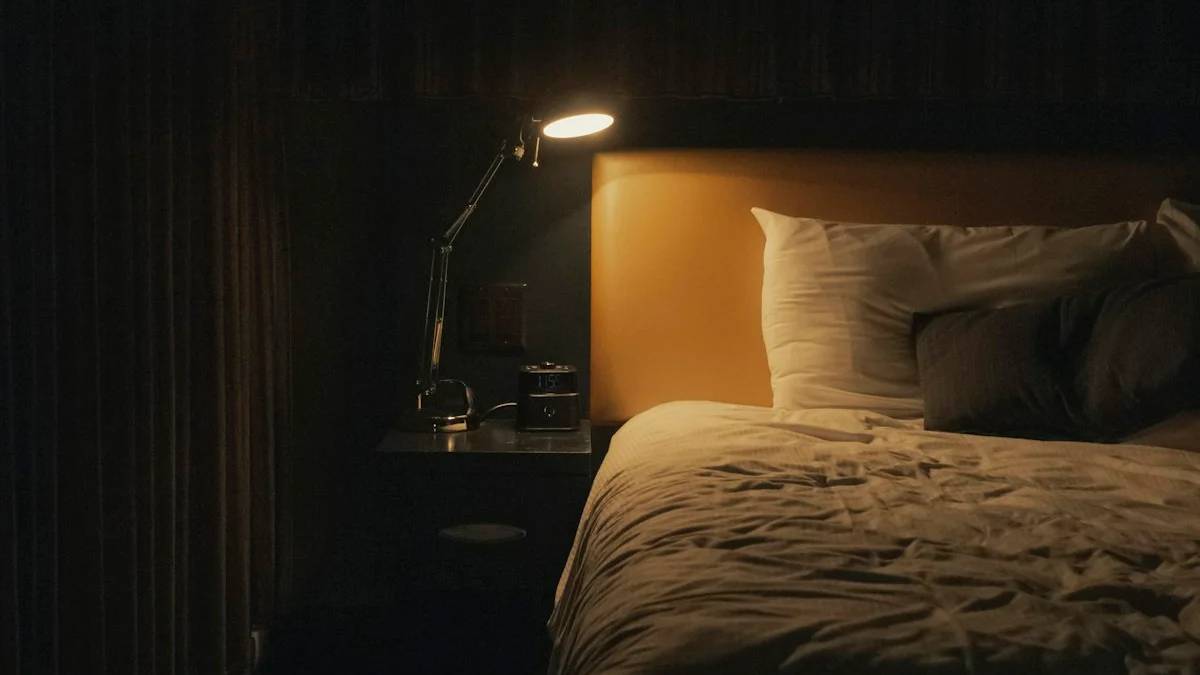
You got into bed at a reasonable hour to check the weather for tomorrow’s run. It’s now 11:37, you’re staring at the ceiling doing math on six hours of sleep, and you have no memory of the last forty-five minutes. A senator said something. The replies were worse. A stranger was confidently wrong about pasta water. That’s the whole mystery of why scrolling keeps you awake, compressed into one Tuesday.
I did that math myself for three years, phone six inches from my pillow, always telling myself I would glance. The glance was eating nearly an hour. The frame that finally made sense of it, and the wider picture of how screens eat nights, lives in the screens and sleep guide, and it starts with a claim that sounds dramatic until you check it against your own evenings: “the phone is two thieves working together.”
Key takeaways
- Scrolling keeps you awake through two mechanisms: light that delays melatonin, and content that hands your brain small doses of alertness.
- The light part is real but modest. The content part does most of the damage, and no setting refunds the time it takes.
- Feeds work because every swipe carries a maybe, and unpredictable rewards are the most addictive kind. You’re outnumbered, not weak.
- The fix is boring and cheap: no feed in the final hour, and the phone docks outside the bedroom, decided before you’re tired.
The two thieves working together
Thief number one is light. Photons arriving at the back of your eye after dark tell the ancient timing equipment in your brain that the day is still running, so melatonin, the hormone that starts opening the door to sleep, holds off. The dose matters here, and the dose deflates the panic. Full daylight runs around ten thousand lux. A brightly lit office manages fewer than five hundred. A phone at arm’s length sits far below either, and an hour of evening daylight delivers more light to your body clock than an entire night of scrolling. So yes, the glow contributes. It’s the understudy.
Thief number two is the job, and this one barely gets press. The phone isn’t a fireplace you stare into; it’s a slot machine that asks your brain a question with every swipe. Is this worth replying to. Should this annoy me. Who liked my photo. Each answer is small, but each one is a small dose of alertness, and alertness is the exact opposite of what eleven at night is for. My worst stretch of this wasn’t even entertainment, it was the inbox, the school group, the one client who emails at nine. Every message arrived on someone else’s timing and assigned me a small task with a small deadline attached.
The two work as a team, which is what makes them hard to catch. The light thief makes you less sleepy at exactly the hour sleepiness should arrive. The job thief pushes your bedtime later, then hands you a mind idling too high to use what’s left. Between them they eat the night from both ends while the phone looks innocent, because it’s just a rectangle of glass being useful.
What the research actually says
When researchers pool the media studies that follow children and teenagers, hundreds of kids at a time, the average effect of screens on sleep comes out small. The damage that does show up traces to two things: content that keeps minds switched on, and time spent scrolling that should have been time spent asleep. Adults aren’t a different species. “If the content wakes your mind up, it barely matters that the screen is dim, and if the feed eats forty-five minutes, no night-mode setting hands them back.”
The famous tablet study, the one behind every headline you’ve read, is worth knowing at its real dose. In 2015, researchers at Brigham and Women’s Hospital had people read for hours before bed, some on light-emitting tablets and some on printed books. The tablet readers’ melatonin arrived about ninety minutes late, they fell asleep about ten minutes slower, and their body clocks shifted later. Notice what that took: hours of bright, close-range light, night after night. Not a glance at the weather. The gap between that dose and the dose in your hand is where most of the marketing lives, and it’s also why I spent a season in blue light glasses that did roughly nothing while the actual thief worked uninterrupted.
Forty-five minutes that felt like five
Tyler told me his version at a neighborhood barbecue, sheepish and precise. At 10:50 he got into bed and opened his phone to check the weather for a morning run. While he had the thing open, he checked the news, and the night went as those nights go. Ask him what he got out of those forty-five minutes and he’ll tell you the truth: nothing. He didn’t enjoy it. Nobody enjoys it. The scroll keeps going because every swipe carries a maybe, maybe the next one is interesting, and an unpredictable reward is the most compelling kind there is, which is exactly why the feed is built that way.
Here’s the sentence I want you to keep. Thousands of very good engineers, with bonuses tied to his thumb, refined that design for a decade. Tyler wasn’t weak. He was outnumbered. The same goes for you, and the shame version of this conversation has never once helped anybody get to sleep.
Notice what the theft actually looks like, too, because it isn’t dramatic. Tyler fell asleep eventually, the way everybody does. What showed up was a shorter night, a groggy Thursday, and a coffee ramp that started a little earlier every month. The feed steals time rather than quality, and it does it so smoothly the theft doesn’t feel like anything while it’s happening. That’s the part worth being honest about, not the glow.
The fix, and why it’s boring
The rule that changed my nights more than any glasses, app, or setting costs about ten dollars. You buy a real alarm clock, and the phone stops sleeping next to you. Mine charges on the kitchen counter, plugged in beside the fruit bowl, and it goes there when the wind-down starts, not later when I’m already in bed negotiating. Decisions made at 11 p.m. with a warm phone in your hand resolve about as reliably as decisions to have one more drink. Decide at nine where the phone sleeps, and the eleven o’clock version of you never gets a vote.
One motion covers both thieves. Docked, the light source is out of pillow range and the job is retired for the night. The first few nights feel strange, like part of your hand is missing, and you’ll reach for it around 10:15 out of pure reflex and find a lamp. Sit with that. Then something quietly good happens: the bed gets boring, and boring is the on-ramp to sleep. If the full move feels too big, charging it across the room is an honest first step, and the alarm clock swap has a whole plan for making it stick.
There’s a hole where the scrolling used to be, though, and a hole with nothing planned for it is how the phone gets rehired. Fill it on purpose. My version is plain enough to be almost embarrassing: dishes done by nine, phone on the counter at nine-thirty, twenty minutes of stretching, a few pages of a paperback with a cracked spine. It sounds like nothing. It is nothing, and that’s the point. The things I do before bed instead of scrolling took a while to settle, but the same order every night is what made them automatic.
Frequently asked questions
Why am I wide awake after scrolling in bed?
Because the feed is a slot machine that hands your brain small doses of alertness with every swipe. Each post asks a tiny question worth answering, and alertness at eleven is the exact opposite of what that hour is for. The light is the smaller half of the problem. The content is the half that keeps you up.
If I feel sleepy, why can’t I stop scrolling anyway?
Because every swipe carries a maybe, and unpredictable rewards are the most compelling kind there is. Teams of engineers spent a decade tuning feeds to hold attention, which is why willpower loses so reliably. You’re not weak for losing track of time in one. You’re inside a machine built to make that happen.
Does night mode or dimming the screen fix it?
It treats the light, which is the smaller thief. If the content wakes your mind up, it barely matters that the screen is dim, and no setting refunds the forty-five minutes the feed ate. Take the free half-measure anyway, then draw the real line at feeds in the final hour.
What’s the single change that helps most?
A ten-dollar alarm clock and a phone that charges outside the bedroom, decided at nine, not negotiated at eleven. Docking removes both thieves in one motion, and the bedroom gets boring, which turns out to be the on-ramp to sleep.
The honest limit
The seventh night exists. Tyler’s score after docking was six out of seven, and the seventh was a bad news week that ate an hour before he started over without treating it like a moral event. That’s the realistic ceiling for most humans, and I still have my own exception, for a friend who works nights. A rule you keep beats a rule you admire. If the phone is genuinely your lifeline after dark, that’s a solvable problem too, not a verdict against you.
The feed refills itself overnight, every single night, with fresh arguments and a new stranger being confidently wrong about pasta water before you even wake up. None of it expires. It will wait with the same appetite at seven a.m. that it had at eleven p.m. Your sleep window is the only thing in this arrangement that closes.
This guide is educational, not medical advice. If sleep problems persist for months despite sane evenings, see a doctor.