Hormones & Sleep
Why Waking More at Night Is Normal as You Age
By Nora Vale · April 5, 2026 · 7 min read
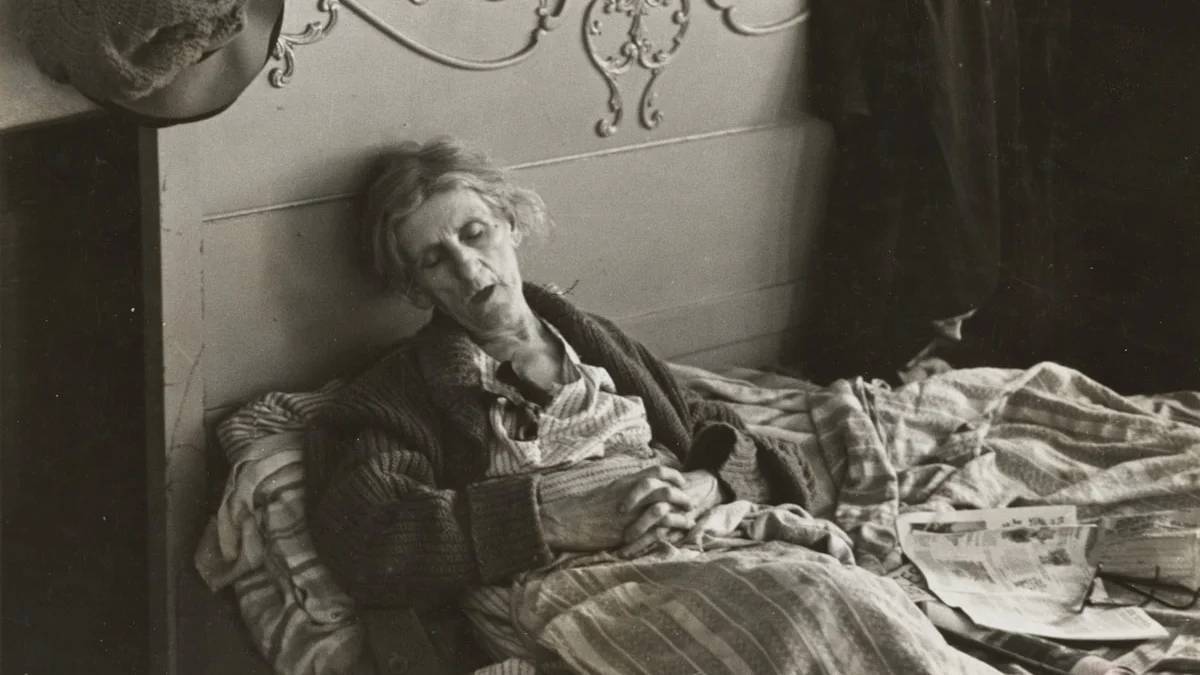
A woman I know, sixty-six, fell asleep in front of the nine o’clock news and woke at four without any reason she could name. Her family, her doctor, and eventually she herself had agreed on a diagnosis: age. She came to the book expecting sympathy for it. What she got instead was an audit, because some of what we file under age is testable, and a couple of her items were.
If your nights have started arriving in installments, the full chapter lives in the hormones and sleep guide, and this post separates the part of older adults night wakings that’s genuine biology from the part that’s just accumulated habits wearing age as a disguise.
Key takeaways
- Deep sleep declines and sleep lightens with age, so brief night wakings are normal biology rather than a malfunction.
- The sleep requirement doesn’t shrink with the architecture; seven to eight hours is still the target, arrived at in pieces.
- Some of what gets called aging is testable: evening light, late caffeine, alcohol, medications, and sleep apnea all mimic it.
- The fundamentals protect lighter sleep better than they protect young sleep, which is why they matter more with age.
- “Old is not a diagnosis.” Waking exhausted, gasping, or flattened in mood earns a doctor, not resignation.
What actually changes with age
The honest biology first, because the reassurance only lands if the mechanism is real. Deep sleep, the heavy first-half sleep that’s hardest to interrupt, declines across adulthood. Sleep in general gets lighter and more fragile, so noises, temperature shifts, and your own bladder can end a sleep cycle that a forty-year-old would have slept through. The circadian clock also drifts earlier, which is why the nine o’clock couch takes you and the four a.m. ceiling gets its turn: bedtime arrives earlier than the schedule wants, and with it an earlier end to the night’s sleep account.
None of this is a malfunction. It’s the same renegotiation the rest of the body is running: “Hormones change the rules of the game. They don’t cancel it.” Waking two or three times briefly and drifting back is the aged version of a normal night, and knowing that has its own value, because the fear of being awake is itself a sleep thief. The wake-up is normal. What you do in the next ten minutes decides whether it costs anything.
What changes less than people assume is the requirement. “Age explains lighter sleep. It doesn’t explain the television,” and it doesn’t explain the three o’clock coffee either. Seven to eight hours of sleep is still what the body votes for, and if you’re getting it in installments and functioning fine by day, the ledger may already be balanced.
What gets mislabeled as age
This is where the sixty-six-year-old’s audit gets its teeth, and it’s the most useful twenty minutes an older sleeper can spend. Several common night-breakers mimic aging perfectly, and each one is testable.
The evening light story ages nobody: a bright living room at nine pushes the clock later at exactly the hour the aged clock wants to advance, and the mismatch fragments the night’s bookends. The late caffeine and the evening wine both keep their old schedules, and the wine’s 2:40 invoice arrives on time at every age. Medications are a whole category: blood pressure pills, diuretics timed for bedtime, and a shelf of common drugs all list sleep effects, and the timing of a dose can be a conversation rather than a fact. The bladder fills faster with age, but a full glass of water at nine makes it fuller. And sleep apnea, massively underdiagnosed in older adults, presents as exactly this: fragmented, unrefreshing sleep that everyone agreed to call age.
The woman at four a.m. was watching television in the bedroom until sleep took her, drinking her last coffee at four in the afternoon, and taking her evening pill at bedtime. None of that was age. “Age sets the terms. It doesn’t write the whole contract,” and her contract had three clauses worth renegotiating before she signed the aging diagnosis at all.
What actually helps lighter sleep
The fundamentals, which sound boringly familiar and work better here than anywhere. A consistent wake time anchors the clock that aging wants to drift, and morning light within the hour keeps the anchor set; both live in morning light and sleep. A caffeine cutoff eight hours before bed protects the fragile second half of the night. A cool, dark room matters more as sleep lightens, since the light sleeper has less margin against a warm room and a glowing clock; the room kit is in best temperature for sleep and why your bedroom should be dark.
The wind-down deserves special respect with age, because a conditioned, boring, same-order evening survives lighter sleep better than a variable one. The brain that has practiced its downshift for years holds the skill; the book’s summary is that conditioning is the routine that happens every night, and that “the routine you actually repeat wins.” If evenings have drifted loose over the years, how to wind down before bed rebuilds the shape.
And the middle-of-the-night moment itself has a protocol: don’t lie there auditing the wake-up. If the wake-up is brief and calm, drift; if the mind starts or the frustration climbs, the stimulus-control move applies at any age. The full version is in should you get out of bed when you can’t sleep, and the clock-checking habit that makes 4 a.m. worse is in how to stop checking the time at night.
Honest limits: what to test, what to take to a doctor
Here’s the boundary, and with age it’s the most important section in the post. Start with the two-week audit: a one-line log each morning, wake-ups and their length, plus the evening inputs, caffeine, alcohol, light, last pill of the day. Patterns confess on paper that they deny in memory, and two weeks is the honest length, because “Memory is a terrible statistician. It rounds off Tuesdays.”
Then the referral list, no shame attached. Waking gasping, or a partner reporting pauses in the snore, is apnea territory, and untreated apnea in an older adult costs more than sleep. Daytime sleepiness despite enough hours in bed deserves the same appointment, and it’s one of the patterns where “There’s a difference between tired and ambushed, and the ambush is the flag.” New medications that arrived with the new nights are a pharmacist conversation first and a dose-timing conversation second. And nights that broke around the same time as a flattening mood belong in that same office, because sleep and mood run in both directions and both doors are real.
The woman with the four o’clock wake-up moved the television out of the bedroom, moved her coffee to noon, asked about the pill timing, and now sleeps, on ordinary nights, through to about five. The four o’clock is down to a brief, calm surfacing she doesn’t fight. Some nights still fragment; the biology remains. “Age explains lighter sleep. It doesn’t explain the television,” and in her case the television had been getting the credit for years.
Frequently asked questions
Why do I wake up more at night as I get older?
Deep sleep declines and sleep lightens, so noises, temperature shifts, and a fuller bladder end cycles they once wouldn’t have. The clock also drifts earlier, ending the night’s account sooner. Brief, calm wake-ups that you drift back from are the normal aged version of a night, not a malfunction.
Is waking at night a sign something is wrong?
Not by itself. Fragmented but adequate sleep with good daytime function is normal aging. What deserves attention: lying awake for hours, waking exhausted despite enough time in bed, snoring with pauses, or nights that broke alongside a new medication or a flattening mood. Those are testable, and most are treatable.
Do older people need less sleep?
No. The requirement stays roughly seven to eight hours; the ability to collect it in one unbroken block changes. Daytime sleepiness still means the night came up short, whatever the date of birth says. The goal is protecting the sleep that remains, not shrinking the target to match the fragmentation.
What actually helps with age-related night waking?
The fundamentals, doubled: a consistent wake time, morning light, an eight-hour caffeine cutoff, a cool dark room, and a wind-down repeated in the same order nightly. Add the brief-wake-up protocol: no clock-watching, no auditing, and the couch routine if the mind starts. Each protects the margin lighter sleep no longer has.
When should an older adult talk to a doctor about sleep?
For gasping or witnessed pauses in snoring, persistent daytime sleepiness despite enough hours, nights that arrived with a new medication, or bad nights that broke around the same time as low mood. Bring a two-week log. Waking at night is normal; being ambushed by the day isn’t.
This guide is educational, not medical advice. If sleep trouble persists most nights for months, or comes with gasping, exhaustion, or mood changes, a doctor is the right door, not a new routine.