Stress & Cortisol
Why Your Heart Pounds When You Lie Down at Night
By Nora Vale · August 12, 2025 · 7 min read

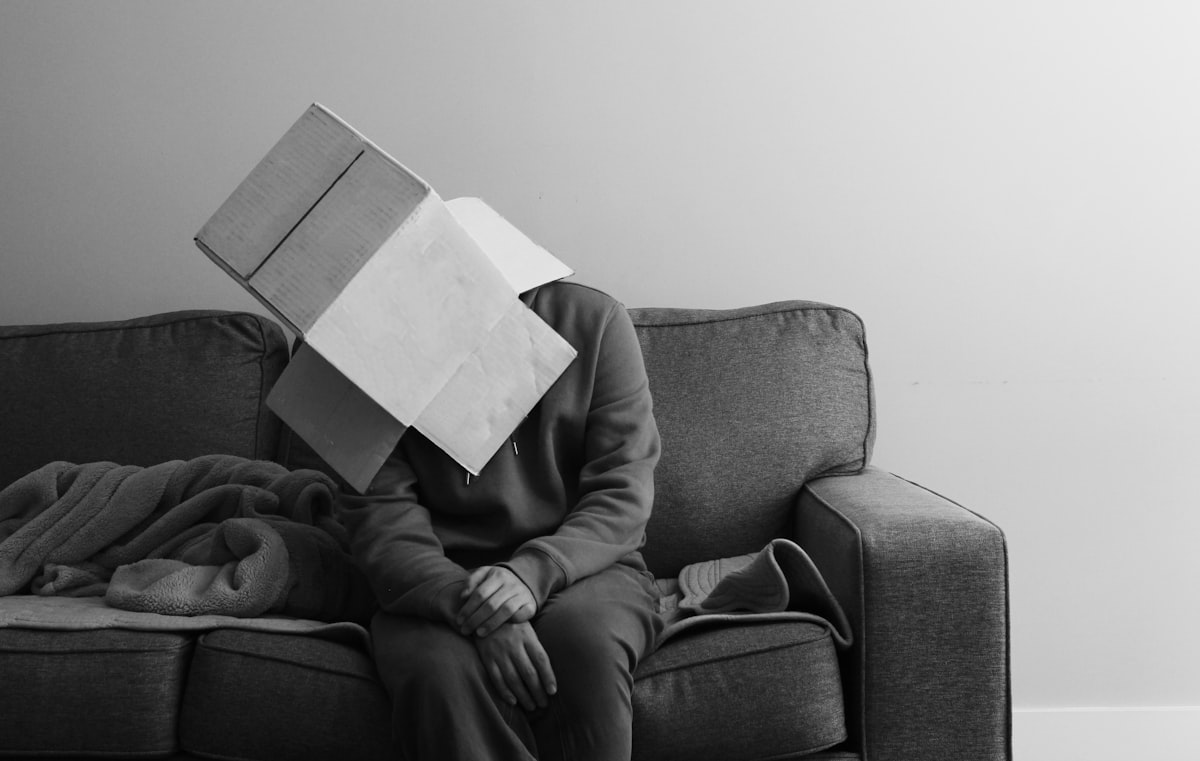
Hannah’s version ended at midnight, flat on her back with her eyes wide and her heart tapping out something urgent, and she had no idea what her body thought was happening. Her day had contained nothing you’d call an event. A clipped comment in the school pickup line, dinner, homework, one argument about a tablet. She felt like a completely normal person all evening, and then she lay down and her pulse did the announcing. If that’s your night, a heart that pounds the moment you go horizontal, this post covers the common explanations, the honest ones and the boring ones, what actually helps, and the line where a doctor replaces me. The wider picture is in the stress and sleep guide.
Key takeaways
- A pounding heart when lying down is most often hyperarousal: a nervous system that never clocked out, made audible by quiet and stillness.
- Position plays a part too, because horizontal and on your side puts your chest against the mattress and closer to your ears, amplifying a normal pulse.
- Late caffeine and evening alcohol both manufacture the symptom by chemistry, and both are checkable tonight.
- The physiological sigh, two inhales and a long exhale, is the fastest honest calmer, and scheduled worry time handles the cause.
- Chest pain, fainting, breathlessness, or pounding that wakes you from sleep repeatedly deserves a doctor, not a technique.
The quiet makes it loud: what’s usually happening
Here’s the frame that helped me stop treating my own pulse like an alarm. All day your nervous system runs background jobs, and on ordinary stressful days it idles higher than you notice, because there’s always something to monitor: traffic, screens, colleagues, the running list. When you lie down, the jobs run out. Dark room, no conversation, a body gone still. The monitoring turns inward, and your own heartbeat becomes the loudest signal left. The pounding isn’t new. The quiet is.
Researchers who study chronic insomnia describe the deeper version as a 24-hour disorder of hyperarousal, and that phrase is literal: people with it show higher resting heart rates, warmer core temperatures, and a metabolism idling above normal in broad daylight, hours before anyone tries to sleep. “The night is when you notice. The day is where it lives.” Hannah’s heart wasn’t reacting to the mattress. It was still reporting on the parking lot her mind had rerun three times since the pickup line.
There’s also a purely mechanical piece that deserves its own sentence, because it scares people for no reason. Lying down changes how a normal heartbeat registers. On your side, especially the left, your chest sits closer to the mattress and your own ears, and a perfectly ordinary pulse can feel like a drum. That amplification is anatomy, not pathology, and it’s why the symptom often shows up the moment you roll over rather than building gradually.
The chemistry you can check tonight
Two common substances manufacture this exact symptom, and both are cheap to audit. The first is late caffeine. A cup at four still has a real share of itself in your blood at midnight, and caffeine’s whole job is raising alertness chemistry, so a pounding bedtime heart can simply be reporting the afternoon’s order. The cutoff math is simple, no caffeine within about eight hours of bedtime, ten if your sleep is already thin, and the arithmetic lives in the guide to caffeine and sleep.
The second is alcohol, which surprises people because it’s famously sedating. The sedation is real for the first half of the night. Then your body clears it, usually three to four hours after the last drink, and the rebound arrives: sleep fragments, and a great many people snap awake near two or three with a racing heart and skin that feels strangely warm. The same rebound can begin before you even fall asleep if the drink was late. If the pounding follows drinking nights, the drink is a legitimate suspect, and why alcohol wakes you at 3am takes that mechanism apart without scolding.
What actually calms it
Now the useful part, with one rule attached: effort ruins calming. Trying to relax is effort with a spa soundtrack, and trying raises the very dial you’re pushing down, so everything below is boring on purpose.
The fastest lever is slow breathing with a long exhale, the physiological sigh: two inhales through the nose, the second a small top-up right after the first, then one long, slow exhale through the mouth, longer than both inhales combined. The exact counts matter far less than making the exhale the longest part, because the exhale is the segment of the breath that signals safety to your body. It’s an arousal dial, not a sedative, and like any dial it works best when your hand already knows where it is, so practice on a calm night rather than auditioning it at midnight.
The structural fix happens earlier in the evening. A pounding heart at lights-out usually means open loops, worries the brain still treats as active threats, so give the loops an appointment before they get one: a worry page in the early evening, concerns in one column, next concrete step in the other, nothing tonight being a legitimate answer. Then add one dull physical downshift between the workday and bed, a walk around the block, dishes with the radio on, a shower without a phone. Low stakes, obvious ending, nothing to grade. The full sequence is in how to decompress after work, and the state you’re likely standing in has a name I’ve written up in tired but wired meaning.
One more practical note for the position problem: if left-side lying is when the pounding peaks, try the right side for a few nights and see whether the amplification alone was doing half the work. That’s a five-second experiment, and it costs nothing.
When it’s not stress: the line I won’t blur
I write about sleep, not medicine, so the border gets its own paragraph. A pounding heart at bedtime has a common stress explanation, and it has medical ones, and you can’t tell them apart from a blog post. Chest pain, fainting, breathlessness, or pounding that wakes you from sleep repeatedly deserves a doctor’s ears. So does a pattern that persists for weeks despite honest caffeine and alcohol changes, and so does a heart that pounds every night regardless of how calm the day was. Making that appointment is not the failure. It’s the correct use of the flag, and the red flags guide exists precisely for that kind of decision.
And one honest limit on the stress explanation itself: the tools above lower the dial, they don’t uninstall the day. In genuinely bad weeks, no breathing pattern rescues a night by itself, and the goal shrinks to keeping the load out of the mattress. That’s a real outcome, not a consolation prize.
Frequently asked questions
Why does my heart pound when I lie down?
Usually hyperarousal: stress chemistry that stayed elevated through the evening plus the quiet that finally makes it audible. The day is where it lives; the night is when you notice.
Can lying down itself make your heartbeat feel stronger?
Yes, physically. Horizontal and on your side puts your chest closer to the mattress and your ears, so a normal heartbeat registers as pounding. Position can amplify without anything being wrong.
What can I do tonight to calm a pounding heart before sleep?
Slow breathing with a long exhale, the physiological sigh, works fastest because the exhale signals safety. Earlier in the evening, a scheduled worry window and a dull physical downshift take the load off before you lie down.
When is a pounding heart at night a doctor problem?
If it comes with chest pain, fainting, or breathlessness, if it regularly wakes you from sleep, or if it persists for weeks despite honest changes, that’s a clinician’s call.
Hannah’s heart settled the week her worries got a six-thirty appointment. Yours doesn’t need a calmer life. It needs to hear that the meeting actually happened.
This guide is educational, not medical advice. If sleep problems persist for months or arrive with symptoms you can’t explain, a doctor is the right door.