Wind-Down Routines
Winding Down in Winter: Dark Evenings and Sleep
By Nora Vale · April 16, 2025 · 7 min read
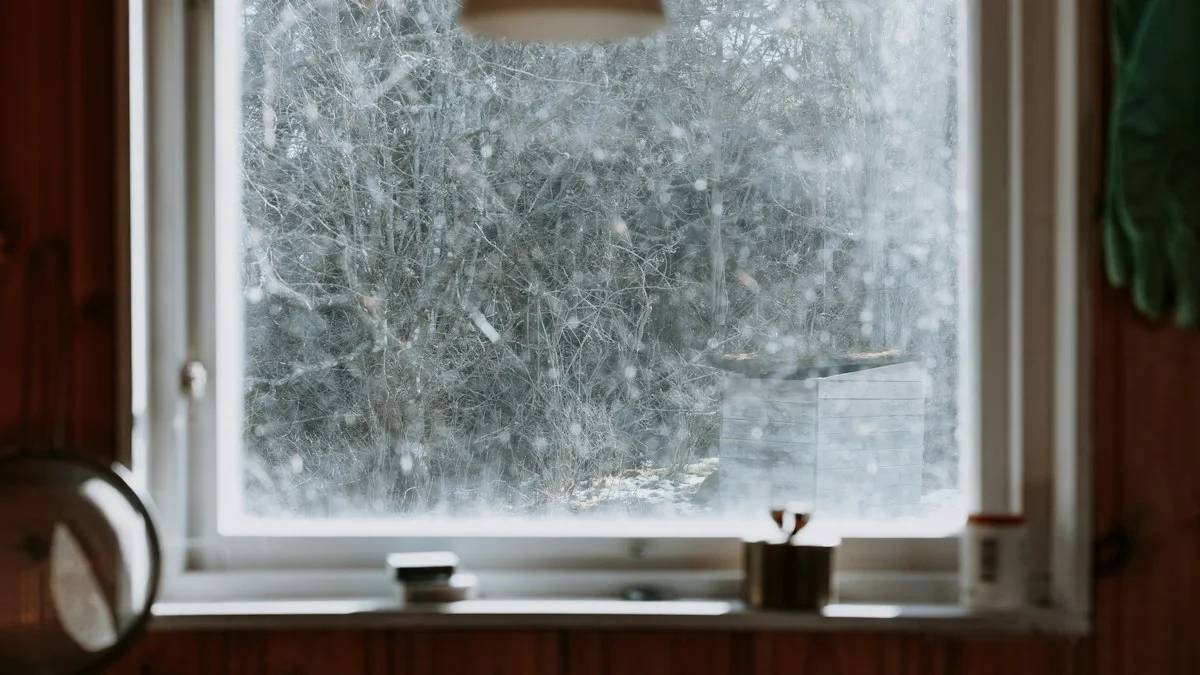
Your living room goes dark at five in December, and by seven your body has quietly concluded the day is over. Then the overheads come on, the phone comes out, and midnight finds you wide awake under full brightness, wondering how a season that starts so sleepy ends so wired. I spent two winters treating the early dark as the enemy before I understood it was the best wind-down cue I would ever get for free. This post is the winter wind-down routine I run now, and the season does half the work. The full system it belongs to lives in my wind-down routine guide.
Key takeaways
- Early darkness is an asset. Melatonin starts rising about two hours before bedtime, but only in dim light, and winter hands you that dimness at five.
- The routine is the same in every season: dim the house, one slow physical thing, one quiet thing for the mind, phone out of the bedroom.
- Warm showers work with winter, not against it, because the cooling afterward is the signal.
- Twelve minutes every night beats an hour twice a week, especially when the dark makes you want to hibernate in front of a screen.
- Expect the first two weeks to feel pointless. That is conditioning, not failure.
Why the early dark is on your side
Start with the mechanism, because it flips the whole season around. “In sleep labs, melatonin, the darkness signal that eases a person toward sleep, starts rising about two hours before their usual bedtime, but only in dim light, because bright light in that window holds the hormone down and quietly shoves the body clock later.” Read that twice in a winter context. The dimness your body is waiting for arrives at five o’clock, two full hours before most people’s wind-down even begins, and every lamp and screen you switch on after sunset spends that head start for you.
Summer asks you to manufacture dusk with blackout curtains and dimmers. Winter manufactures it for you. The mistake I made for years was treating the five o’clock gloom as a problem to fix with brightness, when it was actually an invitation. My body was ready to start the glide at six. I kept canceling the flight.
There is a drowsy stretch after dinner too, and winter stretches it longer. “Most people are genuinely drowsy around nine, in the natural slump the body clock sets up after dinner, and it’s the single best invitation to start drifting toward bed that the whole day offers.” In December, that slump can show up by eight. Riding it to bed is not sad. It is the cheapest sleep move of the year.
The winter wind-down routine, in order
The winter wind-down routine is the ordinary one with an earlier start time. The light move comes first, and the instruction is embarrassingly plain: “after dinner, stop using the big overheads. Lamps, shades half down, the kitchen dim, nothing in the house brighter than a bedside lamp.” In summer this feels like a sacrifice because the sun is still up. In January the sky has already done it, so all you are doing is agreeing with the weather. Lamps on, overheads off, right after the dishes.
Then the three slots in the same order most nights. The body slot gets one slow physical thing, the mind slot gets one quiet thing to hold, and the room slot gets a minute of staging: tomorrow’s clothes over the chair, the phone plugged in somewhere that is not the bedroom. The repetition is the active ingredient, and winter makes it easier, because nobody is tempted out by a bright evening.
A warm shower fits beautifully here, one to two hours before bed. Winter makes it tempting at the wrong hour too, so watch the timing, because the sleep payoff comes from the cool-down afterward, not from the cozy part.
Warm water in a cold season
The shower deserves its own minute, because winter is when people get it backwards. A hot soak right before bed feels like the perfect ending and works less well than the same shower ninety minutes earlier. The mechanism is almost rude: “Warm water pulls blood out toward your hands and feet, you step out, and your core temperature drops as the heat escapes, and a falling core temperature happens to be one of the body’s oldest sleep signals.” The drop is the point. Winter’s cold bedroom does the second half of the job for free, which is why a January shower at nine beats a February bath at eleven-thirty.
Cold feet, on the other hand, genuinely delay that drop, so socks to bed are legitimate equipment in winter, not a surrender. Warm the feet, cool the core, and let the season’s chill in the room do its quiet work while you read.
The mind slot after dark
Here is where winter ruins people, and I say that with love. Early darkness plus a warm couch plus a phone is the most dangerous combination in the sleep calendar, because scrolling feels like the hibernation the season is asking for. It is input, not rest, and it ships bright light straight into the exact window your body has been asking to be dim since five. My worst winter nights were never the busy ones. They were the ones where the dark arrived early, I answered it with a feed, and then wondered why eleven o’clock found me alert.
The substitute is dull on purpose. Twenty pages of a paper novel under one lamp, a crossword, a sketchpad, anything that ends. If your evenings have gone gray in a way that outlasts the season, how to decompress after work covers the earlier part of the evening, and why scrolling keeps you awake puts the feed itself on trial.
When winter fights back
Some nights the season loses to the calendar. Holiday dinners run late, the second wind shows up at ten, and the whole sequence collapses. The fix is smaller than you think, because a shrunken routine keeps the thread alive: “Twelve minutes beats sixty. That’s not me being charitable, it’s how conditioning works: the routine that happens every night is the only routine your body gets to learn.” Teeth, five minutes of stretching under a lamp, phone in the kitchen, lights low. Done.
And when even twelve minutes is impossible, there is a floor below that. “The first stretch of a wind-down will feel pointless, and I’d rather you hear that from me than discover it alone on night four.” On the nights that fall apart entirely, a five-minute version keeps the shape: one lamp, ten slow breaths, phone out of arm’s reach. Attendance, not quality. The tally is what you are building.
What an early dark evening can’t fix
Honest limits, because winter deserves them. Dimness is not a sedative. If the 4 p.m. coffee is still on board at midnight, no amount of lamplight will override it, and how long before bed should I stop drinking coffee covers that line. A dark cozy evening also does nothing for a mind that refuses to close its tabs, which is a different chapter with different tools.
One more winter-specific note: the season cuts both ways, because the same darkness that helps your evenings leaves your mornings black. If you wake in the dark and stay in the dark, your clock loses its morning anchor, and no evening routine can replace it. Morning light and sleep is the other half of the winter fix, and it matters more when the sun is lazy.
The closing thought is the one that survived my worst January: “you can’t switch a brain off like a lamp, but you can walk it down, and the walk can be short, dull, and repeated.” Winter gives you a head start on the walk. Take the lamps, take the shower at nine, take the paper book. The sky already started the routine for you at five.
Frequently asked questions
Does early winter darkness make people sleepy earlier?
It can, and that is the useful part. Darkness is the signal that starts the evening melatonin rise, and winter delivers it hours before a summer evening would. The problem is rarely the early dark. It is the bright house and the glowing phone that cancel the signal right after the sky provides it.
What should a winter wind-down routine look like?
The same three slots as any season, just earlier: dim the house after dinner instead of at ten, take a warm shower an hour or two before bed, and give the last stretch to a paper book under a lamp. The order matters more than the clock, and the routine needs the same shape most nights.
Why do I feel more awake at night in winter?
Because bright indoor light in the evening holds melatonin down and quietly shoves the body clock later. The early sunset is not working against you. The overheads, the television, and the phone in a dark room are, because they feed the eyes more light than the evening was supposed to contain.
How long before a winter wind-down routine starts working?
About two weeks, and the first stretch feels pointless on purpose. Conditioning takes roughly that long, so grade attendance rather than sleep. On collapsed nights, run a five-minute version with lights low, ten slow breaths, and the phone out of reach, and the thread survives.
This guide is educational, not medical advice. If sleep trouble persists most nights for three months or more, that pattern has a name and a treatment, and a doctor is the right door.
If you want the complete evening system, the three slots and the twelve-minute version included, it’s in Sleep, Finally.