Screens & Sleep
E-Reader Before Bed: The Screen That Gets a Pass
By Nora Vale · July 31, 2026 · 7 min read
My paperback has a cracked spine and a coffee ring on the cover, and last Tuesday it beat my phone in a way the phone never saw coming. I read three pages, lost the argument I was rehearsing from the afternoon, and was asleep by 10:50. Three pages. The same book on my phone app has never once done that, because the phone version comes with an entire arcade one swipe away, and at 10:40 I know exactly which one wins.
That’s the honest case for an e-reader before bed, and it’s less about the technology than people assume. If your evenings have been eaten by scrolling, the screens and sleep guide maps the whole problem; this post is about the replacement, the reading habit that survives contact with bedtime. Books were the original wind-down technology. They still work, and a specific kind of screen is allowed to carry them.
Key takeaways
- Paper is the gold standard, and a low-lit e-ink reader behaves enough like paper to make a fair stand-in.
- The e-reader wins for a reason the spec sheet skips: no notifications, no feed, no one-swipe escape hatch.
- A phone displaying a book keeps the casino one swipe away. The device matters more than the text.
- The test for any night habit: can it end on its own, and does it come with a feed. Reading passes both.
- A used basic e-reader or a library book costs less than any sleep gadget worth mentioning.
Why the e-reader before bed passes the test other screens fail
Some screens can stay, and it helps to know which ones. The book’s rule for any screen habit you want to keep is two questions: can it end on its own, and does it come with a feed. If the answers are yes and no, in that order, it can probably stay. A chapter ends. The page stops asking questions. Nothing counts down from five and starts the next one, and there is no bottomless anything anywhere in the device. Reading is the rare night habit that ends on its own, and that single property explains most of its effect on your sleep.
The device matters less than people fear. More than the “screens are screens” crowd admits, too. “Paper is the gold standard, and an e-ink reader with the front light kept low behaves enough like paper to make a fair stand-in.” E-ink reflects room light the way a page does. The front light just illuminates it, a different animal from a backlit display held close to your face. On the light question specifically, the honest version is modest: evening light can delay melatonin, but a dim e-reader is a small dose, nowhere near the hours of bright close-range light that produced the scary study results.
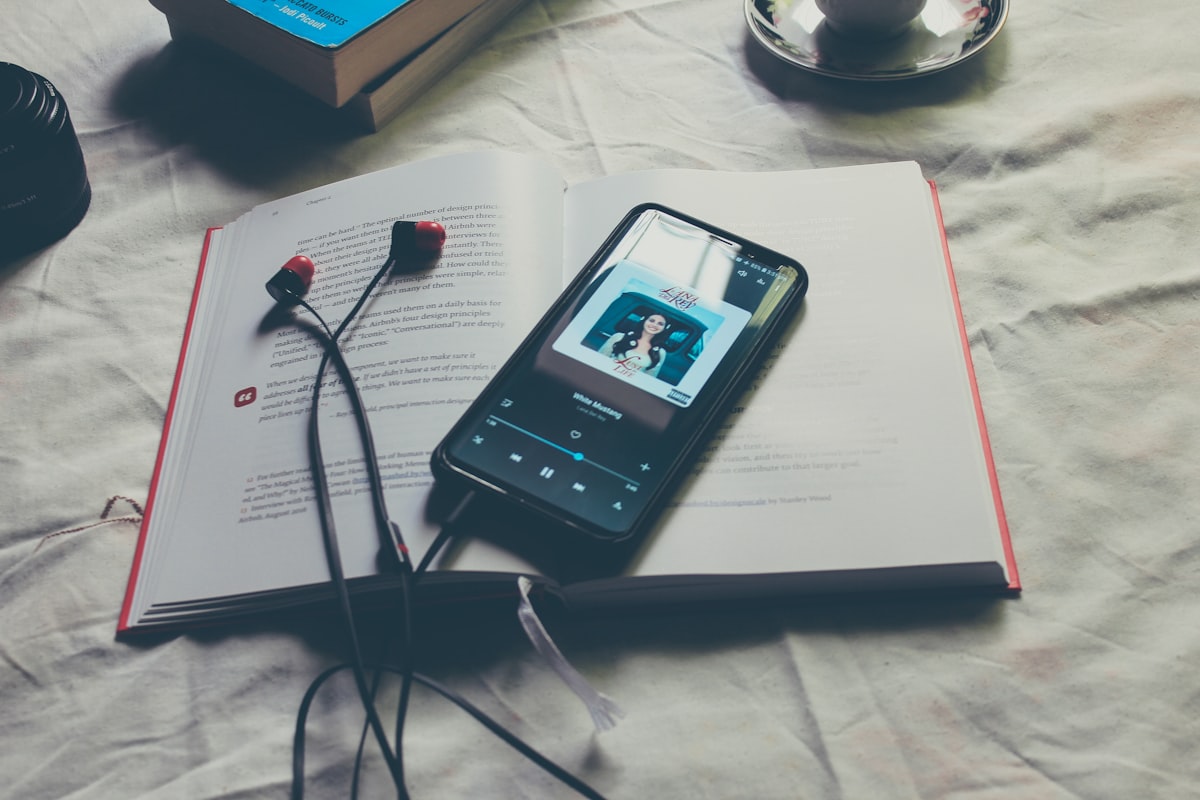
Then there’s the part I consider the real feature. “An e-reader has no notifications. A phone displaying a book has an entire arcade one swipe away, and at 10:40 you know exactly which one wins.” I ran that experiment on myself for a month without meaning to. The phone app version of any book competes against the replies, the scores, and the group thread, and the book loses most tie-breaks. The e-reader competes against a lamp. It wins every night, including the bad ones, and I didn’t need more willpower. I needed fewer contestants.
How to set it up tonight
This takes ten minutes. Most of it is deciding what not to bring, and the not-bringing is where most of the value lives, because every object you exclude is one fewer thing asking questions of a tired mind.
- Keep the light low and warm. Set the front light a few steps above off, and switch on the warm tone schedule if the reader has one. Then forget the setting exists.
- Pick the right book. Something that asks nothing of you: a novel, a reread, a history of something obscure. Nothing that assigns tasks. I keep a self-improvement book on the nightstand and it reliably turns into a planning session by page two.
- Leave the phone out of it. The e-reader replaces the phone slot, not joins it. If you read on the phone app “just this once,” you’ve brought the arcade to bed and renamed it.
- Give it the feed’s old timeslot. Same half hour, same chair or same side of the bed, same order each night. The habit sticks because the slot was already there, empty since the scrolling stopped.
That last point is the one people skip, and it’s where the method actually lives. When you dock the phone, you get a hole where the scrolling used to be, and a hole with nothing planned for it is how the phone gets rehired. Reading is the cheapest hire available. If you want more options for that slot, I made a list of things to do before bed instead of scrolling, and the reading habit fits neatly into a wind-down routine before bed as the mind’s half of the half hour.
Audiobooks deserve a mention. They are the other member of the family that passes the test, the audio branch of the same idea. A familiar-voiced show at low volume with a sleep timer has carried me to sleep more nights than I can count, and the timer is the whole trick, so it doesn’t talk until dawn.
The honest limits
Paper still beats it. If you own books and like them, the e-reader is a convenience, not an upgrade, and I’d rather you heard that from a person who owns both than from an ad. It earns its place in specific situations: heavy novels in bed, one-hand reading, library borrows at midnight, travel. Where it doesn’t earn anything is as a purchase you believe will fix sleep by itself. It won’t. It removes the arcade. The falling asleep part is still done by boring, dark, and repeated, which no device sells.
One more limit, and it’s mine. A thriller with cliffhanger chapters can ambush an e-reader reader as thoroughly as auto-play ambushes a streamer, and I have lost nights to “one more chapter” with the best of them. The fix is the rerun rule borrowed from television: familiar stuff doesn’t carry a hook, because you already know who dug the hole. Rereads and gentle books are the e-reader’s honest menu. If you find yourself speed-reading at midnight, the book goes to the living room for a week and the audio version with a timer takes the night shift.
If you’d rather watch than read, fine. That’s a defensible choice too, as long as it stays on the couch and off the bed. I’ve written about Netflix before bed and why the next episode choosing itself is the real problem, and about why scrolling keeps you awake when the feed is the thing that won’t end. The e-reader is just the cleanest member of a family of habits that all share one property, which is that they end on their own without asking your permission or holding your evening hostage.
Frequently asked questions
Is reading on an e-reader before bed bad for sleep?
No. It’s the one screen I’d defend keeping. E-ink with the front light low behaves like paper as far as your body clock is concerned, and the light dose at low settings is small compared with ordinary indoor evening light. The bigger advantage is structural: no notifications, no feed, and nothing that counts down to start the next thing.
Is a Kindle better than a reading app on my phone?
For bedtime, yes. The book is the least of it. The phone app version sits one swipe from an entire arcade, and at 10:40 you know exactly which one wins. If money is the question, a used e-reader or plain paperbacks beat any sleep gadget on the market, and the library is free anyway.
Does the light from an e-reader delay melatonin?
Evening light can delay melatonin. The dose matters. Hours of bright, close-range light produced the famous ninety-minute delay in the 2015 tablet study. A dim front light on an e-ink screen is a much smaller dose, closer to a lamp than to a tablet at full brightness. Keep it low, warm it after dark, and stop worrying about it.
What should I read before bed to fall asleep faster?
Something gentle. Nothing of you is asked, and no cliffhanger hides anywhere in it. Novels you’d describe as gentle, rereads, books about subjects like rivets or lighthouses, the kind of book where nothing is at stake and nothing needs resolving before morning. Novels you’d describe as gentle, rereads, books about subjects like rivets or lighthouses. Avoid work-adjacent material, and avoid anything that turns into a to-do list before you reach the second page. If a book keeps you up speed-reading, switch to the audio version with a sleep timer.
The page doesn’t ping. The chapter ends, and the reader goes dark when you do. Pick the dullest good book you own, leave the phone charging in the kitchen, and let the two-page knockout prove the point tonight.
This guide is educational, not medical advice. If sleep trouble persists most nights for months, a doctor is the right door.