Racing Mind at Night
How a Sleep Mask Can Calm a Busy Mind
By Nora Vale · January 28, 2026 · 7 min read
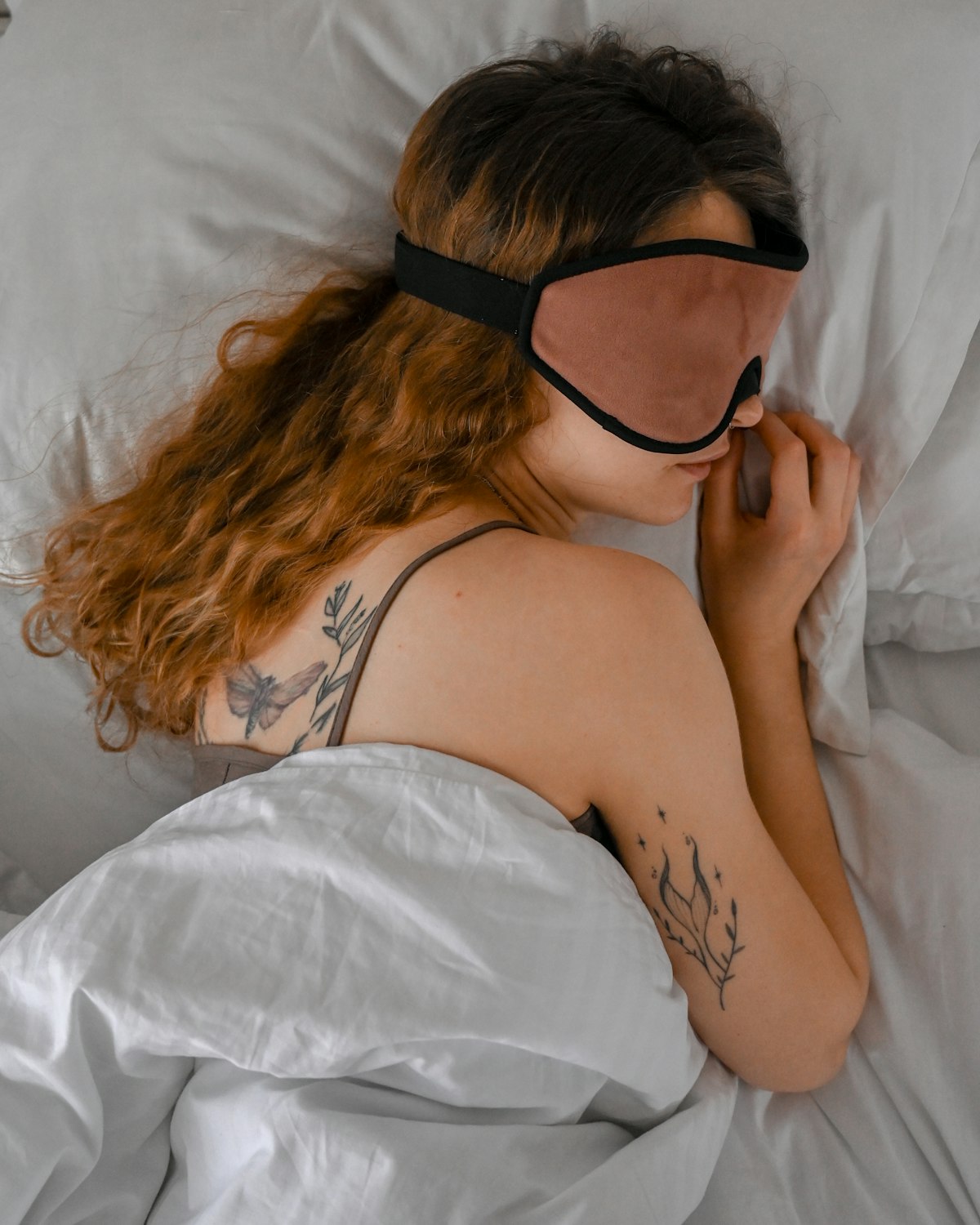
You bought the sleep mask expecting a gadget, and it turned out to be a mute button for one specific kind of noise: the light your bedroom leaks all night and your brain keeps logging. A sleep mask will not argue with a busy mind directly. What it does is quieter and stranger, and understanding the mechanism tells you whether the ten dollars is worth it. This post works through it in the spirit of the racing mind at night guide.
Key takeaways
- A mask calms a busy mind by subtraction: it removes the light your retinas report all night.
- Darkness is an expectation your brain checks constantly, and unmet expectations keep the sentry half-staffed.
- Fit beats price: contoured, no eye pressure, no light stripe at the nose.
- A mask is a room fix that travels. It does not treat 3 a.m. anxiety on its own.
- If the waking runs most nights for months, the tool is CBT-I, not an accessory.
Sleep mask, busy mind, and the sentry that never logs off
Start with what your brain is doing in the dark, because the busy mind and the light leak are the same conversation. Your body runs on old expectations, and steady darkness is one of them: when a room honors the expectations of dark, cool, and quiet, falling asleep is mostly automatic; when the room breaks them, your brain spends the night half-dressed for a party nobody invited it to.
Your retinas keep reporting illumination long after you have stopped consciously noticing it, and the brain takes every report at face value, because for most of human history a lit room meant daytime, and daytime meant stay up. A streetlight stripe through thin curtains is a low-grade argument your brain is having with itself all night. Every bit of attention that goes to the argument is attention the wind-down, the shuffle, and the drift toward sleep do not get.
Why darkness is a mind tool and not just a room tool
Here is the connection the gadget aisle misses. A busy mind at bedtime isn’t a character flaw or a broken brain; it’s ordinary equipment doing exactly what it evolved to do in a room where nothing else needs doing. The tools that work, from the shuffle to the body scan, all occupy the mind gently and dully so the part of you that’s been gripping the night can let go of it. Darkness is the cheapest of those tools, because it removes work instead of adding a task.
A dark room means less to monitor. Less to monitor means the monitoring turns inward more slowly and more quietly, which is exactly the state the body-based tools are trying to build. That is why a mask can calm a busy mind without containing a single calming ingredient. It is subtraction, not force, and subtraction is how most of this system works.
The cheap room test before the cheap mask test
Before you buy anything, find out whether your room is the problem. Stand in your bedroom with the lights off at your usual bedtime and look for light leaks: standby LEDs, charger bricks, streetlight through thin curtains, the glow from a hallway. If streetlight is the culprit, a sleep mask costs less than most people’s monthly snack budget and works on business trips forever. Your goal is a room dark enough that you can’t find your slippers.
Run the hand test first: lights off, five minutes for your eyes to adapt, hold your hand up in front of your face. If you can see it clearly, there is too much light. If the mask solves what the tape and the curtains could not, or if you share a bed with a late reader, it earns its spot permanently. The full room version of this audit is in why your bedroom should be dark.
What kind of mask actually works
Fit beats features. A contoured or padded mask that blocks light without resting on your eyelids is the target, because a mask that presses on your lids becomes its own distraction, and a mask with a light stripe at the nose fails the one job. The strap should hold through a night of turning without pulling your hair, and the fabric should survive a washing machine, because a mask is a bedding item and bedding gets washed.
Skip the novelty versions with built-in speakers or Bluetooth. The headphones turn the mask back into a device with a job, and the feed finds its way back in through the audio. If you fall asleep to sound, that is a legitimate wind-down slot, but it belongs to a fan or a speaker across the room, not to a gadget strapped to your face. The honest version of that argument is in white noise for sleep.
Pair the mask with a job for the mind
The mask works best as the room half of a two-part move. The mind still needs something boring to hold while the darkness does its subtraction, and the shuffle is the natural partner: seed word, letter by letter, random images, no storyline. If you drift off somewhere around the third letter with eleven words imagined and no finish line in sight, the combination worked perfectly.
Slow breathing is the other good partner, because the physiological sigh works from the body side while the mask works from the room side. Two inhales through the nose, the second a small top-up, then one long exhale through the mouth, longer than both inhales combined. The mask removes the light. The exhale turns the arousal dial down a notch. Neither one tries to make you sleep, which is why they work.
The honest limits of the mask
Now the flaw, because every gadget claim deserves one. A mask cannot fix a mind with real content in it. If the worry has a next step, the worry page at the kitchen table is the tool, and no accessory at bedtime substitutes for closing the loop earlier in the evening. If the mind is running a full production staff at midnight, the mask removes the light and the play goes on anyway, just in a darker theater.
And there is a line past which no accessory belongs in the plan. If you are waking three or more nights a week, struggling to get back to sleep, for three months or more, the pattern has a clinical name and a structured treatment that outperforms every product in this category. The mask is a ten-dollar fix for a ten-dollar problem. If your problem is bigger, signs of sleep apnea and what is CBT-I are the honest next stops, because sleep-maintenance insomnia responds to CBT-I better than to anything sold in a sleep aisle.
Frequently asked questions
Can a sleep mask really calm a busy mind?
Indirectly, yes. It removes the light your retinas report all night, which is one input the sentry in your brain keeps logging. Less input means less to monitor, and a mind with less to monitor drifts instead of running the night shift. It is subtraction, not a sedative.
Should I use a sleep mask if I already have blackout curtains?
If your room passes the hand test in full darkness, the mask is optional comfort, most useful for travel and naps. If streetlight leaks through thin curtains, a partner reads late, or you sleep in unfamiliar rooms, the mask is the cheapest fix that travels with you.
What kind of sleep mask works best?
One that blocks light without pressure on your eyes: contoured or padded, with a strap that stays put. Fit matters more than price. A mask that lets light in at the nose fails the job, and a mask that presses on your lids becomes its own distraction.
Will a sleep mask fix anxiety at 3 a.m.?
No. The mask handles the light half of the problem. The mind at 3 a.m. needs its own tools, like the shuffle or slow breathing, and if the waking runs three or more nights a week for months, that pattern has a name and a treatment, and it is a doctor conversation rather than an accessory purchase.
If you want the whole system, the mask is one ten-dollar line in a shopping list that mostly fits a kitchen drawer, and the book that fits it is Sleep, Finally. Try the hand test tonight. The mask is for whatever the test finds.
This guide is educational, not medical advice. For persistent sleep trouble, a clinician beats any accessory.