Screens & Sleep
Podcasts at Bedtime: Do They Help or Hurt Sleep
By Nora Vale · July 10, 2026 · 7 min read
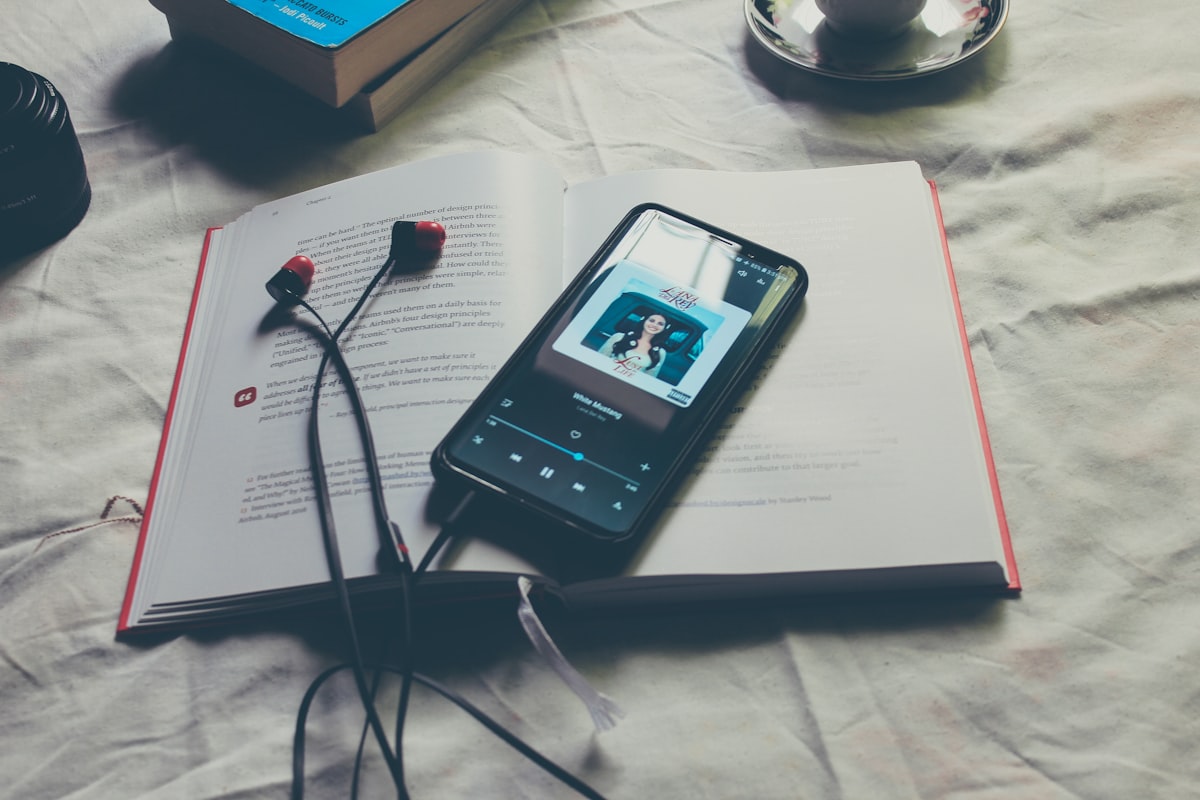
A podcast or an audiobook leaves the light thief out of it entirely, and a familiar-voiced show at low volume has carried me to sleep more nights than I can count. That sentence is true, and I’m starting with it because the honest answer to whether podcasts at bedtime help or hurt is genuinely two-sided, and I’ve lived both sides. The same habit that ends my evenings softly has also, on forgettable nights, handed my 3 a.m. brain a narrator. The difference was never the podcast. It was the show, the volume, and whether a timer was set. The bigger frame of screens and sleep lives in the screens and sleep guide, and this post handles the audio question alone.
Key takeaways
- Audio skips the light thief entirely, which is why podcasts beat phone-scrolling as a wind-down by a wide margin.
- Content still decides the outcome: low-stakes and familiar helps, true crime and hot takes do not, because content that wakes the mind up keeps you awake.
- A sleep timer is non-negotiable, so the show doesn’t talk until dawn and hand your 3 a.m. a narrator.
- The two-question test passes a podcast that can end on its own and comes with no feed; autoplay and episode queues are the feed in disguise.
- If you surface at night and reach for the earbuds, that’s the habit asking for renegotiation, not proof you need it.
Why audio is the honest middle ground
Start with what podcasts get right, because the bar set by the usual bedtime screen is underground. The phone in bed is two thieves working together, the light and the job, and the light one is the smaller. Audio removes the first thief from the equation completely. No glow aimed at your face during the shallow half of the night, no brightness arguing with the dusk your body is trying to have. That alone puts a podcast ahead of every backlit screen in the room.
The second thing audio gets right is subtler, and it’s the same mechanism that makes the cognitive shuffle work: it gives your mind a job. A quiet room with nothing to monitor is exactly where the mental inbox opens, seventeen unread items and two half-finished arguments. A voice narrating something low-stakes occupies the part of your brain that would otherwise run the status meeting, the way an audiobook read by someone with a warm, boring voice has rescued more of my Tuesdays than any supplement. The job is absorbing enough to crowd out worry and, if the show is chosen well, boring enough not to wake you.
That’s the case for. Now the case against, which is real and worth taking seriously.
Where bedtime podcasts go wrong
The failure modes are three, and I’ve collected all of them. First, content. If the show is an argument, the podcast becomes the argument. True crime hands your night brain a storyline with stakes, which is the last thing a mind at midnight needs, because worry needs momentum and a next scene and a good thriller supplies both on schedule. The rule I use now is the same one that separates a downshift from a second shift in the evening more broadly: a shower with a half-listened podcast is a downshift, and the same evening with a comment section running is a second shift. Listen to something that would put you awake at a funeral, and put it on at a volume where missing chunks costs nothing.
Second, the timer, or the lack of one. Without a sleep timer the show talks until dawn, and the trick that makes bedtime audio work, the voice that carries you under, becomes the thing that keeps surfacing you. Every time you bob up from light sleep there’s a voice saying words, and a shallow half of the night plus a narrator is how a five-minute surfacing becomes a two-hour argument. Set the timer for twenty or thirty minutes and let the silence take over. The show will still exist tomorrow. “The feed will still exist at 7 a.m. Your sleep window won’t,” and the same arithmetic applies to a queue of episodes.
Third, autoplay, which is the feed wearing headphones. The two-question test I apply to any screen habit I want to keep: can it end on its own, and does it come with a feed. A podcast passes only when both the episode and the app are configured to stop. A queue that rolls straight into the next episode is infinite scroll with your eyes closed, and it will eat your night with more patience than any notification.
How to set it up so it helps
The working setup is unglamorous. Pick the show in daylight, not at 10:40, because decisions made in bed with the phone warm in your hand resolve about as reliably as decisions to have one more drink. The criteria: a voice you find genuinely dull in the best sense, low stakes, no cliffhangers, no host conflict. Interview shows with soft-spoken guests, history retold without urgency, anything where the segments could be shuffled without loss. Keep the volume low enough that words blur. Set the timer for twenty to thirty minutes. Phone face down, across the room if it lives there now, screen dark, because the audio is the habit and the rectangle is not invited.
One honest comparison before you decide the earbuds are the upgrade. Paper is still the gold standard, and a page under a small lamp does everything a good podcast does without any of the failure modes above, which is why reading is my default and audio is the fallback for nights when my eyes are done. An e-reader splits the difference if you want the reading job without the lamp. Audio’s genuine advantage is that it works in the dark and it works with your eyes closed, which makes it the right tool on tired nights rather than every night.
When the podcast is the problem
Now the limits, because this habit has a signature failure worth naming. If you’re waking at 3 a.m. and reaching for the earbuds, the podcast has stopped being a wind-down and become a dependency, the thing your brain now needs to renegotiate with the night. That’s fixable the same way the phone-in-the-kitchen fix works: the audio stays in the first half of the night, and the middle-of-night protocol stays boring and screenless. If the middle of the night is where your real struggle lives, the guide on waking up at 3am covers that hour, and do e-readers help you sleep covers the reading alternative. And if racing mind rather than screens is the root problem, why scrolling keeps you awake and the tools in that cluster go deeper than any show choice.
Podcasts at bedtime are a genuinely decent tool with sharp edges. Dull show, low volume, timer set, queue off. On those terms they help. Break any one of them and you’ve hired the smaller thief back.
Frequently asked questions
Do podcasts help you fall asleep?
A calm, familiar-voiced show at low volume can, because audio skips the light problem entirely and gives your mind a dull job that isn’t worry. A true-crime series or anything built on conflict does the opposite.
Does it matter what kind of podcast I listen to at bedtime?
Enormously. Content that wakes your mind up keeps you awake no matter how dark the room is. Look for low-stakes conversation, a voice you know, and episodes without cliffhangers.
Should I use a sleep timer for bedtime podcasts?
Yes, and it’s the one non-negotiable. Without a timer the show talks until dawn, and a voice at 3 a.m. is exactly the company the shallow half of the night doesn’t need.
Is listening to podcasts worse than reading before bed?
It’s a reasonable trade, not an upgrade. Paper is the gold standard, but audio passes the two-question test, it can end on its own and comes with no feed, when you pick the show on purpose.
Pick the show tomorrow, in daylight. Set the timer tonight. The voice can carry you under and then be gone by midnight, which is the entire deal.
This guide is educational, not medical advice. If sleep problems persist for months or arrive with symptoms you can’t explain, a doctor is the right door.