Screens & Sleep
Sleep Apps at Bedtime: When Tracking Becomes a Trap
By Nora Vale · October 15, 2025 · 8 min read
Last spring I tried a guided wind-down app, the kind with the rain sounds and the soft narrator, and it worked exactly as advertised for eleven minutes. Then the session ended, the phone stayed in my hand, and the notification that slid in from the top of the screen was a streak reminder from a different app entirely. Forty minutes later I was reading a stranger’s opinion about pasta water. The sleep app hadn’t failed. It had just handed me the casino with a lullaby attached.
That’s the trap worth naming, because sleep apps tracking trap nobody warns you about: the thing you installed to end your screen time runs on a screen, usually the brightest and most demanding one in the house. Some of these apps genuinely help, and I’ll be fair to them. But the bedtime hour has rules, and most apps quietly break the important ones. The frame that helps me sort this out lives in my screens and sleep guide, which treats every screen at night as two thieves in one, light and job; this post runs the same test over the app aisle.
Key takeaways
- A sleep app is still a screen: it treats the light thief while carrying the job thief inside the same rectangle.
- Run the two-question test: can it end on its own, and does it come with a feed.
- Tracking turns sleep into a performance, and performance is the opposite of the drowsy boredom sleep requires.
- Audio and paper versions of the same content beat phone versions, because they can’t ambush you.
A slot machine wearing pajamas
The feed’s design is worth understanding, because the app you’re trusting with your bedtime was built on the same chassis. A phone isn’t a fireplace you stare into; it’s a slot machine that asks your brain a question with every swipe, and your brain answers even when you’d rather it didn’t. Is this worth replying to. Should this annoy me. Who liked my photo. Each answer is a small dose of alertness, and alertness is the exact opposite of what eleven at night is for.
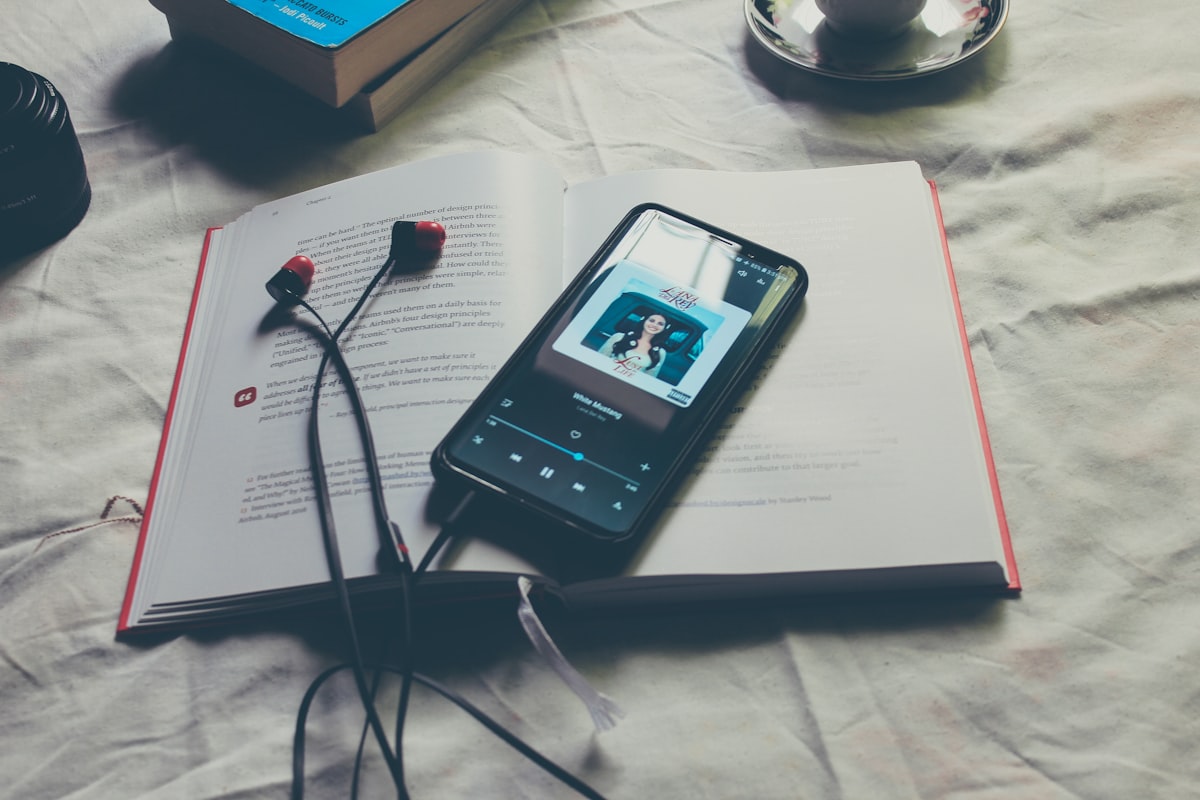
Sleep apps inherit that chassis whether their developers like it or not. The app opens in three seconds; the phone it lives on opens everything. Between the lullaby and your closed eyes sit the operating system, the notifications, and the entire arcade, one swipe away, and at 10:40 you know exactly which one wins. A sleep story on a phone on the nightstand isn’t a wind-down tool with a feed problem. It’s the feed wearing pajamas.
There’s also a quieter design problem. The whole screen economy runs on one trick: every swipe carries a maybe, maybe the next one is interesting, and an unpredictable reward is the most compelling kind there is. Thousands of very good engineers refined that design for a decade. Your willpower at bedtime, the weakest hour you have, is what the design is tuned against. Decisions made at 11 p.m., phone already warm in your hand, resolve about as reliably as decisions to have one more drink. An app that requires the 11 p.m. version of you to log off is an app that has already decided how that story ends.
The two-question test for any screen habit
Here’s the test I use now, and it takes ten seconds. For any screen habit you want to keep at night, ask two questions: can it end on its own, and does it come with a feed. If the answers are yes and no, in that order, it can probably stay. If they come back no and yes, you’ve found the trap, whatever the app store category says.
Run the obvious candidates through it. A paperback ends on its own and comes with no feed: yes and no, it stays. An e-reader with the front light low behaves like paper, ends at the chapter, and has no notifications: stays. A podcast with a sleep timer ends on its own and arrives without a feed: stays, and audio deserves real credit here, because a familiar-voiced show at low volume has carried me to sleep more nights than I can count. Now the phone displaying a book: it doesn’t end on its own, and it carries an entire arcade one swipe away. The meditation app with the social tab and the streak counter: same verdict, no matter how calm the narrator sounds.
That test is also why the streaming auto-play toggle matters so much. “Auto-play is a setting, not weather.” A show you chose, watched on the couch with the lights low, is passive content, the gentle end of the screen spectrum, and a rerun can’t ambush you because you already know who dug the hole. Turn off the countdown and the two-question test starts coming back clean. For more on that swap, I wrote about e-readers versus phones for bedtime reading, and the wind-down replacements live in audiobooks before bed.
The tracking trap, and the sleep-score economy
Tracking deserves its own verdict, because it’s the most persuasive version of the trap. The pitch is accountability: know your nights, improve your sleep. What actually happens, for a lot of people, is that sleep becomes a performance with a scoreboard, and the scoreboard lives in the phone, which means the phone now has a job in your bed every night and every morning.
Watch what the job does. At night, logging and adjusting add tasks to the hour that’s supposed to be task-free, and the drowsy, bored state your mind has to be in before sleep will come meet it doesn’t survive task lists. In the morning, the score arrives before your feet touch the floor, and a mediocre grade can color a day you’d otherwise have called rested. People describe feeling fine until they read the app, then feeling tired on command. That’s not measurement anymore. That’s a mood ring with a subscription.
And the honest science underneath is thinner than the interface implies. Consumer trackers estimate sleep from movement and heart rate; they guess, sometimes badly, and the number you’re optimizing is a guess with a graph. I say this as someone who wore one for a year and ultimately preferred my own mornings as evidence. If you love the data, keep the data, but move the review to breakfast and stop making the bedroom a branch office. There’s a name for what the inbox and its cousins do in bed: it’s a night shift with worse hours, and the tracker just got hired for the same shift.
The limits section, because the fair version matters. Some apps help some people: a sleep story on a speaker has rescued more than one bad night of mine, and for insomnia the structured programs behind a few apps have real trials behind them, which is more than the glasses aisle can say. A white noise machine that has never once shown me a notification is one of the better gadgets I own. The trap isn’t apps. The trap is an app that can’t end on its own or arrives with a feed, used at the hour when your judgment is at its lowest battery. Run the test, not the marketing.
What I use now instead
The current setup would bore a product manager, which is how I know it works. Wind-down starts at nine-thirty: phone on the kitchen counter beside the fruit bowl, lights down to lamps, twenty minutes of stretching on the floor while the radio murmurs, then a few pages of a paperback with a cracked spine. If I want a sleep story, the speaker plays it and stops on its own timer, and the phone is in another room where it can’t grade anything. The freed half hour is the part people forget to plan; if the ban leaves a hole, the wind-down menu in what to do the hour before sleep fills it.
If that full move feels like too much tonight, the stair-step is honest: keep the app, but put the phone across the room, screen down, timer on, notifications off. Distance does what do-not-disturb never could, because the feed needs shoes to reach you from the hallway. And if you’re stuck in the checking loop itself, the escape routes in how to stop phone use at night cover the mechanics.
Frequently asked questions
Do sleep apps help or hurt at bedtime?
Both, depending on the hardware arrangement. The content can genuinely calm you; the phone carrying it stays one unlock from everything. Speaker or timer-based versions keep the benefit and drop the casino.
How do I know if my sleep app is part of the problem?
Run the two-question test: can it end on its own, and does it come with a feed. Yes and no means it stays. No and yes means the app is working against the hour it claims to serve, however soothing the narrator.
Why is tracking my sleep at night a problem?
It turns sleep into a performance, and performance is the opposite of the boredom sleep needs. Nightly logging adds tasks to the task-free hour, and the morning grade can recolor a night you’d otherwise have counted as fine.
Are sleep stories and white noise any better than scrolling?
Usually, yes. Audio leaves the light thief out entirely and ends on its own with a timer, which passes half the test by default. Just host it on something that isn’t a phone in your hand, and the verdict improves again.
What should I use instead of a bedtime app?
Anything boring and repeatable that lives outside a phone: paper pages, stretching, tomorrow’s list on paper. For audio, a speaker or clock radio with a sleep timer. The boring version wins because nothing in it asks questions.
The feed refills itself overnight, and tomorrow’s sleep score is already in it, waiting to tell you how you slept. Your sleep window is the only thing in the arrangement that closes. The SleepFinally book lays out the whole wind-down, no subscription required, and the chapter on screens starts with a ten-dollar clock.
This guide is educational, not medical advice. If sleep trouble persists most nights for months, a doctor is the right door, not a new screen rule.