Exercise, Naps & Sleep
Yoga Before Bed: A Wind-Down Bridge That Works
By Nora Vale · July 30, 2026 · 7 min read
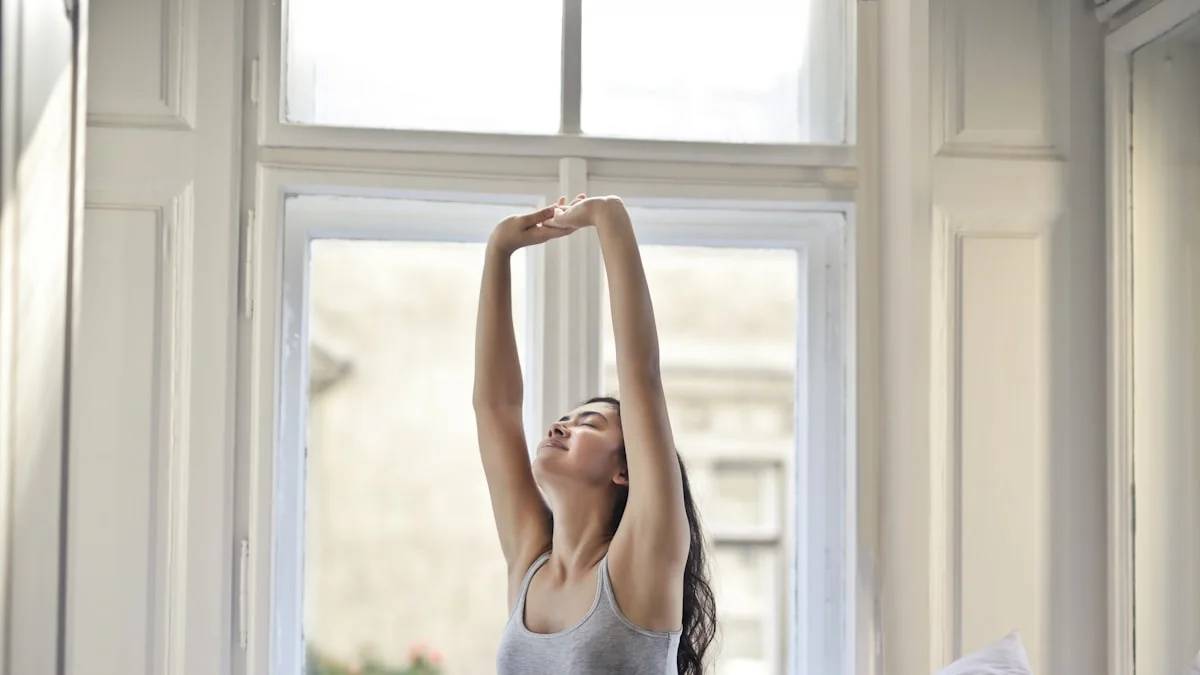
My yoga mat lives under the bed, and it has lived there for years because of what happens when I pull it out: eight boring minutes under a dim lamp, no poses worth posting, and then falling asleep being noticeably less of a project. That’s the entire case for the practice, and it needs defending mainly because the internet has turned it into either a fitness regime or a religion. The plain version sits in the exercise and sleep guide.
Key takeaways
- Gentle yoga or stretching before bed has real evidence: trials found faster sleep onset and better sleep quality.
- The yoga-vs-stretching question matters less than you’d think. Both work, because slow unclenching is the active ingredient.
- Eight to ten minutes under a dim lamp fills the body slot of your wind-down without becoming a project.
- Vigorous styles belong earlier in the evening. Gentle practice in the last hour is the bridge into sleep.
- No flexibility, studio, or equipment required. The mat is optional and the silliness is free.
What the evidence actually says
Here’s the honest claim, stated at its actual size. “Gentle stretching or slow yoga in the last hour before bed has real evidence behind it: trials in older adults and in people with insomnia found slower sleep onset and better sleep quality.” That’s the finding, and sleep researchers describe effects like that as modest, which I find refreshing. Modest beats nothing, and it also beats the fourth glass of wine that used to occupy my own body slot.
Why does slow movement work at all? The mechanism is a demonstration rather than a trick. “Slow, unclenching movement tells your body the day’s work is over, and your body believes demonstrations more than it believes declarations.” You can announce to yourself that you’re relaxing until midnight. A body moving slowly on the floor, breath unhurried, shoulders coming down off the ears, is a demonstration, and the demonstration is what the nervous system reads.
That’s also why the practice fits so neatly into the wind-down, which gives every evening three slots: one for the body, one for the mind, one for the room. The body slot is the one people most often leave empty, because relaxing isn’t an activity and your phone doesn’t count. Ten minutes of stretching fills it. My fuller walkthrough lives in yoga before bed, and if you want the slot system around it, how to build a wind-down routine is the companion piece.
Yoga vs stretching before bed
Now the question the title promised, and the honest answer is that the gap is smaller than the search results want it to be. Mechanically, both are slow, unclenching movement in the last hour, and both draw from the same trials and the same mechanism. Your sleep doesn’t check which tradition the movements came from, any more than it checks your outfit at the gym.
What yoga adds is structure: a breath rhythm to follow and a sequence of shapes that occupies the mind just enough to keep it from wandering back to the inbox. Some people find that easier to stay with than free-form stretching, which can turn into two minutes of toe-touching and an early exit. If a named sequence keeps you on the floor for eight minutes, that’s a real advantage, and it’s the strongest case for yoga over plain stretching. If plain stretching is what you’ll actually repeat, it wins, because the routine you repeat is the only one your body gets to learn.
The evidence draws one useful line on intensity. Vigorous practice raises core temperature and heart rate, and both need time to come down before your body will accept the idea of bed, which is why hard workouts belong one to two hours before lights out. Gentle practice in the last hour sits on the right side of that line. A power flow at nine and lights out at ten is the version that can wire you up; eight minutes of cat, cow, and child’s pose under a lamp is the version that works as a bridge.
What eight minutes looks like
Here’s my actual program, and I include it precisely because it’s unimpressive. The mat comes out from under the bed. Cat and cow, a few rounds, following the breath. Child’s pose, long enough to stop fidgeting. Some hamstring thing, one leg at a time, no ambition in it. Eight minutes under a dim lamp while the house goes quiet, and nothing that could be photographed. Then the mat goes back, and the bed takes over.
You don’t need flexibility for any of that, and you don’t need a studio, an instructor, or a subscription. If you already use the body scan or the long slow exhales, stretching stacks neatly on top: “loosen the body first, then lie down and give the mind its boring job. The tools were always on the same team.” If you keep a mat routine going most nights, you’re getting the whole published effect with furniture-grade equipment.
The stacking matters more than the specifics, because habits attach to anchors rather than to motivation. “Motivation is a terrible scheduler. Anchors work.” The mat under the bed next to the nightstand is an anchor. A plan to do yoga most evenings is a spreadsheet. Attach the eight minutes to the end of brushing your teeth, and the old habit pulls the new one into existence.
Honest limits
First limit: this is a nudge, not a sedative. Nobody drifts off mid-pose, and the effect shows up as falling asleep being less of a project, which is a quieter outcome than the marketing promises. If you want a knockout drop, this isn’t it, and honestly that drop doesn’t exist without a bill attached.
Second limit: the trials behind the evidence measured regular practice, and regular means most nights, not the two heroic sessions a week that die by Thursday. An eight-minute routine you keep beats a forty-minute class you attend twice, and the first week will feel pointless while the conditioning catches up. That’s the price tag every wind-down habit charges, and it’s cheaper than most.
Third limit belongs to the exception the research keeps flagging: if you’re rebuilding broken night sleep during a stretch of genuine insomnia, the harder problem is sleep pressure, and the tools for that, including when a nap helps and when it steals, live in why do I sleep better on gym days and does exercise help you sleep. Movement helps almost everyone, but it doesn’t outrank the pressure math, and if sleep trouble has lasted months with a daytime cost, that’s a doctor conversation rather than a mat conversation.
Frequently asked questions
Does yoga before bed actually help sleep?
Yes, with honest modesty. Trials in older adults and people with insomnia found faster sleep onset and better sleep quality from regular gentle practice, and researchers call the effects modest. Modest beats nothing, and it beats the wine that used to hold the slot.
What’s the difference between yoga and stretching before bed?
Less than the marketing suggests. Both are slow unclenching movement, and both work through the same mechanism. Yoga adds a breath rhythm and a sequence, which helps some people stay on the floor longer, but your sleep responds to the doing, not the branding.
How long should a bedtime yoga session be?
Eight to ten minutes under a dim lamp fills the body slot with room to spare. This is a bridge into sleep, not a workout, and anything that starts feeling like exercise belongs earlier in the day.
Can yoga at night wire me up instead?
Vigorous styles can, because they raise core temperature and heart rate, which need time to fall before bed. Keep the last hour to gentle, slow practice, and finish anything genuinely demanding one to two hours before lights out.
What if I’m not flexible or I feel silly?
You don’t need flexibility, a studio, or poses worth posting. Cat, cow, child’s pose, and a hamstring stretch cover the program, and nobody is watching or grading. The silliness is load-bearing, in the sense that it proves no performance is required.
“I keep a mat under the bed for exactly this. I don’t do poses worth posting. Cat, cow, child’s pose, some hamstring thing, eight minutes under a dim lamp, and it works as a ramp from vertical day to horizontal night.” The full chapter is in Sleep, Finally. Put the mat where the evening can see it.
This guide is educational, not medical advice. If trouble falling or staying asleep keeps you up three or more nights a week for three months or more, that pattern has a name and a treatment, and a doctor is the right door.