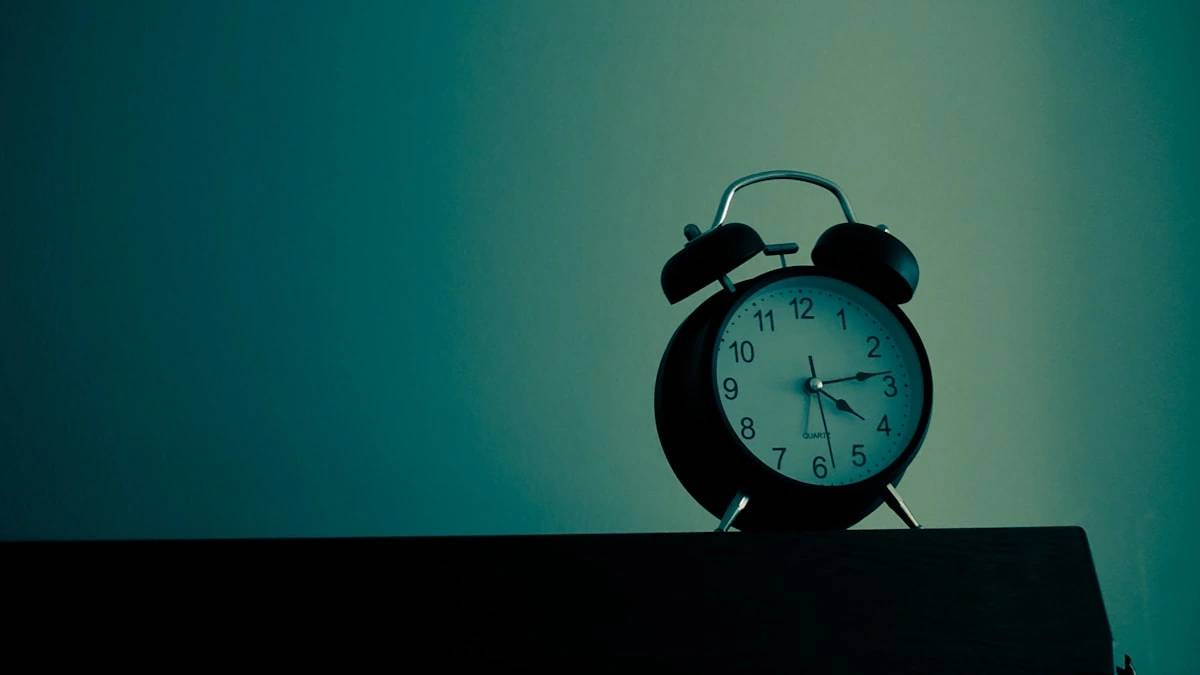
Waking Up at 3 A.M.
Awake After 20 Minutes? Why You Should Get Up
By Nora Vale · February 23, 2026 · 7 min read
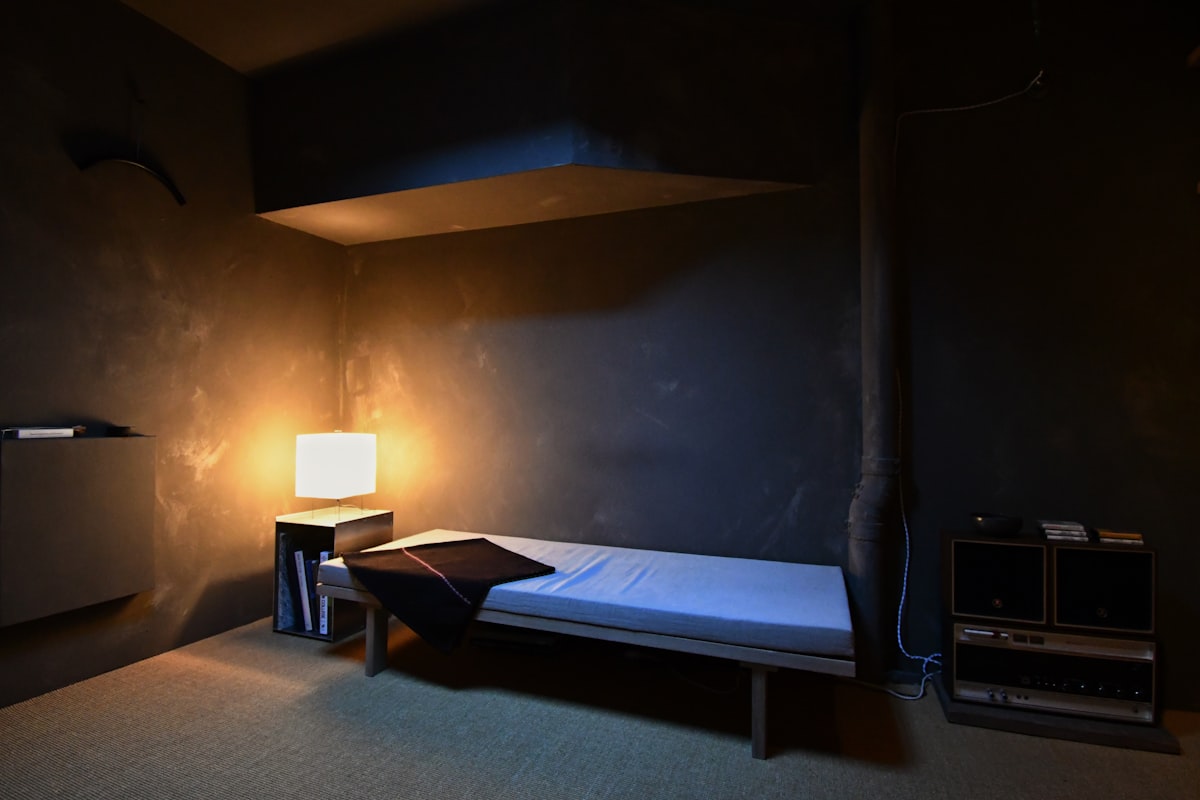
The advice sounds like a joke the first time you hear it: you can’t sleep, so the treatment is to get out of bed. It feels like surrender, like your own brain has won, and the bed is warm and the floor is not. But the research behind the get-up-after-20-minutes rule is the most credentialed advice in sleep medicine, and the reason it works is stranger and more interesting than willpower. It’s about what your bed has quietly learned to mean.
Key takeaways
- Waking at night is normal equipment. Staying awake is the problem, and staying is trained, not innate.
- Twenty awake minutes in bed is the estimated cue to get up, go somewhere dim, and be bored until true sleepiness returns.
- The logic is conditioning: the bed becomes a cue for alertness the way a dentist’s chair is a cue for dread.
- Lying there trying harder backfires, because effort is alertness in disguise.
- The method charges a rough first week or two. The trade is those weeks against the next decade of 3 a.m. math.
The difference between waking and staying awake
It took me an embarrassingly long time to learn the difference between waking at night and staying awake at night, and that difference turned out to be most of the fix. One is your body doing its job. The other is a loop that turns a five-minute surfacing into a two-hour argument with yourself.
The waking part is standard equipment. A night runs four to six laps of roughly ninety minutes, and between the laps you surface. Most surfacings last under three minutes and most people forget every single one by morning. If you’re remembering yours, that doesn’t mean your system is defective; it means one arousal ran long enough to leave a mark. “You were never a bad sleeper. You were a sleeper who started remembering the wake-ups, and the remembering is where all the trouble lives.”
By 3 a.m. specifically, the deck is stacked: your deep sleep is banked, your sleep pressure is spent, and what remains is lighter, REM-heavy sleep you can pop out of like a cork, with cortisol already climbing toward its morning peak underneath. “Three in the morning isn’t cursed. It’s the shallow end of the pool.” The full anatomy of that hour is in why do I wake up at 3am every night.
The staying part is what you can change. Kevin, an accountant, does his sharpest work at 3:17 in the morning, which is not a compliment: pension projected to age seventy, kids’ shoes priced through college, a filing from 2019, in that order, like acts of a play nobody wrote. The crisis that started his wake-ups ended two years ago. The wake-ups stayed, because by then the bed had learned the routine.
Why the bed stops meaning sleep
Here’s the mechanism, and it’s duller than you’d hope. Brains learn fast. Yours learned long ago that this mattress means sleep. Every hour you spend in bed awake, annoyed, and doing pension arithmetic files a counter-report, and given enough bad nights the counter-report quietly wins. “The bed becomes a cue for alertness the way a dentist’s chair is a cue for dread before anyone turns the drill on.”
That’s why lying there trying harder backfires so reliably. Effort is alertness in disguise, sleep doesn’t take direction from willpower, and every minute of trying quietly files another page into the counter-report. You can’t out-muscle a conditioned response in the very place it was trained. You can only starve it.
Getting up is how you starve it. Leaving a warm bed while you’re awake feels like defeat, and it’s closer to maintenance, the same instinct as taking a wet towel out of a drawer instead of leaving it there to ruin what the drawer is for. The bed stays a sleep place because nothing else gets to happen in it for long. The formal name for the whole method is stimulus control, and the full ruleset is in what is stimulus control.
The twenty-minute rule, precisely
The four rules, in plain English. First, no clocks: turn the display away, cover the glow, and if your phone is your alarm, rehome it beyond arm’s reach, because time math fuels arousal, which is backwards from what the checking is for. “You check for reassurance and get a bill instead.”
Second, the one this post is about: give yourself fifteen to twenty minutes of awake-in-bed, estimated rather than measured. If you’re still awake past that, that’s your cue to get up. You’re not setting a timer or lying there counting; you’re making an honest estimate, and if you genuinely can’t tell whether twenty minutes have gone by, you’re usually close enough to sleep that drifting off is back on the table. Getting up twice in one night is normal. Three times happens too. Neither one means the method is failing.
Third, do something dim and boring somewhere else until you feel truly sleepy, then head back to bed. Hopeful doesn’t count as sleepy. Sofia, a nurse with a rotating schedule, turned this into a script: when she surfaced and stayed surfaced past twenty minutes, she got up, went to the kitchen, and read old paperbacks under the forty-watt bulb over the kitchen table. Some nights, four pages. Other nights she read forty and alphabetized the spice rack, and either way the bed stayed a place where sleep happened rather than a place where she lost arguments with herself. “She had been a nurse long enough to trust a protocol over a feeling.”
Fourth, keep the bed for sleep and sex and nothing else, and pair the whole method with a fixed wake time, the same time every day, no matter how the night went. A rough night with a kept wake time costs you a single day. A rough night plus a three-hour lie-in rearranges your body clock and can cost you the whole week. The lie-in tax is covered in should you get out of bed when you can’t sleep and the weekend version of it in should i sleep in on weekends.
What the method honestly costs
Now the honest part, because a chapter that hid it would read like an ad. Getting out of bed in the middle of the night feels like surrender, and the first stretch genuinely makes nights worse: more time awake, more standing in a dim kitchen feeling ridiculous, more of Kevin’s arithmetic performed vertically. Plenty of people quit right there. I nearly did.
What kept me going was understanding the shape of the curve. You’re untraining an association that took months to build, so the first rough nights measure the untraining rather than your prognosis, and the awkwardness usually starts breaking up somewhere in the second week. Lying in bed awake for two hours feels productive and isn’t. Standing bored in a kitchen for twenty minutes feels like failure and is the treatment working. “The method asks you to take the option that feels worse on faith for a little while, and I’d rather you know that going in than discover it at 3:30 on night two.”
The method charges a bad week or two, and in exchange you stop doing this for the next decade. If you’re waking three or more nights a week for three months with a daytime cost, the pattern has a name, and it responds better to structured treatment than to willpower; what is cbt-i covers that door without scare tactics.
And one cause of sticky wake-ups has nothing to do with conditioning: the nightcap. “A nightcap at 10 buys sedation at 10:15 and often a wide-awake 2:40, and that trade is predictable biology rather than bad luck or weak character.” If your wake-ups cluster after drinking evenings, nightcap myth walks through that experiment.
The 3:40 bed
There’s a quiet minute in this method that nobody markets: the one where you’re standing up, still half-drunk with sleep, walking your own body back to bed. That minute is the win. It means the waking stayed small, the bed stayed honest, and the night is still yours even though it opened an eye in the middle. You did nothing clever to get there. You declined three invitations, and the invitations were panic, check, and solve.
Somewhere around 3:40 on a worked night, your eyelids will start arguing for the couch, and you’ll recognize the ride home when it comes. Going back should feel like nothing at all: no puzzle to solve, no scoreboard to check, no last chance ticking away in the dark. It happened at 11. It’s about to happen again. The bed you get back into at 3:40 should feel slightly boring. The logs and worksheets that support the whole method are in Sleep, Finally.
Frequently asked questions
Why should I get up after 20 minutes awake in bed?
Because every hour spent in bed awake, annoyed, and doing arithmetic files a report that the bed means alertness. Getting up protects the association that matters: the bed is where sleep happens, and nothing else gets to happen in it for long.
Do I have to count exactly twenty minutes?
No. You make an honest estimate rather than measuring, and if you genuinely can’t tell whether twenty minutes have gone by, you’re usually close enough to sleep that drifting off is back on the table.
What am I supposed to do when I get up?
Something dim and genuinely boring somewhere else: a paper book under the dimmest lamp in the house, folding laundry, a crossword in pencil at the kitchen table. Not a feed, not a news cycle, not a bright screen.
Won’t getting up wreck tomorrow?
One shallow night is survivable, and the night after a bad one runs deeper on its own as sleep pressure rebuilds. The dread always quotes a worse day than the one that actually shows up. Keep your wake time fixed and the damage stays at one day.
This guide is educational, not medical advice. If sleep problems persist for months or wreck your days, see a doctor.