Waking Up at 3 A.M.
The 3am Math Spiral: Counting Hours Left to Sleep
By Nora Vale · September 7, 2026 · 7 min read

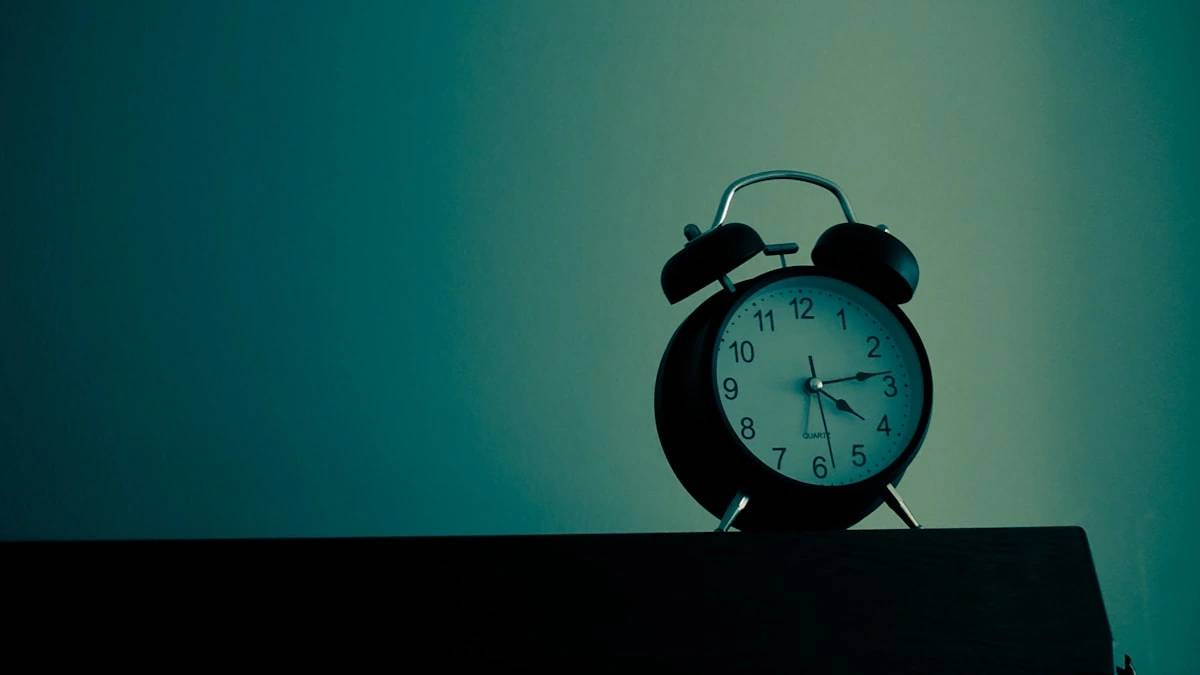
You wake at 3:17 and do the math before your eyes fully open. Six hours until the kids get up. Six, minus the twenty minutes you’ve already lost. Five and a half, if sleep were a savings account, which the arithmetic insists it is. By 3:40 you’ve priced your kids’ shoes through college and wondered whether your job will exist in a decade, all performed on the ceiling.
That’s the 3am math spiral, and neither chapter of its backstory is about you being broken. It’s solvable, but only after you stop solving it, which is the whole joke. The map lives in the guide to waking up at 3am.
Key takeaways
- Waking at 3 is normal: deep sleep is banked, sleep pressure is spent, and the second half of the night runs shallow.
- The spiral runs on two fuels: time math from the clock check, and a brain with nothing else to do.
- You check for reassurance and get a bill instead.
- The fix is stimulus control’s four rules, plus the willingness to feel ridiculous in a dim kitchen for a week or two.
Why the math starts at 3, and not at midnight
A night is not one long dive. It’s closer to four to six laps of roughly ninety minutes, with deep sleep concentrated in the early cycles and REM stretching toward the better part of an hour by morning. Between the laps, you surface, and most of those surfacings last under three minutes and get forgotten by morning, which tells you how little they matter on their own.
So why does the math version cluster at three? Because by then, the deep sleep is banked and the sleep pressure is spent, and what remains is lighter, REM-heavy sleep you can pop out of like a cork. Underneath that, cortisol begins climbing around 2 or 3 a.m. toward its morning peak, so your body is already drifting toward the exit without consulting you. “Three in the morning isn’t cursed. It’s the shallow end of the pool.” The same shallowness is why the wake-up lands at the same minute every night: a body that has surfaced at 3:17 for a month starts to expect the appointment.
Here’s the genuinely good news, and I don’t mean it as a consolation prize. “You were never a bad sleeper. You were a sleeper who started remembering the wake-ups, and the remembering is where all the trouble lives.” A waking becomes a problem only when something attaches to it, and the things that attach are nameable.
The clock check, the first fuel
The first attachable thing is the clock check, the reflexive roll toward the nightstand, and it’s the worst move available at that hour, because the instant you know it’s 3:14 the math starts. The math is always the same flavor. Hours left before the alarm, hours of sleep already gone, tomorrow getting mortgaged minute by minute. Sleep clinicians are blunt about the clock for exactly this reason: time math fuels arousal, which is backwards from what the checking is for. “You check for reassurance and get a bill instead.”
I ran this experiment for years on myself, and the bill always cleared. The checking never produced the calm it promised, because the number is a question with no good answers at that hour. Turn the display away, cover the glow, and if your phone is your alarm, rehome it beyond arm’s reach. A phone charging in the hall has never once shown anybody the time at 3:17, and the fuller case for that move is in should i charge my phone outside the bedroom.
Kevin is the person I think of here, an accountant who does his sharpest work at 3:17 in the morning, which is not a compliment. On a bad night, within four minutes of opening his eyes, he has projected his pension to age seventy and wondered whether his job will exist in a decade. The spiral has a plot that rarely varies: work first, then money, then the kids, then mortality, arriving like acts of a play nobody wrote. His wake-ups started with a restructuring that ended two years ago. The wake-ups stayed, because by then the bed had learned the routine.
Why the spiral lies, and what it’s actually running on
The thing worth knowing about that state of mind is that it lies. The 3 a.m. brain is a catastrophizing machine running on a spent night and a rising cortisol wave, and sleep researchers who study night waking describe its conclusions as drafts rather than decisions. Kevin’s pension math wouldn’t survive contact with daylight, because nothing real gets solved on the ceiling at that hour. The solving is the trap.
It also runs on the phone grab, which is three problems in one rectangle. “It’s a light source aimed at your face during the shallow half of the night, it’s a feed engineered to be more interesting than sleep, and it’s a job, because somewhere in that scroll sits an email you’ll feel obliged to have an opinion about.” All three arrive together, in one hand, in the dark. Here’s the part worth sitting with: waking is automatic, but the clock check is a choice, and the phone grab is a choice, which means the stickiest parts of a 3 a.m. waking are the parts you can change. The gentle tools are in how to stop overthinking at night, but my move at that hour is blunter: refuse the argument, save the thinking for a version of you that’s had some sleep.
The rules that starve the spiral
The fix has an unlovely clinical name, stimulus control, and the American College of Physicians lists it as a first-line treatment for chronic insomnia. Plain English: “The bed is for sleeping, and everything else in your life has somewhere better to happen, which is the entire method in one line.” The method is four rules.
- No clocks. Turn the display away, cover the glow, rehome the phone, because time math is fuel and this rule cuts the supply.
- Give yourself fifteen to twenty minutes of awake-in-bed, estimated rather than measured. Still awake past that is your cue to get up.
- Do something dim and boring somewhere else until you feel truly sleepy, then head back. Hopeful doesn’t count as sleepy.
- Keep the bed for sleep and sex, and nothing else. Long stretches of lying awake in it teach your brain that the bed is where thinking happens.
Sofia, a nurse whose precious nights off used to vanish into fury and Kevin’s math, credits the twenty-minute rule with giving her a script instead of a fight. She’d get up, go to the kitchen, and read old paperbacks under the forty-watt bulb, sometimes four pages, sometimes forty and the spice rack alphabetized, and either way the bed stayed a place where sleep happened. “She had been a nurse long enough to trust a protocol over a feeling.” Within a couple of weeks, her nights off stopped feeling like exams.
One habit belongs beside the four even though the clinicians file it separately: a fixed wake time, every single day, no matter how the night went. A rough night with a kept wake time costs you a single day, while a rough night plus a three-hour lie-in rearranges your body clock and can cost you the week. If you keep one habit from this page, keep that one.
The honest cost, and the 3:40 bed
Now the part a chapter that hid it would read like an ad for. Getting out of bed in the middle of the night feels like surrender, and the first stretch genuinely makes nights worse: more time awake, more standing in a dim kitchen feeling ridiculous, more of Kevin’s arithmetic performed vertically. Plenty of people quit right there. I nearly did. The first rough nights measure the untraining rather than your prognosis, and the awkwardness breaks up in the second week.
The objection you’re rehearsing deserves its answer too. “If I get up now, I’ll be destroyed tomorrow” is a forecast, and it’s wrong, because sleep pressure self-corrects: the night after a bad one runs deeper and heavier without instructions. The dread always quotes a worse day than the one that shows up. And one honest boundary: if you’re waking three or more nights a week for three months or more, dragging through your days, the pattern has a name and responds better to structured treatment than to willpower. What is cbt i is where that starts.
Frequently asked questions
Why do I count hours left to sleep at 3am?
Because the clock check feels like reassurance, but time math fuels arousal, which is backwards from what the checking is for. The shallow half of the night leaves your brain with nothing else to do, and the countdown gives it a job.
Is waking at 3am every night a problem?
Waking briefly is standard equipment for human sleep, and the shallow second half of the night makes surfacings cluster around then. The problem isn’t the waking, it’s the staying awake, and whether it happens three or more nights a week for three months, with a daytime cost.
How do I stop the 3am math spiral?
Cut the fuel first: no clocks, phone rehomed beyond arm’s reach. Then use the twenty-minute rule, get up, do something dim and boring elsewhere, and return only when truly sleepy.
Can I just force myself back to sleep instead?
You can try, and most people do. But effort is alertness in disguise, sleep doesn’t take direction from willpower, and every minute of trying teaches your brain that the bed is where thinking happens.
Somewhere around 3:40 on a worked night, your eyelids will start arguing for the couch, and you’ll walk your own body back to bed. Going back should feel like nothing at all: no puzzle to solve, no scoreboard to check. You did nothing clever to get there. You declined three invitations, and the invitations were panic, check, and solve. The bed you get back into at 3:40 should feel slightly boring, which is the entire victory. The full method is in Sleep, Finally.
This guide is educational, not medical advice. If sleep problems persist for months or wreck your days, see a doctor.