Waking Up at 3 A.M.
Why Clock-Watching Makes Insomnia Worse
By Nora Vale · September 8, 2026 · 7 min read
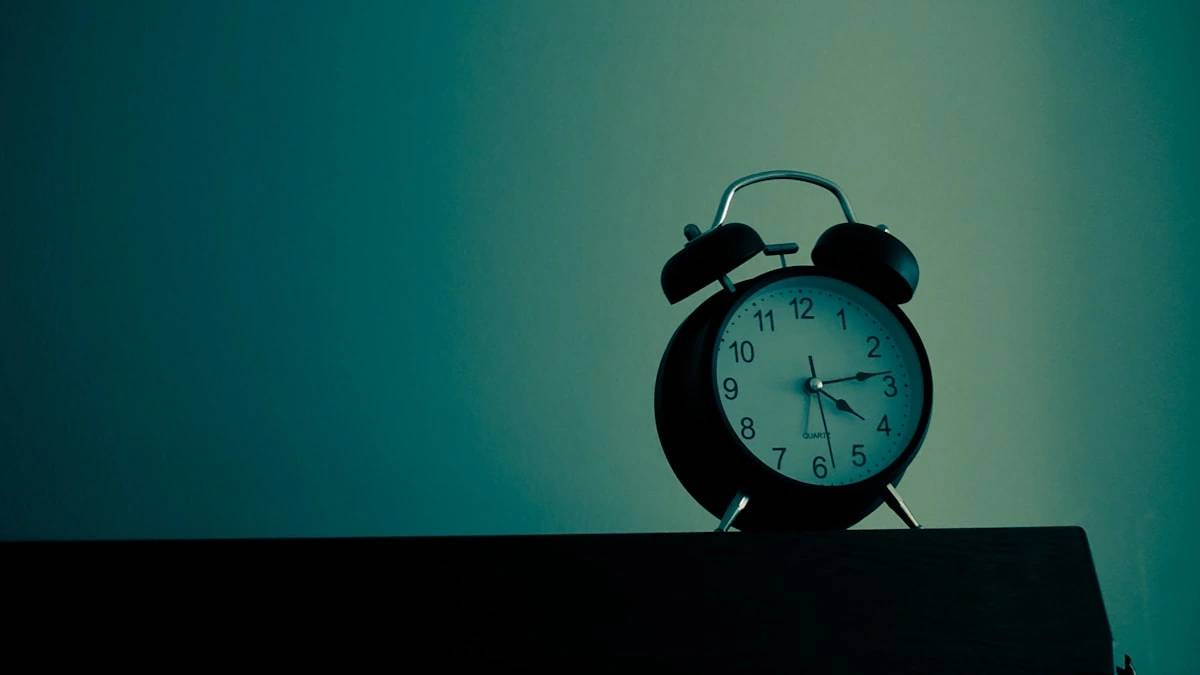
Kevin is an accountant, which explains the arithmetic. Four minutes after a bad-night wake-up at 3:17, his mind had projected his retirement account to age seventy, priced his kids’ college, and resurrected a lost form from 2019, all on the ceiling, all in order: job, money, children, mortality, “arriving in that order like acts of a play nobody wrote.” The wake-up lasted moments. The clock math turned it into a two-act tragedy, and it did the same to me for years before I understood the mechanism.
This post is about the clock itself, the smallest and most stubborn piece of the 3 a.m. problem. The full treatment lives in the waking-up-at-3am guide, and the sibling piece on why the 3 a.m. wake-up happens at all covers the biology.
Key takeaways
- Checking the time at night is reassurance-seeking that always backfires: you check for reassurance and get a bill instead.
- Time math is arousal fuel. The countdown to your alarm reads as an emergency to your body, and arousal is the opposite of sleep.
- The fix is physical, not willful: no visible clocks, phone out of reach, and a daytime log if you want data.
- Estimating beats measuring. Fifteen to twenty awake minutes by feel is the signal to get up, not a number to verify.
- Short night wakings are normal equipment. The clock is what turns them into a story you can’t put down.
The difference between waking and staying awake
Here’s the distinction that took me an embarrassing number of years to learn: waking at night isn’t the problem. Staying awake at night is. Your body surfaces briefly between sleep cycles all night long, four to six times, and most of those surfacings last under three minutes and vanish without a memory. The night was working. You just started remembering the wake-ups.
The remembering is where the trouble lives, and the clock is the engine of remembering. The instant you read 3:14, two things happen at once. First, the math starts: seven hours until the alarm, six and a half, six. Second, your body reads that math as a verdict on the coming day, and stress chemistry shows up to help. You check for reassurance and get a bill instead, and the bill is payable in wakefulness.
Notice what the number actually does. Before the check, you’re a person lying comfortably in the dark who may or may not have been awake long. After the check, you’re a person with a deadline. Nothing about your sleep debt changed in that second. What changed is the story, and the story is what your heart rate responds to.
This is why the single cheapest intervention in the entire chapter costs nothing: turn the clock around. Cover the glowing face. Move the phone, which is a clock, a feed, and a job in one rectangle, out of arm’s reach, into the hallway or the kitchen. You’re not hiding information from yourself; you’re removing a tripwire that fires at your most suggestible hour. The whole case for relocating the phone lives in the alarm clock problem.
The 3 a.m. arithmetic trap
The middle of the night is uniquely bad territory for math, and it isn’t an accident. Deep sleep is mostly banked by then, sleep pressure is largely spent, and what remains is lighter, dream-heavy sleep that’s easy to surface from. Meanwhile cortisol, the alertness hormone, is beginning its slow morning climb. “Three in the morning isn’t cursed. It’s the shallow end of the pool,” and shallow water is where every small thing snags.
So the brain you bring to 3 a.m. math is a brain with an edge on. Numbers that would bore you at lunch become verdicts at 3:14. Seven hours reads as enough. Six reads as a problem. Five reads as a catastrophe, and each reinterpretation stirs more arousal, which makes the number worse, which stirs more arousal. The loop is self-feeding, and no part of it is about actual rest.
Worse, the math doesn’t stay about sleep. Give it a minute and it starts pricing your life: the presentation, the mortgage, the symptom you’ve been meaning to ask a doctor about. Kevin’s spiral had a fixed cast of characters and a running order. Yours has one too. The 3 a.m. mind is not a reliable narrator, which is worth writing somewhere you’ll see it at noon: “the dread always quotes a worse day than the one that actually shows up.”
The rule that breaks the loop has to be chosen in daylight, because at 3 a.m. you have nothing to bargain with. No clocks. No phone. If you want data about your nights, collect it in a morning log, in writing, where it can inform you instead of alarm you. Information at 8 a.m. is knowledge. The same information at 3 a.m. is a flare.
What to do with the twenty minutes instead
Without a clock, you need something else to steer by, and the tool is estimation. If it feels like you’ve been awake fifteen to twenty minutes, you probably have, and close enough is the entire standard. That’s the signal to leave the bed, not a number to verify by phone.
Get up. Somewhere else in the house, in dim light, do something genuinely boring: a paper book under the darkest lamp you own, a crossword in pencil at the kitchen table, folding laundry that doesn’t need folding. Stay until real sleepiness arrives, the heavy-eyelid kind, not the hopeful kind. Hopeful doesn’t count as sleepy. Then go back to bed and let the boring take over again.
This is stimulus control, and it isn’t a folk remedy. The American College of Physicians lists it as a first-line treatment for chronic insomnia, which makes it one of the best-evidenced moves in all of sleep science. Its logic is simple enough to fit in one line: “The bed is for sleeping, and everything else in your life has somewhere better to happen.” Every minute you spend in bed doing time math teaches your brain the wrong lesson, that the bed is where the math happens. Every dull minute in the kitchen teaches the right one.
Two honest warnings, because this method bills itself honestly. First, “Getting up twice in one night is normal. Three times happens too. Neither one means the method is failing.” Second, the first week or two can feel like losing, more time awake, more standing in a dim kitchen feeling absurd. That’s the price of retraining a cue, not evidence of failure, and it breaks around week two if you keep the shape. Sofia, a nurse with rotating shifts, ran the protocol like the protocols she trusted at work: up, kitchen, forty-watt lamp, old paperback. “She had been a nurse long enough to trust a protocol over a feeling,” and the feeling eventually came around.
Frequently asked questions
Why does checking the clock make insomnia worse?
Time math converts a small wake-up into a threat. The moment you see 3:12, your brain starts counting down to the alarm, and the arithmetic tells your body this is an emergency. You check for reassurance and get a bill instead, plus a jolt of arousal that resets your wakefulness.
What should I do instead of checking the time at night?
Turn the clock around, cover the glowing face, and move the phone out of arm’s reach before bed. If you need to track a pattern, do it in a daytime log, not at 3 a.m. In the moment, estimate: if you feel you’ve been awake fifteen to twenty minutes, act on that instead of measuring.
How long can I lie awake before getting out of bed?
Roughly fifteen to twenty minutes by feel, not by clock. If you’re still awake past that, get up, go somewhere else, and do something genuinely boring in dim light until real sleepiness returns. Lying in bed doing time math teaches your brain that the bed is where worry happens.
When is clock-watching a sign I need help?
If you’re waking several nights a week for three months or more, and the nights carry a real daytime cost, that’s past the range of tricks. A doctor and CBT-I, the first-line treatment for chronic insomnia, are the right doors, not another hack.
Tonight’s version takes one minute: clock turned, phone exiled, a boring book and a dark lamp staged in the other room. Then, at the next wake-up, decline the three invitations, panic, check, and solve, and let the boring win. The complete system, including the worksheets, is in Sleep, Finally.
This guide is educational, not medical advice. If sleep problems persist for months or wreck your days, see a doctor.