Waking Up at 3 A.M.
Best Analog Alarm Clocks for a Dark Bedroom
By Nora Vale · March 22, 2026 · 7 min read
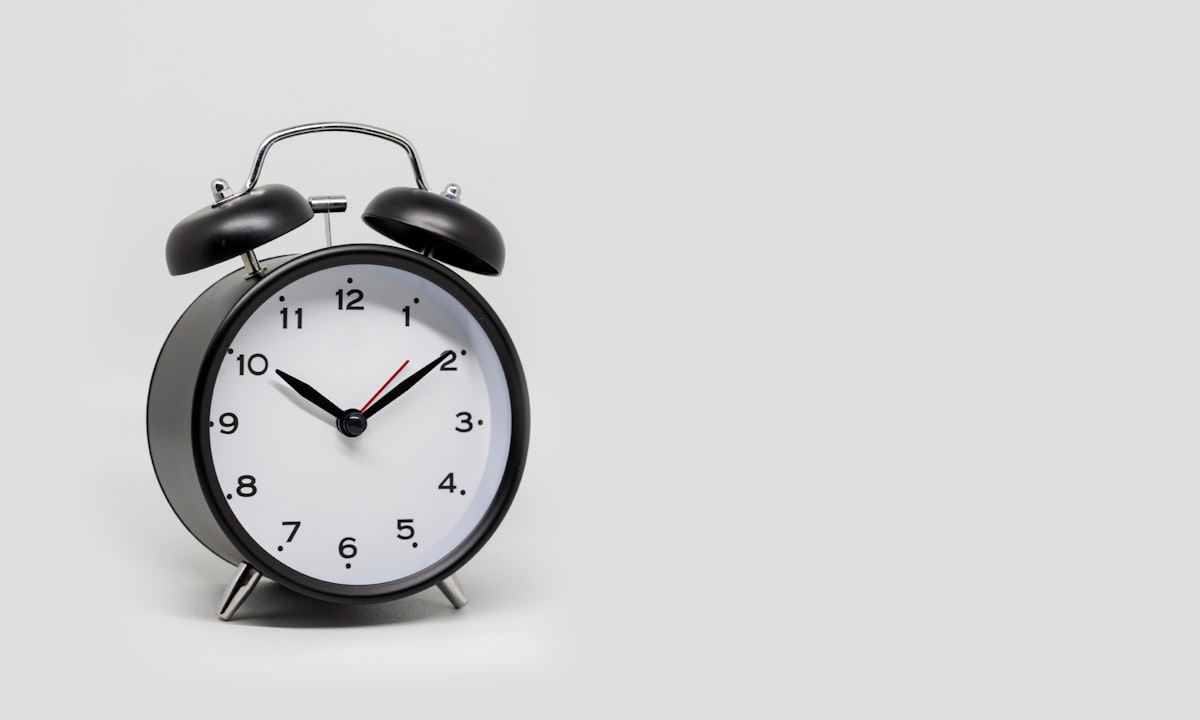
The best sleep purchase I ever recommend costs about ten dollars, has no app, no battery of features, and it is not even about sleep exactly. It is an analog alarm clock, and the reason it earns its spot in a dark bedroom is a rule that sounds almost too small to matter: the clock is the enemy of the 3 a.m. wake-up, not because of what it shows but because of what checking it does to you.
Here is the stakes. When you surface at night and roll toward a clock, the instant you know it is 3:14 the math starts, hours left before the alarm, hours of sleep already gone, tomorrow getting mortgaged minute by minute. “You check for reassurance and get a bill instead.” The whole case for removing the glowing clock from your nightstand is in the complete 3am guide; this post is about the hardware that makes the rule livable.
Key takeaways
- The clock check at 3 a.m. is the worst move available, because time math fuels arousal.
- Analog alarm clocks win by giving you time without glow and without a feed attached.
- Park it across the room, out of arm’s reach, so checking becomes a decision, not a reflex.
- Look for a silent movement, a readable dial with zero backlight bleed, and a bell loud enough for its new home.
- The phone loses the alarm duty, moves to the hallway charger, and the whole 3 a.m. spiral loses its fuel.
Why the clock is the problem
Sleep clinicians are blunt about the clock, and the reason is arithmetic. Time math is fuel for wakefulness, which is backwards from what the checking is for. You wake at night, you check for reassurance, and you receive an invoice: minutes consumed, hours remaining, a forecast you cannot do anything about at 3:14 in the dark. Every check restocks the spiral, and the spiral is the difference between a five-minute surfacing you forget by morning and a two-hour argument with your own brain.
The modern clock makes this worse in two ways the old ones did not. First, the glow: digital displays put light in a dark room all night, and light at eye level through the shallow half of the night is a mild insult your retinas keep reporting whether you look at it or not. Second, if the clock is your phone, the check is worse than a check. The phone is three problems in one rectangle: a light source aimed at your face, a feed engineered to be more interesting than sleep, and a job, because somewhere in that scroll sits an email you will feel obliged to have an opinion about. Any one can stretch a wake-up. All three arrive together, in one hand, in the dark.
An analog alarm clock cuts both problems at once. No glow, no feed, no job. Just hands on a dial, and only when you choose to look.
What to look for, cheaply
The spec list is short because the job is small.
Movement: get a silent or near-silent one. A ticking clock in a quiet bedroom is a change-sound generator, and your brain does not care about steady sound, it cares about change. Many cheap quartz movements tick; check the listing for “silent sweep” or “non-ticking.” This is the one spec worth paying attention to, and even it rarely costs more.
Dial: readable in dim light without being illuminated. Big hands, high contrast, no glow leaking from the case. If you want a backlight for the rare legitimate peek, get one you press for a second, not one that burns all night. The whole point of the purchase is a bedroom with nothing bright in it, and “Electrical tape over the router light, a folded sticky note on the clock face, a small square of masking tape over the television’s standby eye” is the spirit of the project. Your alarm clock should not need the tape.
Alarm: a bell or buzzer loud enough to work from across the room, because the placement is part of the method. If you are a heavy sleeper or the clock’s new home is a dresser six feet away, the classic wind-up bell alarms are honestly hard to beat, and their ugliness is part of their charm.
Price: about ten dollars, once. This is the same ten-dollar clock the book keeps handing the phone’s alarm duty, and it is the cheapest piece of sleep equipment in the whole system.
The placement is the method
The clock only works if the check stops being a reflex. Park it across the room, on a dresser, out of arm’s reach from the pillow. The rule underneath is simple: time math is fuel, and distance cuts the supply. A clock you must stand up to read is a clock you will not check at 3 a.m. unless the answer genuinely matters, and by the time you are standing up, you are halfway to the better move anyway.
The better move, when a wake-up sticks, is the twenty-minute rule: estimate fifteen to twenty minutes awake in bed, and if you are still awake past that, get up and do something dim and boring somewhere else until you feel truly sleepy. “Hopeful doesn’t count as sleepy.” The rules for coming back live in should you get out of bed when you can’t sleep, and the clock’s job in that system is to be invisible until morning.
One more placement note: the phone. Once the analog clock owns the alarm, the phone’s excuse is gone, and it can go to the kitchen counter or hallway shelf to charge. That single move, clock in, phone out, does more for a dark bedroom than any gadget marketed at sleep, and it is covered in full in why the phone as alarm clock is a problem.
Frequently asked questions
Why use an analog alarm clock in the bedroom?
Because a phone or digital clock gives you two things a dark bedroom does not need: light and access. An analog clock with no backlight tells time without glowing and, parked across the room, ends the 3 a.m. clock check that fuels wakefulness.
What should I look for in an analog alarm clock?
A silent or near-silent movement, a dial you can read in dim light without any illumination, a reliable bell or buzzer loud enough for a clock parked away from the bed, and a simple backlight for one-second peeks if you need one.
Should the clock be on the nightstand or across the room?
Across the room, or at least out of arm’s reach. The point of the no-clock rule is making the time check a decision instead of a reflex, and a reflex dies when the clock is too far to reach without standing up.
Can I just use my phone alarm face-down instead?
You can, and most people do for a while. But the phone is the clock, the feed, and the alarm in one case, and it lights up when messages land. A ten-dollar analog clock takes the alarm duty and the phone goes to charge in the hallway.
Ten dollars, once, and the 3 a.m. math loses its calculator. Put the phone in the hallway tonight, park the clock across the room, and let the dark bedroom do its quiet work. The full method, rules and all, is in Sleep, Finally.
This guide is educational, not medical advice. If sleep problems persist for months or wreck your days, see a doctor.