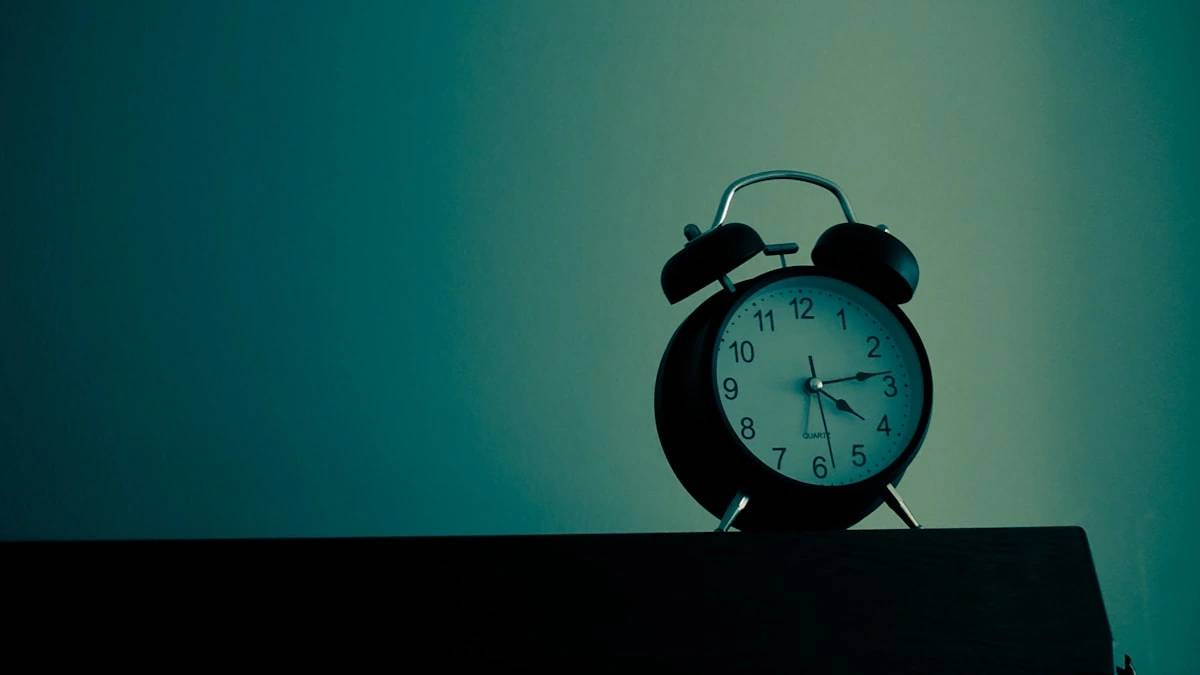
Waking Up at 3 A.M.
Does Checking the Time at Night Ruin Sleep
By Nora Vale · June 11, 2026 · 7 min read
I was the person who could read a glowing clock face without lifting my head, and I want to make a confession about what that skill earned me: years of arithmetic on the ceiling. If checking the time at night ruins sleep, I ran the experiment on myself more thoroughly than anyone should, and the answer is yes, with a mechanism worth understanding before you believe it. The full middle-of-the-night playbook lives in my waking up at 3am guide.
Key takeaways
- Waking at night is normal. Checking the time is how a five-minute surfacing becomes a two-hour argument.
- The math is always the same flavor, and it fuels arousal, the opposite of what the check promises.
- The clock check is a choice, not a reflex you are stuck with, which is the good news.
- No clocks is rule one of stimulus control: turn the display away, cover the glow, rehome the phone.
- If you stay awake anyway, get up after about twenty minutes and do something dull and dim elsewhere.
What the clock check actually costs
Start with the anatomy of a surfacing, because the clock is what ruins it. Sleep runs in cycles, and by the shallow half of the night you surface easily, several times, mostly without noticing. Those surfacings are supposed to stay under three minutes and be forgotten by breakfast. They turn sticky when something attaches, and the clock is the most common thing that attaches.
“The first is the clock check, the reflexive roll toward the nightstand, and it’s the worst move available at that hour, because the instant you know it’s 3:14 the math starts. The math is always the same flavor. Hours left before the alarm, hours of sleep already gone, tomorrow getting mortgaged minute by minute while you watch. Sleep clinicians are blunt about the clock for exactly this reason: time math fuels arousal, which is backwards from what the checking is for. You check for reassurance and get a bill instead.”
Read that last sentence again, because it is the whole post. The check feels like gathering information. It is actually a purchase, and the currency is arousal. My worst nights were never the ones I woke on. They were the ones where I learned the time, and every one of them played out the same way: 3:14, four hours and forty-six minutes if I fell asleep right now, which sounds almost respectable until you remember you have been telling yourself right now since 2:40.
Why the number never helps
Here is the trap inside the trap: the check sometimes delivers good news, and that is exactly why the habit survives. Some nights the math says five hours and forty minutes, and you relax for a moment, and the relief trains the reflex. Other nights it says two hours, and the alarm goes off in your head before it goes off on the nightstand. The habit gets fed either way, and the arithmetic gets faster.
The forecast is also unreliable in a specific direction. The dread “always quotes a worse day than the one that actually shows up.” One shallow night is survivable, and the body collects the missed sleep the next night on its own, because sleep pressure self-corrects. What wrecks the repair is the arithmetic that keeps you awake longer, and then the lie-in that rearranges your clock the next morning.
And the hardest truth, the one worth sitting with: “None of the three is required. Waking is automatic, but the clock check is a choice, the phone grab is a choice, and treating the waking as a problem to be solved on the spot is also a choice, which means the stickiest parts of a 3 a.m. waking are the parts you can actually change.” The waking was never the problem. I spent a decade treating it as one.
The no-clock rule, installed tonight
The fix is not willpower at 3am, because the version of you at 3am has no willpower to spend. The fix is furniture, moved while you are calm. “No clocks. Turn the display away, cover the glow, and if your phone is your alarm, rehome it beyond arm’s reach, because time math is fuel and this rule cuts the supply.”
Three moves, five minutes, before tonight. Turn the alarm clock’s display away from the bed or put a folded sticky note over the face. Move the phone to the kitchen counter or a hallway shelf, because it is “usually the clock, the feed, and the alarm wearing the same case.” And if the phone was the alarm, a ten-dollar clock from the drugstore takes the job. “Ten dollars, once. I’ll add only this: a phone charging in the hall has never once shown anybody the time at 3:17.”
Expect the first night or two to feel strange, like you have left the house without keys. The hand heads for the nightstand and finds nothing to read. That twitch is the habit dying, and it takes about three nights. Should I charge my phone outside the bedroom covers the docking move in full.
When you’re awake anyway
The no-clock rule does not put you to sleep, and it should not pretend to. Waking is automatic, and sometimes the surfacing runs long despite the dark. The protocol for that is stimulus control, and it works without knowing the hour: after an estimated fifteen to twenty minutes awake, get up, go to another dim room, and do something genuinely boring, a paper book under the dimmest lamp, folding laundry, a crossword in pencil. Return to bed when the eyelids drag, and if they never drag, repeat without drama.
The estimation matters, because counting minutes without a clock is deliberately rough, and rough is fine. The rule needs a threshold, not a timestamp. Should you get out of bed when you can’t sleep has the full protocol, and why do I wake up at 3am every night explains why the hour itself is innocent.
One honest limit: cutting the clock does not fix what put you awake. Alcohol rebound, a racing mind, the boiler kicking on before dawn all have their own chapters, and the no-clock rule works alongside them rather than instead. If wake-ups run three or more nights a week for three months or more, the pattern deserves a doctor, not just darker furniture.
The verdict
Does checking the time at night ruin sleep? It converts small, forgettable wake-ups into long, remembered ones, and it does it with arithmetic that reliably makes the night worse. The fix costs ten dollars and five minutes of furniture-moving. “Getting up twice in one night is normal. Three times happens too. Neither one means the method is failing.” You just have to not know what time it is when it happens. The full protocol is in Sleep, Finally.
Frequently asked questions
Does checking the time at night ruin sleep?
It turns small wake-ups into long ones, which is most of the damage. The instant you know it is 3:14, the math starts: hours left before the alarm, hours already gone, tomorrow getting mortgaged. Time math fuels arousal, which is backwards from what the check is for. You check for reassurance and get a bill instead.
What should I do instead of checking the clock at night?
Nothing, first. Most night surfacings last under three minutes and dissolve on their own if nothing attaches to them. If you stay awake an estimated fifteen to twenty minutes, get up and do something dull and dim in another room until your eyelids drag, without ever learning the hour.
How do I stop checking my phone for the time at night?
Move the phone out of arm’s reach entirely, because it is the clock, the feed, and the alarm wearing one case. A ten-dollar alarm clock takes over the wake-up job, and a phone charging in the hall has never once shown anybody the time at 3:17.
Isn’t it useful to know how much sleep I’m getting?
Not at 3am, where the number buys nothing. Knowing the hour either relaxes you briefly or alarms you, and the alarming version has a way of making the forecast true. If you want sleep data, a seven-day written log in the morning tells you more than any night-vision glance.
This guide is educational, not medical advice. If sleep trouble persists most nights for three months or more, that pattern has a name and a treatment, and a doctor is the right door.