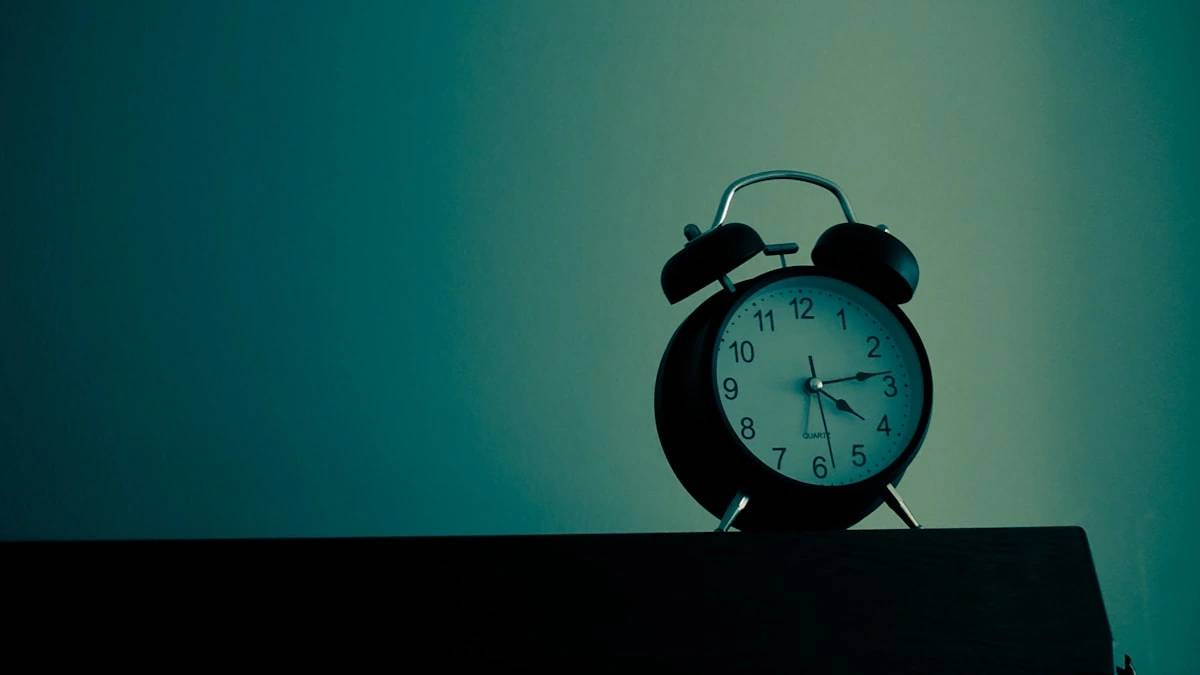
Waking Up at 3 A.M.
Sleep Inertia: Why Mornings Feel Foggy After 3am
By Nora Vale · July 19, 2026 · 7 min read

The 3 a.m. wake-up gets all the attention, but the bill arrives in the morning. You eventually fall back asleep, the alarm goes off, and you stand in the kitchen feeling like your head was poured in place, thinking through a layer of gauze. That state has a name, sleep inertia, and the 3 a.m. version of it has a specific shape worth understanding, because it’s treatable in both directions. The full night-waking protocol lives in the waking up at 3am guide.
Key takeaways
- Sleep inertia is the transitional grogginess of waking; waking out of deep or REM-heavy sleep makes it worse.
- The second half of the night is the shallow end, so a 3 a.m. break happens in the lightest, most fragile sleep.
- The clock check feeds the fog: time math fuels arousal, and arousal is expensive the next day.
- Morning light and movement clear inertia faster than caffeine; coffee works eventually, the walk works sooner.
- Fog that persists most days for months, or sleep that ambushes you, is a doctor flag, not inertia.
What sleep inertia actually is
Sleep inertia is the groggy transitional state between sleeping and being fully awake, and it’s a normal feature of every wake-up, not a malfunction. Its intensity depends mostly on one thing: which stage of sleep you woke out of. Wake from light sleep at the top of a cycle and you come up clean. Wake out of deep sleep, or out of the middle of a REM period, and the brain surfaces dragging equipment.
The classic demonstration is the long nap. Sleep past about thirty minutes and you drop into deep sleep, and waking from it delivers what researchers call sleep inertia, a thick-headed hangover that can run thirty to sixty minutes. You’ve felt this even if you never knew its name: the two-hour couch nap that ends at four-thirty with you unsure what year it is and faintly hostile toward everyone you love. That wasn’t a failed nap. It was waking from the wrong stage.
Why the 3 a.m. version hits harder
Here’s where the night-waking mechanics connect to the morning fog. By the second half of the night, your deep sleep is banked and your sleep pressure is spent, and what remains is lighter, REM-heavy sleep you can pop out of easily. That’s why the wake-up happens at 3 in the first place: the sleep is shallow and something small, a noise, a temperature shift, the cortisol wave starting its climb, is enough to break the surface.
The problem isn’t the pop itself. It’s what the night looks like afterward. A 3 a.m. wake that keeps you up for an hour, or repeats twice, shreds the last third of the night’s architecture, and that final third holds a meaningful share of REM. REM is when the brain does emotional filing, which is why a night broken at 3 a.m. doesn’t just leave you tired, it leaves you emotionally thinner, quicker to bristle, less resilient by ten in the morning than the same amount of sleep would have left you if it had been continuous.
So the morning fog after a 3 a.m. night is a composite: ordinary inertia from waking, compounded by fragmented REM, compounded again by whatever arousal you spent during the waking itself. That third ingredient is the one you control.
The clock check is fuel for tomorrow’s fog
The most expensive thing most people do at 3 a.m. isn’t staying awake, it’s checking the time. “The instant you know it’s 3:14 the math starts. Hours left before the alarm, hours of sleep already gone, tomorrow getting mortgaged minute by minute while you watch.” Sleep clinicians are blunt about this because time math fuels arousal, which is backwards from what the checking is for. “You check for reassurance and get a bill instead.”
That bill is denominated in morning fog. Arousal at 3 a.m. keeps you awake longer, which fragments more REM, which makes the morning thicker. Worse, the arousal itself consumes the recovery: the heart rate that ran high while you did ceiling math doesn’t fully settle before the alarm, and you wake with a nervous system that already worked a shift. My own worst mornings followed my own best ceiling mathematics, and the correlation was not subtle.
The fix at that hour is unglamorous and free: no clocks. Turn the nightstand clock around, phone out of reach, and if you must estimate, estimate, badly, in the direction of generosity. The fall back asleep at night post covers the whole return trip, and the stimulus control post covers the system that keeps the bed honest about its one job.
Clearing the fog in the morning
Now the morning side, because the first hour after a broken night sets the day’s terms. The fastest lever isn’t caffeine, it’s light. Bright outdoor light within an hour of waking does two jobs at once: it suppresses the melatonin still circulating, which lifts the fog directly, and it anchors your body clock so tonight’s sleep starts on schedule, which shrinks tomorrow’s version of the problem. Ten minutes on the porch beats forty minutes of scrolling in a dim kitchen.
Movement is the second lever, and it doesn’t need to be impressive. A walk around the block raises core temperature and alertness chemistry through the same channels coffee pretends to. The morning walk benefits for sleep post covers why this habit compounds.
Coffee still has a role, with two footnotes. It works slower than the walk, since caffeine’s lift takes twenty to thirty minutes to arrive. And the dose matters after a bad night, because your system already ran an arousal shift and a third cup on a fragmented morning is how the fog becomes jitters, followed by a second bad night. Stop by early afternoon at the latest; the afternoon coffee post runs that math. If the day allows it, a twenty-minute nap before three repairs more than any substance, and the how long naps should be post keeps it out of the deep-sleep danger zone.
The honest limits
And the boundary, because fog is a symptom wearing many costumes. One rough morning after a bad night is inertia, and it passes by mid-morning. Fog on most days for weeks is a different question, and it deserves data rather than resignation: a seven-day log of bedtimes, wake-ups, and morning grogginess graded one to five. Loud chronic snoring with pauses, a partner’s report of gasping, morning headaches, or falling asleep involuntarily at your desk despite real nights all point past inertia to things like apnea, which is common and dramatically underdiagnosed, and which no amount of morning light will fix. That’s the line where this post stops and a doctor starts.
Frequently asked questions
Why do I feel so foggy the morning after waking at 3am?
Two mechanisms stack. Waking repeatedly out of the second half of the night, when sleep is shallow and REM-heavy, fragments the architecture, and the grogginess of interrupted sleep carries into the morning. Worry about the wake-up adds its own arousal, which consumes energy that would have gone into feeling awake.
Is sleep inertia the same thing as being sleep deprived?
They overlap but differ. Sleep inertia is the transitional grogginess of waking, normally worst in the first half hour after getting up. After a bad 3 a.m. night it runs longer and stacks on a real sleep deficit, which is why the fog feels heavier than an ordinary morning’s first half hour.
Does going back to sleep after 3am make the fog worse?
Not the return itself, and drifting back down is the win, not the problem. The fog comes from where the night broke: waking out of REM-heavy shallow sleep repeatedly. If you fall back asleep after waking at 3, that’s the system working, and most people wake clearer than if they’d stayed up.
Does snoozing after a bad night cause sleep inertia?
Snoozing after fragmented sleep hands you short, broken sleep right before the alarm, and waking out of it feels thick. On a normal morning a short snooze is harmless; after a 3 a.m. night, getting up on the first alarm and getting light tends to clear faster than another shallow cycle.
When is morning fogginess more than one bad night?
If the fog persists most days for months, or you fall asleep involuntarily during the day despite real nights, that’s beyond inertia. Loud snoring with pauses, witnessed gasping, or unrefreshing sleep with morning headaches are all flags that belong with a doctor.
The fog is real, but it’s assembled from parts you can reach: the clock you didn’t check at 3, the light you took at 7, the walk you didn’t skip. Assemble those and the mornings thin out. The complete night-waking protocol is in Sleep, Finally.
This guide is educational, not medical advice. If morning fog is chronic, or snoring with pauses is part of the picture, a doctor is the right door.