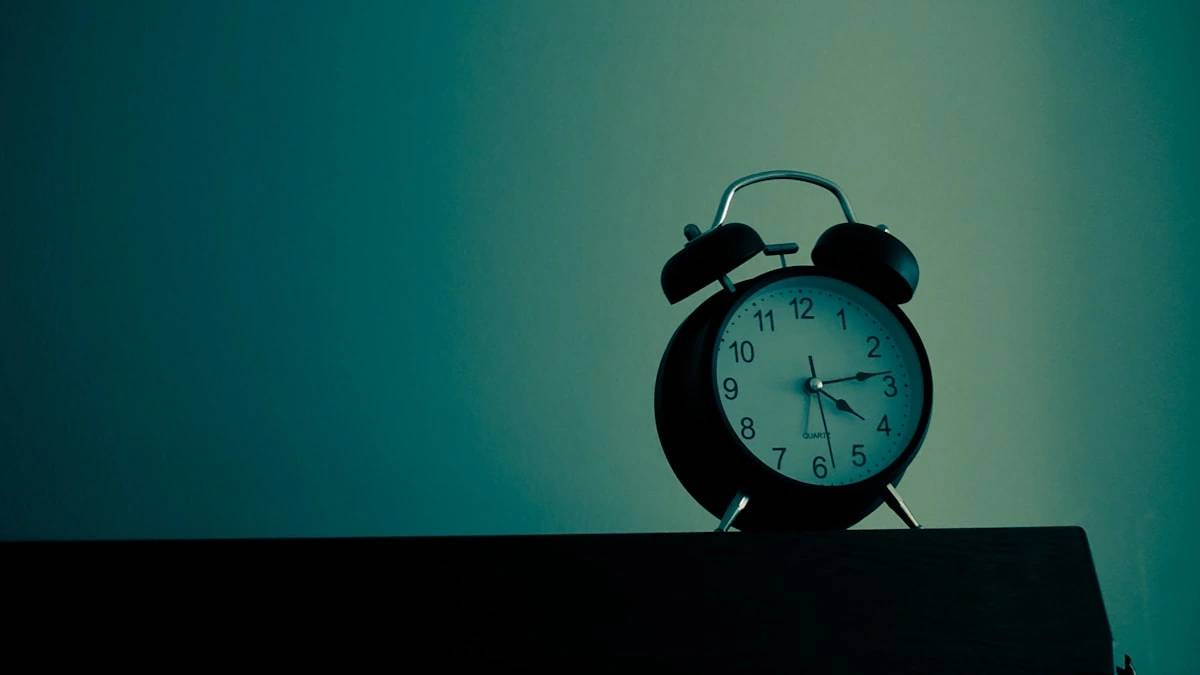
Waking Up at 3 A.M.
The Cognitive Shuffle for Middle-of-Night Waking
By Nora Vale · February 26, 2026 · 7 min read

The version of 3 a.m. I know best goes like this: you surface for no reason, and within four minutes the ceiling is running a status meeting. Kevin, an accountant I think about more than he knows, could project his pension, his kids’ tuition, and a form he forgot in 2019 onto a dark ceiling in one spiral, arriving in that order like acts of a play nobody wrote. My own 3 a.m. was less organized but just as loud. So the question worth answering is what to hand a mind like that at 3 a.m., and the honest candidate is the cognitive shuffle, the tool I reach for when the night is static rather than signal. This post covers how the cognitive shuffle for middle-of-night waking actually works, how to run it in the dark, and where it breaks. Its sibling, the sleep-onset version, is covered in cognitive shuffle for sleep, and the fuller toolkit is in the waking up at 3am guide.
Key takeaways
- A 3 a.m. waking becomes a problem when a worry grabs it, and the shuffle works by giving your mind a job that can’t host a storyline.
- The mechanics: neutral seed word, letter by letter, random unrelated image per letter, a few seconds each. Losing the thread is success.
- You can’t worry in shuffle mode. The words refuse to line up, and a storyline is the one thing a busy night brain cannot run without.
- Stay in bed for the first fifteen to twenty minutes; if you’re still clearly awake, get up boring and dim, and shuffle again later.
- It fails when desperate and fails on nights with real cargo, which is what the worry page at the kitchen table is for.
Why 3 a.m. is the shuffle’s home turf
First, why the middle of the night needs a different tool than falling asleep. By 3 a.m. your deep sleep is banked and your sleep pressure spent, so what remains is lighter, REM-heavy sleep you pop out of like a cork. Underneath that, cortisol is already climbing toward its morning peak. “Three in the morning isn’t cursed. It’s the shallow end of the pool.” The waking itself is standard equipment. What turns it into a two-hour event is what grabs the surfacing, and that’s almost always a storyline: the spiral with acts, the argument rehearsal, the arithmetic on hours remaining.
The shuffle attacks exactly that hinge. A cognitive scientist at Simon Fraser University, Luc Beaudoin, gave the technique its formal name, serial diverse imagining, and his proposed mechanism fits what insomniacs already know: scattered, unrelated images look a lot like the hodgepodge your mind makes naturally as you drift off, and a worry can’t get a foothold in it. “You can’t worry in shuffle mode. The words refuse to line up.” A 3 a.m. spiral needs momentum, stakes, a next scene. A mind spelling harbor can’t simultaneously run the status meeting. You haven’t defeated the worry, you’ve out-competed it for attention, and at 3 a.m. that’s the kindest available victory.
One more honest reason it suits the shallow end: the stakes are lower there. You’re not negotiating the start of your whole night, just the return leg of it, which makes it easier to hold the tool loosely, and loose is the only grip the shuffle survives.
How to run it at 3 a.m., in the dark
The dark version has three adjustments, none of them clever. First, do not check the clock, because you know what that’s for: reassurance that becomes a bill. Second, pick your seed word now, in daylight, and keep it by the bed the way you’d keep a fire drill posted; neutral means neutral, no words that live near the Layoffs folder in your head. Third, when a letter gives you nothing, let the image stay vague, a shape of a thing instead of the thing. The mechanics themselves never change: letter by letter, a random unrelated image per letter, held a few seconds, dropped. P: pancake. Pelican. Puddle. When you lose the thread somewhere around the third letter, that’s the tool working, not failing, because you were never supposed to finish the alphabet.
About staying in bed: the shuffle is for the first stretch of a waking, roughly fifteen to twenty minutes, estimated, not measured. If you’re still clearly awake after that, the bed is becoming a cue for alertness, and the right move is the boring exit, dim kitchen, dull paperback, back when real sleepiness returns. The shuffle and the exit aren’t rivals. They’re the same night’s protocol, run in order. My own drill happened on an unremarkable Wednesday in October, and I felt ridiculous shuffling words at ten fifteen while fully intending to stay awake for another chapter. That ridiculous feeling was the training. Two weeks later, on a genuinely bad night, the shuffle started itself almost without my permission, and part of me stood back and watched it work like a stranger doing my dishes.
Where it breaks, and what those failures mean
The failure modes, honestly, because I promised you the whole tool. First, desperation breaks it. The shuffle collapses if you’re doing it while silently begging it to knock you out, because desperation is sleep effort wearing a costume, and sleep effort is precisely what keeps you awake. If you notice yourself grading the run, three letters in, checking whether it’s working, that’s the costume. Take the grade off and go back to spelling. Second, cargo breaks it. Some nights the waking has real content, a loss, a deadline, a body that hurts, and the shuffle is a courtesy there, not a cure, because the material has a next step, and next steps belong on the worry page at the kitchen table, ideally at eight thirty rather than at 3 a.m. Third, chronicity breaks the whole category: if you’re waking at 3 or more nights a week for three months, that’s the line where a doctor replaces this post, and what is CBT-I is the treatment with the actual evidence.
What the shuffle is, in the end, is the boring job that beats the brilliant argument. Most nights, it isn’t close. Last night my seed word was harbor. I never got past H.
Frequently asked questions
Does the cognitive shuffle work for waking up at 3am?
It can, because 3am waking becomes a problem when a worry grabs the surfacing, and the shuffle gives your mind a job that can’t host a storyline. It works on generic static nights; nights with real cargo need the worry page earlier in the evening.
How do I do the cognitive shuffle in the middle of the night?
Lights off, eyes closed, pick a neutral seed word like harbor or ladder, and walk it letter by letter, picturing a random unrelated image for each, a few seconds at a time. When you lose the thread, you’re falling asleep, not failing.
Should I stay in bed while doing the cognitive shuffle?
For the first fifteen to twenty minutes, yes. If you’re still clearly awake after that, get up and do something boring and dim, and try the shuffle again when real sleepiness returns.
What if the shuffle doesn’t work at 3am?
Some nights nothing works, because the night has real content, not static. And if you’re doing it desperately, begging it to knock you out, it collapses, because desperation is sleep effort wearing a costume.
Pick the seed word today, while nothing is on fire. The boring job is much easier to hire at 3 a.m. if it’s already on the payroll.
This guide is educational, not medical advice. If sleep problems persist for months or arrive with symptoms you can’t explain, a doctor is the right door.