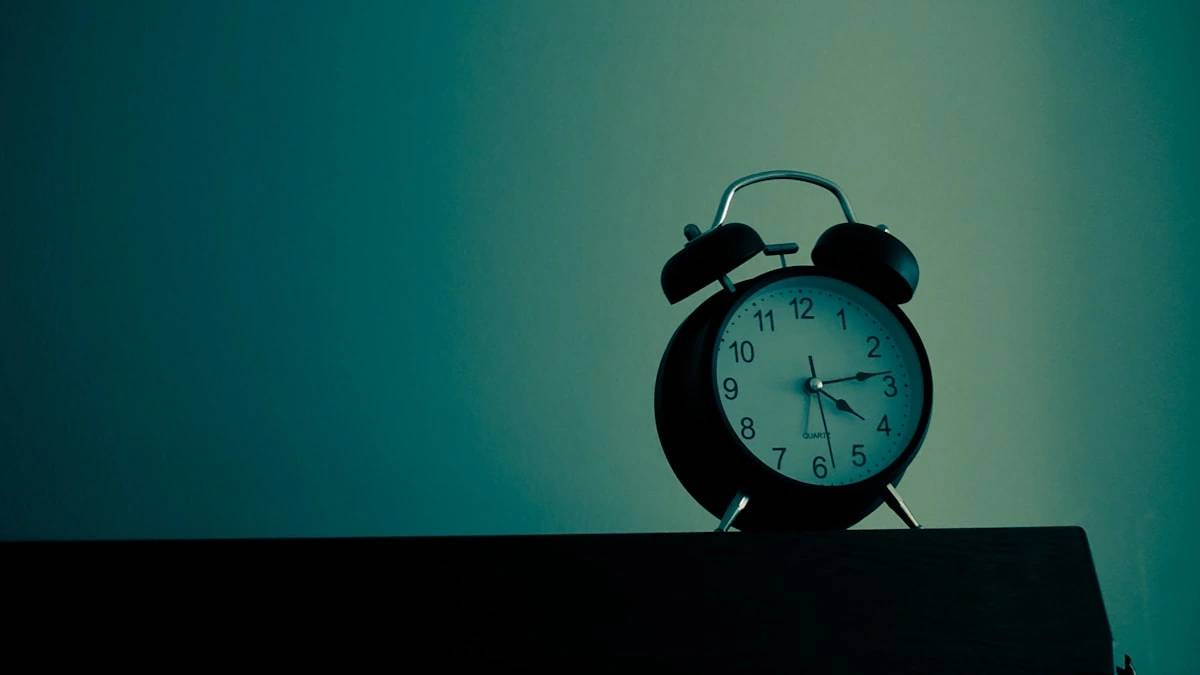
Waking Up at 3 A.M.
Waking Up Anxious at 3am: What Is Happening
By Nora Vale · June 18, 2026 · 7 min read

3:14 a.m., and the meeting is already underway. The vendor contract, the filing you’re not sure got sent, the pension math, your kid’s shoes through college, all of it arriving in a fixed order with the lights off and your heart going like it has somewhere to be. You didn’t decide to be anxious. You decided to sleep, and the anxiety showed up instead with the agenda.
Waking up anxious at 3am has a machinery, and the waking up at 3am guide takes the whole thing apart. Here’s the version for the hours when you’re actually lying in it, because knowing the machinery is most of the fix.
Key takeaways
- Waking at night is standard equipment. Staying awake is the problem, and the staying is built from three specific, optional moves.
- By 3 a.m. the shallow half of the night plus a rising cortisol wave supply the alertness. The anxiety supplies the agenda.
- The clock check, the phone grab, and the solving are choices, and refusing them is the whole method.
- The 3 a.m. brain’s conclusions are drafts, not decisions. Save the thinking for a version of you that’s slept.
Why 3 a.m. specifically
The night is four to six laps of about ninety minutes, and between the laps you surface. Most surfacings last under three minutes and get forgotten by morning. By 3 a.m., though, the deck is stacked: your deep sleep is banked in the first half, your sleep pressure is spent, and what remains is lighter, REM-heavy sleep you can pop out of like a cork. Underneath that, cortisol, the alertness hormone, begins climbing around 2 or 3 a.m. toward its morning peak, so your body is already drifting toward the exit without consulting you.
Three in the morning isn’t cursed. It’s the shallow end of the pool.
That’s the waking. The anxiety is what attaches to it, and it attaches for a mechanical reason: a waking after 2 a.m. arrives with alertness chemistry already loose in the blood, and whatever worry it finds gets performed on a stage with excellent acoustics. The same worry that bored you at three in the afternoon arrives at eleven with a full production staff, and at 3 a.m. the staging gets bigger, not smaller. Nothing in that starts with you being flawed.
The three things that make it stick
The waking itself is optional equipment; what’s optional is everything after it. The first is the clock check, the reflexive roll toward the nightstand, and it’s the worst move available at that hour, because the instant you know it’s 3:14 the math starts. The math is always the same flavor: hours left before the alarm, hours gone, tomorrow mortgaged minute by minute while you watch. You check for reassurance and get a bill instead.
The second is the phone grab, and the phone is three problems in one rectangle: a light source aimed at your face during the shallow half of the night, a feed engineered to be more interesting than sleep, and a job, because somewhere in that scroll sits an email you’ll feel obliged to have an opinion about. Any one of the three can stretch a wake-up. All three arrive together, in one hand, in the dark.
The third is the solving, and it’s the sneakiest. Kevin, an accountant, could project his pension to age seventy, price his kids’ shoes through college, and remember a filing from 2019 within four minutes of opening his eyes, all performed on the ceiling. The spiral has a plot that rarely varies: work first, then money, then the kids, then mortality, arriving in that order like acts of a play nobody wrote. The ceiling has no answers, and no pension problem in his life was ever improved by middle-of-the-night reasoning. Knowing that doesn’t stop the spiral, because the spiral isn’t powered by belief. It’s powered by a brain with nothing else to do and a body drifting toward morning.
Here’s the part worth sitting with. None of the three is required. Waking is automatic, but the clock check is a choice, the phone grab is a choice, and treating the waking as a problem to be solved on the spot is also a choice.
What to do instead
The method has an unlovely clinical name, stimulus control, and it’s the first-line treatment for chronic insomnia, which is funnier than it sounds: the most credentialed bodies in sleep medicine endorse a method whose central prop is a chair in another room. The rules: no clocks, display turned away before bed. Fifteen to twenty minutes awake in bed, estimated rather than measured, and if you’re still awake past that, that’s your cue to get up. Something dim and boring somewhere else until you feel truly sleepy, then back to bed, and hopeful doesn’t count as sleepy.
The anxiety content gets one blunt instruction from me. Refuse the argument, and save the thinking for a version of you that’s had some sleep. A brain at 3 a.m. catastrophizes; treat its conclusions as unreliable drafts, not decisions. The problem that feels unsolvable in the dark usually shrinks back to a ten-minute phone call by the middle of the next morning.
If the mind needs a job while you wait for the eyelids to win, the cognitive shuffle for sleep gives it one too dull to argue with, and how to fall back asleep at night walks the full sequence. The phone that usually starts all three problems belongs across the room, and should I charge my phone outside the bedroom makes that case properly.
The part that feels like giving up
Getting up in the middle of the night feels like surrender, and the first stretch genuinely makes nights worse: more time awake, more standing in a dim kitchen feeling ridiculous, more arithmetic performed vertically. You’re untraining an association that took months to build, so the first rough nights measure the untraining rather than your prognosis, and the awkwardness usually starts breaking up somewhere in the second week. Your bad week will cost less than your bad decade.
And the morning after matters as much as the hour itself. Up on time, some daylight, no rescue fourth coffee, bedtime at the ordinary hour rather than an 8:30 retreat. The dread always quotes a worse day than the one that actually shows up.
Frequently asked questions
Why do I wake up anxious at 3am specifically?
Because the shallow half of the night lives there. Deep sleep is banked early, sleep pressure is spent by then, and cortisol is climbing toward its morning peak, so you surface from light, REM-heavy sleep into a body already drifting toward alertness. The anxiety content is whatever the alertness finds first.
Is 3am anxiety a sign something is wrong with me?
Usually not. It’s ordinary worry run by a brain on a spent night and a rising alertness wave, performed on a stage with excellent acoustics. The conclusions it reaches are drafts, not decisions, and they almost never survive contact with daylight. If the pattern runs three or more nights a week for three months, that’s a doctor conversation, not a character verdict.
Why does checking the clock make it worse?
Time math fuels arousal, which is backwards from what the checking is for. The instant you know the time, the arithmetic starts: hours remaining, hours lost, tomorrow getting mortgaged. You check for reassurance and get a bill instead, and the bill keeps you awake longer than not knowing would have.
What should I do when I wake up anxious at 3am?
Decline the three invitations: no clock, no phone, no solving. If you’re still awake after an estimated fifteen to twenty minutes, get up, do something dim and boring in another room until your eyes go heavy, and go back to bed then. Refusing the argument is the method; the anxiety content was never the part you had to fix.
The waking was never the problem. The staying awake is, and the staying is built from choices you can decline, starting tonight, with the clock face turned away before you even lie down.
This guide is educational, not medical advice. If sleep problems persist for months despite sane evenings, see a doctor.