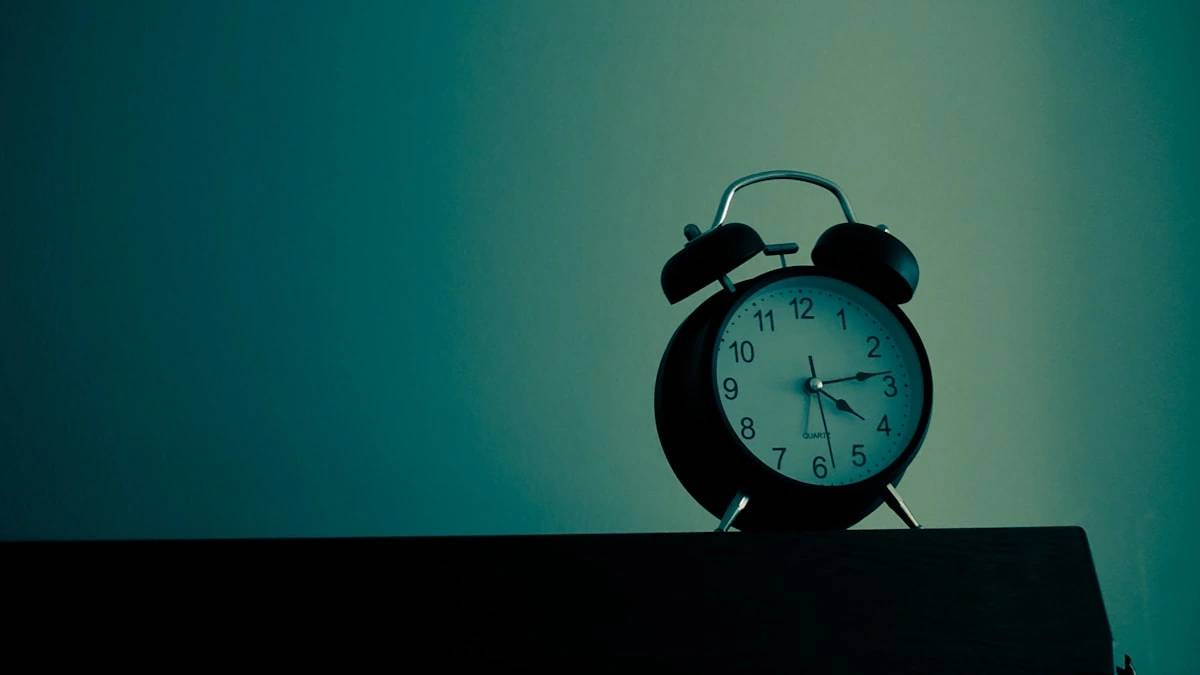
Waking Up at 3 A.M.
When Night Wakings Become Chronic Insomnia
By Nora Vale · June 30, 2026 · 8 min read

Everything I believed about my 3 a.m. wake-ups was wrong for about a decade, and the wrongness had a comfortable shape to it: each waking felt like a separate mysterious event, some flaw in the night’s construction, never a pattern with a name. Naming it turned out to be most of the fix. So this page is about the line, the one between ordinary night wakings and the chronic kind, because the two get the same google and need different answers.
The ordinary case first, then the line, then what’s on the other side of it. The whole toolbox for the ordinary case lives in the waking up at 3am guide.
Key takeaways
- Brief night wakings are standard equipment. Several surfacings per night are a feature of human sleep design, not a malfunction.
- The chronic line is specific: three or more nights a week, for three months or more, with daytime consequences.
- That pattern has a name, sleep-maintenance insomnia, and it responds to structured treatment, not willpower.
- The first-line treatment is CBT-I, endorsed by the American College of Physicians and the American Academy of Sleep Medicine.
- Stop guessing: a seven-day log turns a vague complaint into evidence you can act on or bring to a doctor.
First, what isn’t chronic, even when it feels like it
Waking briefly during the night is standard equipment for human sleep, so standard that sleep researchers treat several brief surfacings per night as a feature of the design rather than a malfunction in yours. You were never a bad sleeper. You were a sleeper who started remembering the wake-ups, and the remembering is where all the trouble lives.
The architecture explains why the wakings cluster at the same hour. A night runs four to six cycles of roughly ninety minutes, deep sleep comes early, and REM stretches toward the better part of an hour by morning. By 3 a.m., the sleep pressure is spent, what remains is lighter, REM-heavy sleep you can pop out of like a cork, and cortisol, the alertness hormone, has begun climbing toward its morning peak. “Three in the morning isn’t cursed. It’s the shallow end of the pool.”
A surfacing turns into a waking when something attaches to it, and the things that attach are nameable: the clock check that starts the time math, because “you check for reassurance and get a bill instead”; the phone grab, which is a light source, a feed, and a job in one rectangle; and the cortisol wave meeting your anxiety halfway. None of the three is required. Waking is automatic, but the clock check is a choice, the phone grab is a choice, and treating the waking as a problem to be solved on the spot is also a choice. For wakings that stay occasional and traceable, the four rules of stimulus control are the fix, and they’re laid out in should you get out of bed when you can’t sleep.
The line, drawn precisely
Here’s the line, and it deserves precision because everything on either side of it gets handled differently. If you’re waking three or more nights a week, struggling to get back to sleep, for three months or more, and dragging through your days because of it, the pattern has a name, sleep-maintenance insomnia, and it responds better to structured treatment than to willpower or to this book alone.
Three things in that sentence matter, so let me separate them. The frequency, three-plus nights a week, rules out the ordinary case, where wakings are occasional and traceable to clocks and phones and pinot noir. The duration, three months, rules out the rough patch, the work crisis, the newborn stretch, all of which train bad habits but end. And the daytime cost, dragging through your days, is the part people minimize, so let me not minimize it: if the nights are wrecking the days, that’s not a footnote, that’s a diagnostic criterion.
Chronic night waking isn’t a character flaw, and it isn’t rare. It’s one of the most common complaints sleep clinics hear, the first-line treatment for it is specific and well studied, and asking for it is a sleep skill like any other in this book. The rules in this chapter are the friendly cousin of that formal treatment. Sometimes the cousin is enough. Sometimes you want the real thing.
Kevin, the accountant with the 3:17 spiral, is the useful illustration of how the ordinary becomes chronic. His wake-ups started with a genuine crisis, a restructuring at work, and the crisis ended two years ago. The wake-ups stayed, because by then the bed had learned the routine. A rough month trains a habit, and the habit cheerfully outlives the reason for it by years. He isn’t anxious by nature. He’s trained, the way anyone trains a reflex, except the trick he taught himself was panicking horizontally at 3:17. That’s the mechanism chronic insomnia runs on, and it’s why the condition needs untraining rather than effort: the bed becomes a cue for alertness the way a dentist’s chair is a cue for dread before anyone turns the drill on.
What’s on the other side of the line
The treatment with the receipts is cognitive behavioral therapy for insomnia, CBT-I. The American College of Physicians lists it as the first-line treatment for chronic insomnia, and guidance from the American Academy of Sleep Medicine points the same direction. It works on the same conditioning the habit runs on, and it does it with structure, over weeks, with someone who has seen your version before. The plain-English tour of what it involves is in what is CBT-I, and the honest framing of the whole territory is in can’t sleep for months.
Two other flags belong in a doctor’s office rather than a blog post, and I’ll say them once, without drama. Loud chronic snoring, or pauses in breathing a partner has witnessed, are different flags entirely, and the signs of sleep apnea are worth knowing for that conversation. And if the wakings arrive with low mood most days, that pairing matters too, because sleep and mood run in both directions, and untangling which came first is what clinicians are for.
If you can’t tell which side of the line you’re on, stop guessing and start recording. A seven-day log turns a vague complaint into usable evidence: when you slept, when you woke, how long you stayed up, what the morning cost. Guessing keeps you going in circles. A week of notes moves you in one direction or the other, and if the notes land you past the line, you bring them to the appointment, because doctors think in patterns and fourteen nights is a pattern.
What the method honestly costs before the line
A fair word for the people working the ordinary side of the line with the stimulus-control rules, because the method has a cost and a chapter that hid it would read like an ad. Getting out of bed in the middle of the night feels like surrender, and the first stretch genuinely makes nights worse: more time awake, more standing in a dim kitchen feeling ridiculous, more of Kevin’s arithmetic performed vertically. Plenty of people quit right there. I nearly did.
What kept me going was understanding the shape of the curve. You’re untraining an association that took months to build, so the first rough nights measure the untraining rather than your prognosis, and the awkwardness usually starts breaking up somewhere in the second week. Standing bored in a kitchen for twenty minutes feels like failure and is the treatment working. The method charges a bad week or two, and in exchange you stop doing this for the next decade. Your bad week will cost less than your bad decade.
But here’s the honest boundary on that trade: if you’ve run the method faithfully for weeks and the nights still fall apart three or more times a week, that’s information rather than a verdict. It doesn’t mean you did the method wrong. It means the friendly cousin isn’t the right dose for your case, and the real thing exists, it’s well studied, and it works.
Frequently asked questions
When are night wakings considered chronic insomnia?
The line is specific: waking three or more nights a week, struggling to get back to sleep, for three months or more, and dragging through your days because of it. The pattern has a name, sleep-maintenance insomnia, and it responds better to structured treatment than to willpower or to a book alone.
What is sleep-maintenance insomnia?
It’s the form of chronic insomnia where the trouble is staying asleep rather than falling asleep. You drop off fine, then surface in the shallow half of the night and the surfacing sticks. It’s one of the most common complaints sleep clinics hear, and it is not a character flaw.
What is the first-line treatment?
Cognitive behavioral therapy for insomnia, CBT-I. The American College of Physicians lists it as the first-line treatment for chronic insomnia. The rules in the book, no clocks, the twenty-minute exit, a fixed wake time, are the friendly cousin of that formal treatment. Sometimes the cousin is enough. Sometimes you want the real thing.
How do I know which side of the line I’m on?
Stop guessing and start recording. A seven-day log that notes when you slept, when you woke, and how long you stayed up turns a vague complaint into usable evidence. Guessing keeps you going in circles. A week of notes moves you in one direction or the other.
If you’re not sure which side of the line you’re on, start the log tonight: one line per morning, before you can revise the memory. The full stimulus-control rules and the log template are in Sleep, Finally.
This guide is educational, not medical advice. If sleep problems persist for months or wreck your days, see a doctor.